


Gaza Football Fans Are Ditching Traditional Regional Loyalties for a Surprising European Favorite This World Cup
In solidarity.
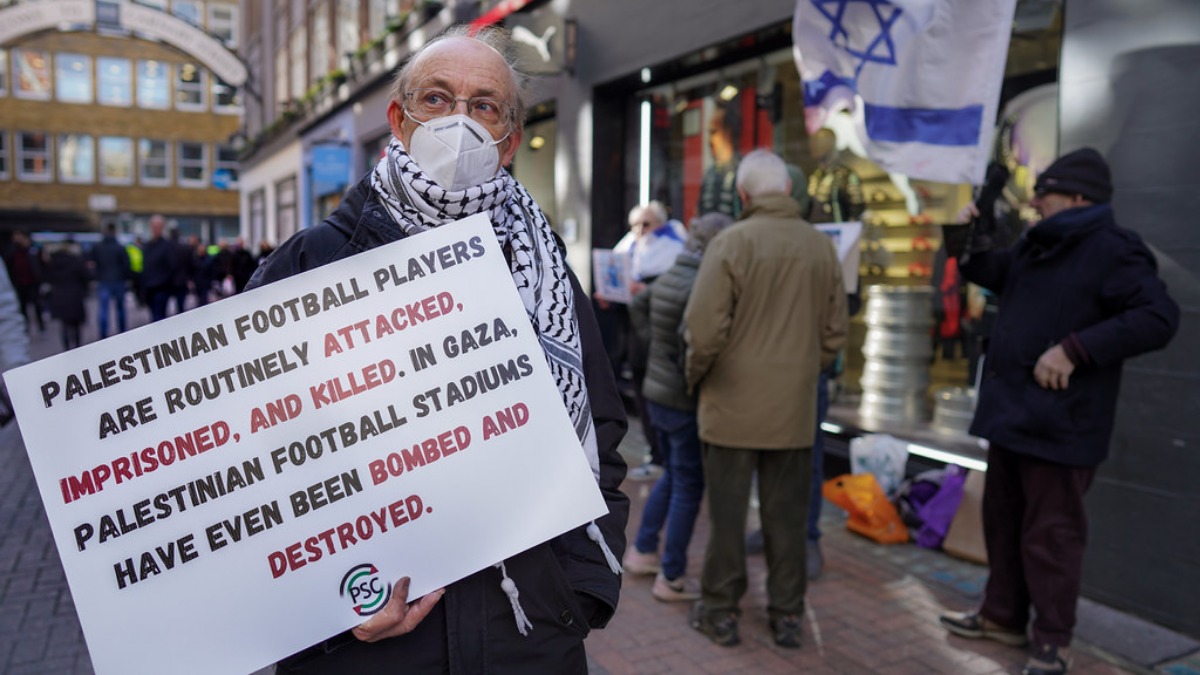
Gaza’s football fans are rallying behind an unexpected favorite this 2026 FIFA World Cup, and it’s not the team you’d guess. When Spain faced Saudi Arabia in a recent match, cafes across Gaza City erupted in cheers for La Roja, despite Saudi Arabia’s long-standing ties with Palestine. The reason? Spain’s outspoken support for Gaza during the ongoing genocide has turned football fandom into a form of political solidarity.
At a packed Gaza City cafe, fans crowded around a small screen to watch Spain dominate the match, celebrating each goal with the kind of enthusiasm usually reserved for local heroes. The 4-1 victory wasn’t just a win on the scoreboard – it was a moment of defiance.
According to Al Jazeera, Mohammad Attallah, a 43-year-old lawyer from Gaza City, put it simply, “We are a people who love life and love football. Spain’s stance during the war made people feel much closer to it.” For many in Gaza, supporting Spain isn’t just about the game anymore. It’s about gratitude for a country that has stood by them when others haven’t.
Spain’s political actions have resonated deeply in Gaza
The recognition of Palestine as a state earlier this year, King Felipe VI’s public plea for Israel to stop its “abhorrent acts,” and even Barcelona star Lamine Yamal’s viral moment waving a Palestinian flag during La Liga celebrations have all cemented Spain’s place in the hearts of Palestinian fans.
Hani Abu Rizq, a 32-year-old fan, called the support for Spain a reflection of Gaza’s determination to hold onto life despite the genocide. “We want to show the world that the people of Gaza love life and love sports, despite all the destruction and hardships surrounding them,” he said. Football, for many, is one of the few escapes from the relentless pressures of daily life in a war zone.
The connection between Gaza and Spain goes beyond politics. Many Palestinians have followed Spanish football for years, drawn to La Liga’s style of play and the success of its national team. But the war has added a new layer of meaning to their fandom.
Abdullah Masoud, another fan, said the World Cup has given Gazans a rare chance to experience something resembling normalcy. “We love football like any other people, and we once hoped to see Palestine play in the World Cup,” he said. “We do not forget the positions we witnessed during the war, whether from Spanish officials or sports figures like Lamine Yamal.”
That solidarity has extended far beyond Gaza
According to NPR, in Northern New Jersey, Palestinian-American kids training at the Palestino Soccer Academy have found their own escape on the pitch. For these young athletes, soccer isn’t just a game. It’s a lifeline. Taim Nadin, a 13-year-old player, didn’t mince words: “Without soccer in life there’s nothing. If I didn’t play soccer, I’d be nothing.”
The sentiment is shared by many of his teammates, who see the sport as a way to process the trauma of the genocide in Palestine. Coach Omar Abdulaziz, who moved from the West Bank to Puerto Rico as a teenager, understands the emotional weight of the game. “Soccer, to us, is a moment to disconnect, a moment of tranquility, a moment to detach from the suffering of reality,” he said.
The Palestino Soccer Academy was founded three years ago to give kids a space to channel their frustrations. Today, it serves children of all backgrounds, but the war in Gaza still looms large. Many of the players have lost family or friends in Israeli airstrikes, and the destruction of Gaza’s sports infrastructure – 90% of which has been wiped out – has made it impossible for local athletes to train or compete.
Palestinian officials say 450 people involved in sports, including athletes, coaches, and referees, have been killed since the war began. For these kids, watching the World Cup isn’t just about the game. It’s about reclaiming a piece of their identity.
Yamal has become a hero to many young players
Obaida Al Amleh, a 14-year-old who was born in the West Bank, admires Yamal’s skill on the field but also his off-field activism. When Yamal waved the Palestinian flag during Barcelona’s La Liga victory parade, the moment went viral, and photos of it now serve as wallpaper on many of the kids’ phones. “I thought it was very special for the people who are going through the worst right now,” Obaida said.
He knows that pain firsthand – five of his close family friends were killed in an Israeli airstrike. The day he heard the news, he skipped the grief and headed straight to the field. “You can ball in the pitch, or you can bawl at home,” he said. For him, soccer isn’t just a distraction. It’s a way to process the unthinkable.
Back in Gaza, the World Cup has become more than just a tournament. It’s a platform to remind the world of Palestine’s struggle. Frequent electricity and internet outages make it difficult to watch matches, but fans still gather in cafes, determined to celebrate the game they love. Hani Abu Rizq called it a way to “remind the world of our cause and our ongoing suffering,” just as Palestine’s visibility at the 2022 World Cup in Qatar did.
For many, supporting Spain is a way to honor those who have stood with them. “We appreciate everyone who stood with the people of Gaza,” Abdullah Masoud said. “They may not speak our language, but their humanitarian positions reached us more than those of any other people in the world.”
The genocide has stolen so much from Palestine’s football community but it hasn’t stolen Palestinians’ love for the sport. It’s a reminder that even in the darkest times, the beautiful game can still bring light.
(Featured image: alisdare1)
Have a tip we should know? [email protected]
Follow The Mary Sue:
