


Four sailors spent 17 terrifying hours adrift in the Pacific after a massive whale pod collision left their yacht crippled
Fight for survival.
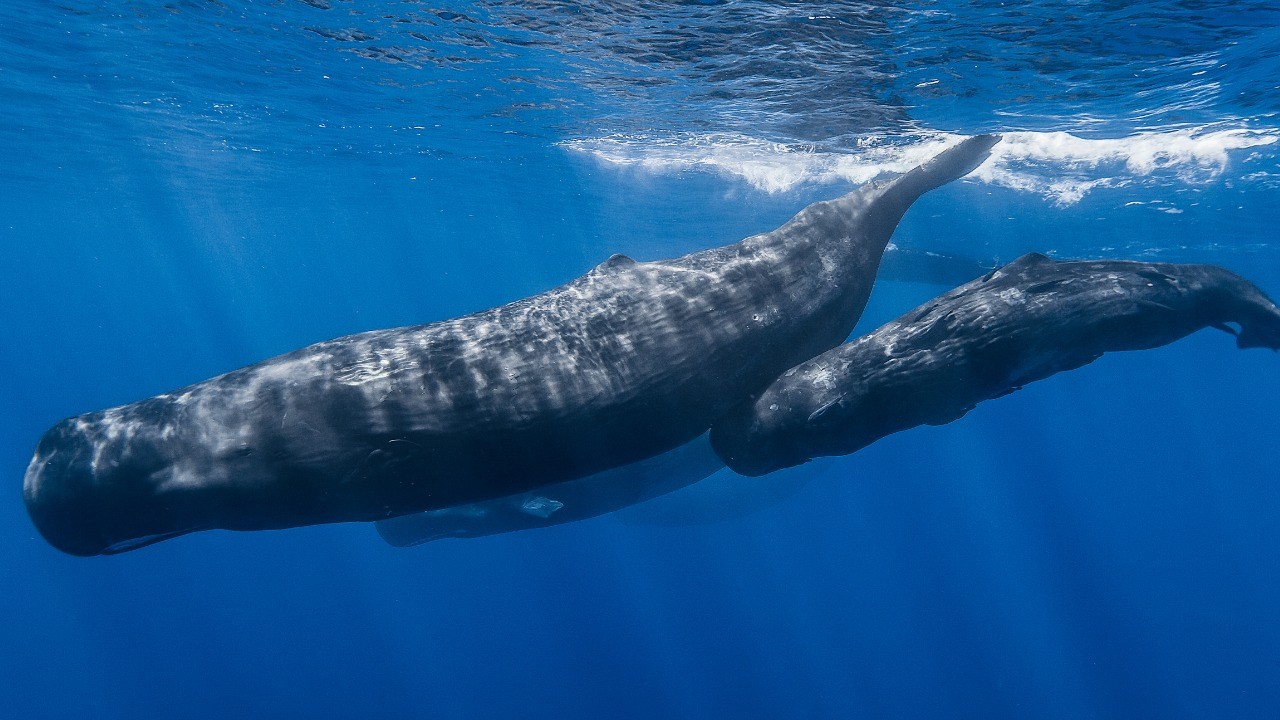
It’s a terrifying scenario that every long-distance sailor fears, but for the crew of the Tai Tam, it became a harsh reality on September 26, 2026. According to PEOPLE, the Australian vessel was sailing about 250 nautical miles north of Norfolk Island when it suffered catastrophic damage after colliding with a massive sperm whale. The impact, which occurred around 1 p.m., left the boat taking on water and effectively crippled in the middle of the Pacific Ocean.
The crew consisted of four people, including two Australians, a New Zealander, and a French national. Among those on board were Jeremy and Jemma Cooper, who were returning from a three-month sailing trip around the Fijian Islands. Jemma recalled the moment of impact with striking clarity. She was on the helm during what she described as a beautiful day with settling seas. Suddenly, the vessel was knocked sideways by a massive force.
“There was a thud. We knew we’d been hit by something,” Jemma said. “I was thrown over to port side because of the impact… There were, like, six of them. One to two huge ones; they were as long as the boat,” she added.
The collision had an immediate impact
According to 1News, Terry Hetherington, another crew member who is from Wānaka, also recounted the sudden violence of the collision. He described hearing a “very, very loud bang” as the yacht struck the giant mammal. Hetherington jumped up and grabbed the wheel, but he quickly realized there was no movement. The collision had rendered the steering completely unresponsive.
The group later concluded that a pod of what appeared to be four or five sperm whales was nearby. However, Hetherington noted he did not see the specific whale that was hit.
The immediate aftermath was a frantic fight for survival. The crew spent the first half hour assessing the damage and trying to get the boat under control. Jeremy explained that they worked to stem the flow of water and get pumps running to buy as much time as possible. They wanted to keep the boat afloat for as long as they could to delay the moment they would have to abandon the vessel.
“Our crew members, Martin and Terry, who are fantastic, you know, assessing damage, trying to stem flow, getting pumps going and just sort of buying as much time so we could make some decisions,” Jemma added.
Despite their best efforts, it soon became clear the situation was unrecoverable
Jeremy initiated the emergency protocol by triggering the EPIRB and issuing a Mayday call. They were soon in contact with New Zealand rescue services. The crew eventually made the difficult decision to abandon the yacht and move into a life raft.
The rescue operation was a complex, multi-agency effort. The New Zealand Defence Force deployed a P-8A aircraft, which established two-way radio communications with the yacht’s crew and other vessels in the area. The aircraft remained overhead for hours, providing a vital link for the stranded sailors.
The crew spent 17 hours adrift in the life raft before being spotted. Around 6 a.m. the next morning, the MV Sofrana Surville, a 469-foot cargo vessel, arrived to conduct the rescue. “It was a massive relief, stepping on board the container ship,” Hetherington said.
Jemma expressed the overwhelming emotion of the moment when the rescue was finally complete. She said she was focused on getting her feet on the bottom rung of the ladder to board the cargo ship. When the last crew member reached the ship safely, she burst into tears. The crew members were fortunate that no injuries were reported during the entire ordeal.
The yacht crew did everything right
Mike Clulow of EFG Asset Management praised the coordination of the rescue. He thanked the NZDF, JRCC Australia, and MRCC Noumea for their support, as well as the crew of the cargo ship and a private sailing vessel that assisted. “The crew of the yacht did all the right things, and it was unfortunate to have struck a whale in open water,” Clulow said.
“They were well prepared and the early activation of their EPIRB was key to helping get them to safety. It is an excellent reminder that being prepared when going to sea can save your life,” he added.
Jeremy echoed this sentiment, noting that while they were unlucky to have hit the sperm whale, they were incredibly fortunate regarding the weather and the response time of the rescue teams. He later told reporters that they would not be sitting at home if it were not for the fast-acting teams in New Zealand.
Hetherington also reflected on how much worse the situation could have been. He noted that while the weather was calm during their rescue, the outcome could have been significantly different if the accident had occurred just 24 hours earlier. It serves as a stark reminder of the unpredictable nature of the open ocean.
Have a tip we should know? [email protected]
Follow The Mary Sue:
