


28-year-old man undergoes brain surgery. Then he starts seeing his cat’s eyes and stripes on the faces of people he meets
The condition could resolve on its own.
Karl, 28, had brain surgery to remove part of his right temporal lobe due to tangled blood vessels that could lead to a brain bleed, according to Medical Xpress. Now, Karl lives with prosopometamorphopsia (PMO), a rare condition that causes him to see distortions in faces.
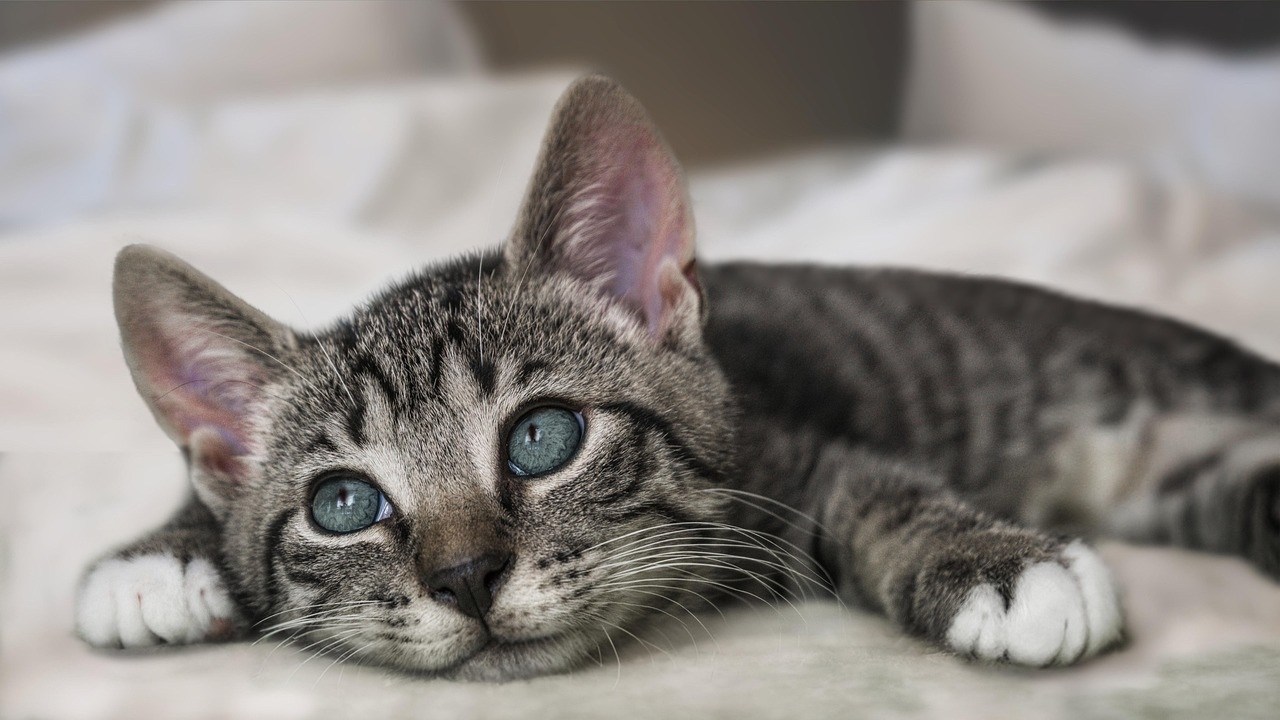
If Karl sees his gray tabby cat, Luna, first thing in the morning, then on some days he reportedly sees her features, such as her eye shape, enlarged pupils and stripes, on the faces of people he encounters that day. If he sees a human face first, he may see that person’s pupils and eye shape on other people’s faces, or even on his cat’s face.
Brad Duchaine, a professor and chair of psychological and brain sciences and principal investigator of the Social Perception Lab at Dartmouth, has been using AI to try to create a visualization of what Karl sees, according to the outlet. Duchaine has been working to increase awareness of PMO, which he spoke about in another Medical Xpress article.
How long PMO lasts varies a lot
According to the outlet, PMO isn’t necessarily a permanent condition. It says, “Specific symptoms vary from case to case and can affect the shape, size, color, and position of facial features” and “can last for days, weeks, or even years.”
In Karl’s case, he sees the distortions even on faces on screens, but Duchaine mentioned a rare case where the patient didn’t see distortions on faces on screens. This allowed Duchaine to visualize what that patient saw by having them look at a real face and that same face on a screen, then describe the differences they saw.
Duchaine has heard from over 250 people with PMO
Duchaine’s lab has heard from more than 250 people who experience face distortions, according to Medical Xpress, and his research is meant to help raise awareness of the condition. He said in 2024, “We’ve heard from multiple people with PMO that they have been diagnosed by psychiatrists as having schizophrenia and put on antipsychotics, when their condition is a problem with the visual system.”
There also seems to be a stigma around the condition that can lead to people who may have PMO not bringing up strange vision symptoms with a medical professional. Duchaine added, “And it’s not uncommon for people who have PMO to not tell others about their problem with face perception because they fear others will think the distortions are a sign of a psychiatric disorder.”
Duchaine has a website dedicated to this condition. It says that when the cause of the distortions is known, doctors have tried treating the underlying problem with “migraine medications, anti-epileptic medications, and surgery to remove tumors.”
The website notes that face distortions often clear up after a few days or weeks, though some cases last for years. It adds that because distortions frequently resolve on their own, “it is sometimes unclear whether the intervention contributed to the improvement.”
Have a tip we should know? [email protected]
Follow The Mary Sue:
