


Florida woman says a Miami dealership sold her husband’s car and never paid $32,500, then denied having it: ‘I’ve never had that car here’
She writes that the couple is "not asking for anything extra" and wants only the money it says it is owed.
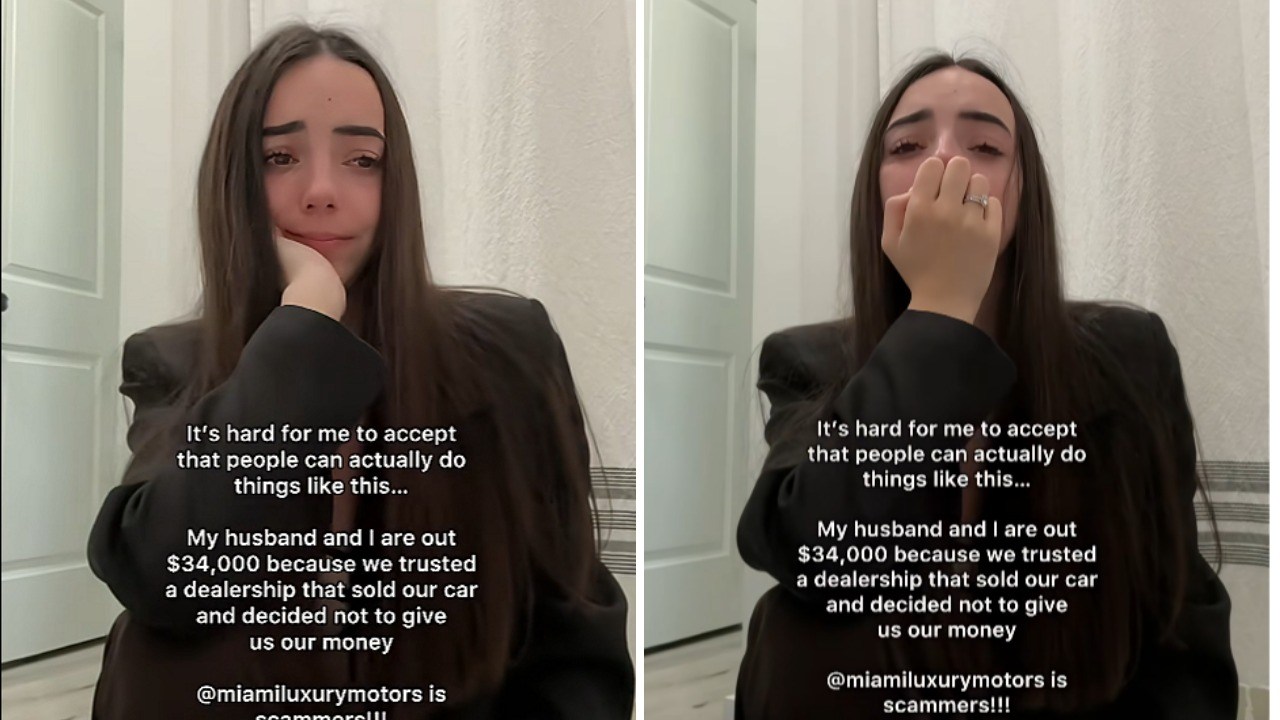
A Florida woman says her husband’s car was sold by Miami Luxury Motors, which never paid the couple the $32,500 it owed, according to BroBible. The woman describes months of shifting explanations and a returned check in a TikTok video and its caption. The outlet reports that the dealership later answered a review by saying it never had her vehicle.
In the video, she says the couple listed their car for sale online and found a buyer who wanted financing. The couple could not offer it, so the buyer pointed them to Miami Luxury Motors, where they signed a contract with a 10-day payment deadline. Florida law lets a dealer offer an owner’s vehicle for sale under a consignment contract and a power of attorney to assign the title.
She says the buyer agreed to a deal in April but later withdrew. By her account, the dealership then sold the car to a different customer. The outlet states that the sale took place in June, and she writes that no payment followed.
She says the explanations kept changing
According to her, the money did not arrive, and the couple heard several explanations instead. The dealership first cited the title, then the buyer’s registration, and later a release of funds by a bank. In July, she adds, her husband received a $32,500 check, which was returned for insufficient funds when they tried to cash it.
She writes that the couple received a document in November described as confirmation of payment, yet no money reached their account. By her account, they contacted the dealership by phone and message and also went there in person. On-screen text states that the couple is out $34,000, while the caption names $32,500.
She says the dealership’s owner reached out only after the couple posted publicly, and that he demanded they delete their posts. “I am not trying to destroy anyone’s business or hurt anyone,” she writes. She adds that the couple would settle the matter peacefully and that she will share an update if the money is returned.
The outlet reports that a screenshot she shared shows the dealership replying to a review with, “Wrong dealer, I’ve never had that car here… ever.” It adds that she later posted footage she says shows the car on the dealer’s lot, and images of it on the dealership’s Instagram page. It also states that she filed complaints with state motor vehicle officials and contacted a lawyer.
She writes that the couple has the agreement, messages, the returned check and other paperwork supporting their account, and that they are “not asking for anything extra.” The outlet states that it emailed Miami Luxury Motors for comment. All details are based on her account, which presents only her version of events.
Florida regulates motor vehicle dealers under section 320.27 of the state statutes. The law lets the state take action against a dealer’s license over fraud or a failure to follow a written sale agreement. The violations must be frequent enough to show a pattern. Dealers must also post a $25,000 surety bond or letter of credit tied to following written sales contracts.
Sale problems can surface fast, as when a dealership wanted her car back after a sale. Florida requires motor vehicle dealers to meet state licensing requirements, so a license check can help vet a seller. The state posts bulletins on dealer license cancellations, revocations and suspensions, valid as of the date posted. Questions about a dealer’s status can go to a local DMV regional office.
A returned check is covered separately in section 68.065 of the Florida statutes. A payee may send a written demand for payment by certified or registered mail. The person who wrote the check then has 30 days to pay in cash. After that, the payee can sue for the check amount plus triple the amount owing. Financing can also unravel after a sale, as when a dealership called weeks after a Tesla purchase. In that account, she says the dealership told her the bank had not approved her loan. She states that she had already driven the car home.
Florida law also requires dealers to keep sale records for five years. The state may fine a licensee up to $1,000 per violation, and a licensee who disputes a fine is entitled to a hearing. Violating the dealer statute is also a second-degree misdemeanor.
Have a tip we should know? [email protected]
Follow The Mary Sue:
