


Cheesecake Factory Customer Says ‘SkinnyLicious’ Menu Is Misleading. Then She Reveals What Customers Are Really Paying For: ‘That’s My Two Cents’
Words matter.
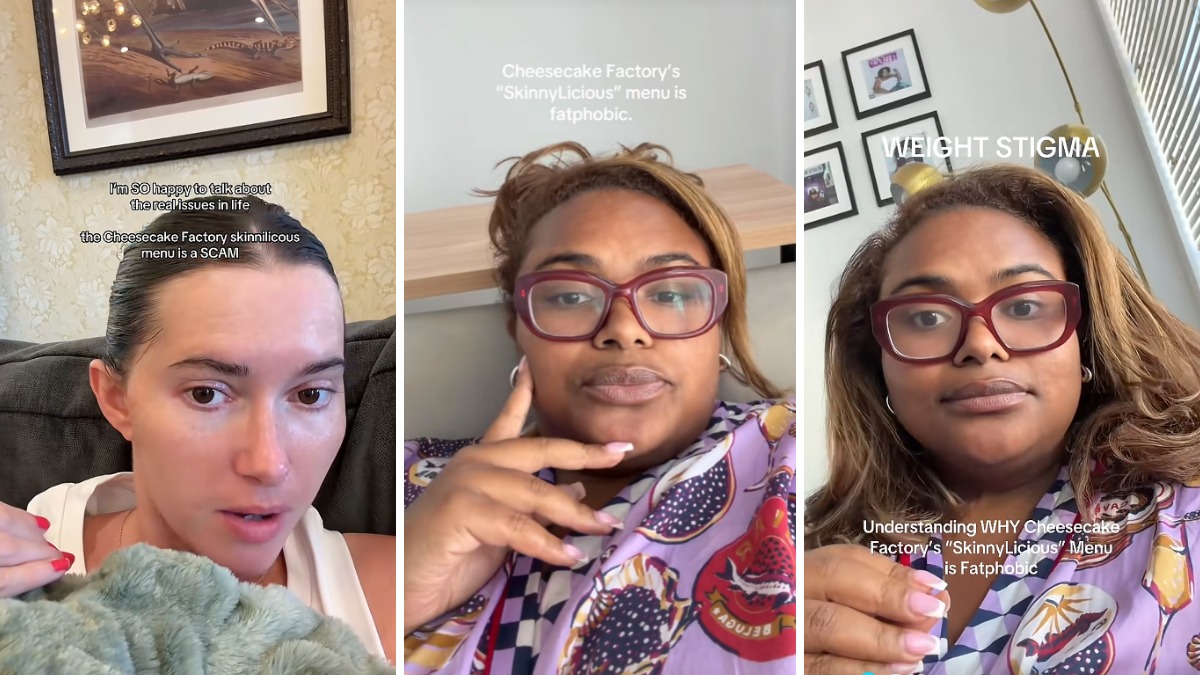
The Cheesecake Factory’s “SkinnyLicious” menu is under fire again after a TikTok creator called out the branding as misleading and more about marketing than actual health benefits. User @poutinesmom posted a video breaking down why she thinks the menu is a con.
She argues that the name “SkinnyLicious” frames lower-calorie options as the “virtuous” choice by tying them directly to being “skinny,” while the rest of the menu remains focused on indulgent, larger portions. Her main point? Customers are essentially paying more for smaller portions, not necessarily healthier ingredients. The video has sparked a fresh wave of debate online, with users divided over whether the menu’s branding is fatphobic or just a practical way to offer lighter options.
Some argue that the name reinforces outdated diet culture, while others see it as a harmless way to label lower-calorie meals. The discussion has even drawn in Cheesecake Factory employees, who’ve chimed in to defend the menu’s purpose and clarify how the dishes differ from the regular offerings.
The Cheesecake Factory ‘SkinnyLicious’ Menu is back in the spotlight
Poutine’s mom’s video starts with a blunt take: “So happy that we’re finally talking about things that I’m passionate about, such as the Cheesecake SkinnyLicious menu. Do I believe it’s fatphobic? No. Do I believe it’s a con? Yes.” She goes on to explain that the only real difference between the SkinnyLicious items and their regular-menu counterparts is portion size.
“It’s more expensive if you order it on the SkinnyLicious menu versus if you order it on the regular menu,” she says. Her argument is that the menu tricks customers into thinking they’re getting a “healthier” version of a dish when, in reality, they’re just getting less food for more money. She wraps it up with a simple conclusion: “That’s my two cents.” Her take has resonated with some viewers, who agree that the branding feels deceptive.
One commenter wrote, “A smaller portions menu is not fatphobic, calling it SkinnyLicious is though.” Another added, “It just pmo they have all the calories listed. Let me enjoy my food in peace.” Others, however, pushed back, arguing that the menu is a useful option for those looking to manage their calorie intake.
A Cheesecake Factory server said, “The skinny menu is actually a great choice for those looking for lower calorie, lower sugar alternatives that are made to be more personal opposed to our ginormous menu and portion sizes that are intended to be shared.”
The debate over the SkinnyLicious menu isn’t new
According to Thought Catalog, it’s been around for years, but it recently resurfaced thanks to another TikTok creator, Samyra Miller (@samyra), who argued that the name is inherently fatphobic. Her videos have gone viral. In the first video, she says, “The fact that it is named SkinnyLicious because it has “fewer calories” and “healthier options”… it is fatphobic. That is not an opinion. That is a fact.”
Samyra goes on to explain that the name reinforces the idea that thinness equals health, which she calls a “lie told to you by diet culture.” Her criticism digs deeper into the history of the SkinnyLicious menu, pointing out that it launched in 2012 with a marketing campaign that tied it directly to weight loss and fitness goals.
She highlights a Twitter contest from that year where the Cheesecake Factory encouraged customers to share their “skinnylicious resolutions” for a chance to win prizes like workout DVDs and swimsuit-ready gifts. “They wanted people to share their ultimate dream for getting fit,” she says. “It was always about equating skinny to better. It was always about creating guilt and shame around food and our bodies.”
The backlash to Samyra’s videos has been just as intense as the support
Some users argue that she’s overthinking a simple menu name, while others say the criticism is long overdue. Similar reactions are also seen on Poutine’s mom’s video where one commenter wrote, “Anyone saying SkinnyLicious is fatphobic needs to touch grass omg.” Another asked, “Can someone genuinely explain why the term ‘SkinnyLicious’ is fatphobic? As a fat person myself, I am lost af.”
The divide highlights how polarizing the conversation has become. Some see the menu as a harmless option and others view it as a symptom of deeper issues in how society talks about food and bodies.
Cheesecake Factory employees have tried to clarify how the SkinnyLicious menu actually works. One server explained that the dishes use different ingredients, like lower-calorie sauces or dressings, and often come with a side salad instead of heavier sides.
Another pointed out that the wraps, for example, don’t come with extra peanut sauce, which reduces the calorie count. “Those small changes really reduce the calories,” they wrote. “Also, veggies cost more than mash, so yeah, more expensive, but you pay for the reality.” Still, others argue that the portion sizes are the biggest difference, with one commenter noting, “Not true, and not all smaller. Calories come from changed dressing, or no fruit.”
The debate reflects broader conversations about how restaurants market ‘healthier’ options
Words like “skinny,” “guilt-free,” and “cheat meal” are increasingly being scrutinized for their implications about body image and diet culture. Some see this as a necessary evolution in how we talk about food, while others view it as unnecessary outrage over harmless marketing. As one TikTok user put it, “Whether you see ‘SkinnyLicious’ as outdated branding or perfectly harmless marketing probably depends on your perspective.”
For now, the discussion shows no signs of slowing down. The Cheesecake Factory’s menu has become a lightning rod for debates about body image, marketing language, and personal responsibility. And while the restaurant itself hasn’t responded to the latest wave of criticism, the conversation is a reminder of how much power a single word can hold.
(Featured images: Poutine’s Mom @poutinesmom and Samyra @samyra on TikTok)
Have a tip we should know? [email protected]
Follow The Mary Sue:
