


Domino’s driver spots something unusual about her most loyal customers. She says it could signal a recession: ‘Haven’t been delivering’
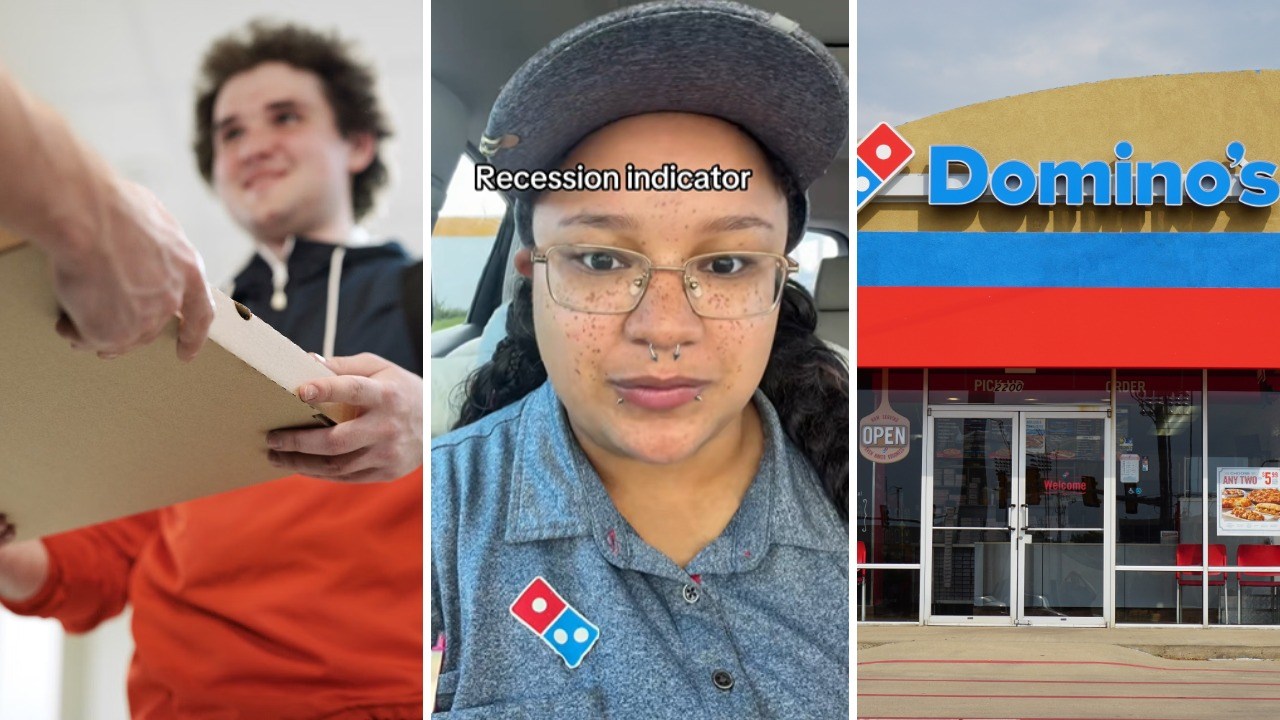
A Domino’s delivery driver has raised concerns about a possible economic slowdown after noticing a change in her regular customers’ ordering habits. While ordering pizza may seem like an ordinary expense, she believes the shift could reflect broader financial pressure on households.
In a TikTok video with 89,800 views, creator legit nesha (@flameheartsanrblx) shared what she considers a major recession warning. She claims that customers who once ordered Domino’s frequently have significantly reduced their purchases, although she did not provide sales records to support her observation.
Her claim prompted mixed reactions. Some viewers pointed to rising food prices and delivery charges, while others questioned whether fewer pizza orders could indicate an economic downturn. The discussion also raises questions about how changes in everyday spending relate to broader economic conditions.
Domino’s sales figures add another perspective
The creator explained that some of her regular customers used to order food approximately every other day. According to her, those same customers now appear to place orders only once a month. “One of the biggest recession indicators that I noticed is that my usual regular customers that I deliver to haven’t been delivering,” she said.
She added, “Like, mind you, these people order every other day. Now it’s like once a month. That is the biggest recession indicator right there.”
Viewers offered different explanations for the decline in orders. One commented, “Or they found better pizza.” Another pointed to additional delivery costs, writing, “It’s the delivery fee plus the tip. Fine paying a tip, but I’m not paying delivery fee too.”
Others focused on food prices. One viewer wrote, “I swear pizza costs at least $40-60 bucks now.” The creator responded, “Literaly i seen someone pay 40$ for 2 medium pizzas.” These comments reflect concerns about affordability, although individual purchases cannot establish average pizza prices. However, not everyone agreed with her economic interpretation. One commenter stated, “that is not a recession indicator.”
These reactions highlight an important distinction. Customers might reduce their spending because of financial pressure, but they could also switch restaurants, collect their orders, or cook at home. The creator’s experience does not establish which explanation applies.
Government figures offer some context for these concerns. According to the U.S. Bureau of Labor Statistics, prices for food away from home increased 3.5% between September 2025 and September 2026. Grocery prices rose 1.8% during the same period. That difference could encourage some households to reconsider how often they purchase prepared meals.
Domino’s own financial results provide another perspective. In its third-quarter 2026 report, released on October 13, the company reported a 0.3% increase in U.S. same-store sales, compared with 5.2% growth a year earlier. Although growth slowed considerably, the figures do not establish whether delivery orders specifically declined.
The distinction matters because same-store sales measure revenue changes at comparable locations, not how frequently individual customers order. Higher menu prices or larger purchases could potentially offset fewer transactions. Consequently, a restaurant might report sales growth even while some regular customers visit or order less frequently. Companywide results also cannot explain what is happening along one driver’s delivery route.
There is also a difference between financial pressure and an actual recession. The National Bureau of Economic Research considers several economic measures when identifying recessions, such as employment, income, and production. A decline in orders among one driver’s customers would not be sufficient evidence.
Still, repeat customers matter to businesses because frequent purchases contribute to predictable revenue. If customers begin ordering less often, businesses may notice weaker demand even before losing those customers entirely. For now, the creator’s observation raises questions about changing spending habits rather than confirming an economic downturn. Without knowing why her customers reduced their orders, it remains unclear whether financial concerns or other preferences explain the shift.
Have a tip we should know? [email protected]
Follow The Mary Sue:
