


Dad was sweating hard after getting convinced he was suspect in a $4 million money-laundering case. Then he tried to raise $300,000 for bond
They had plenty of instructions until he wanted to pay in person.
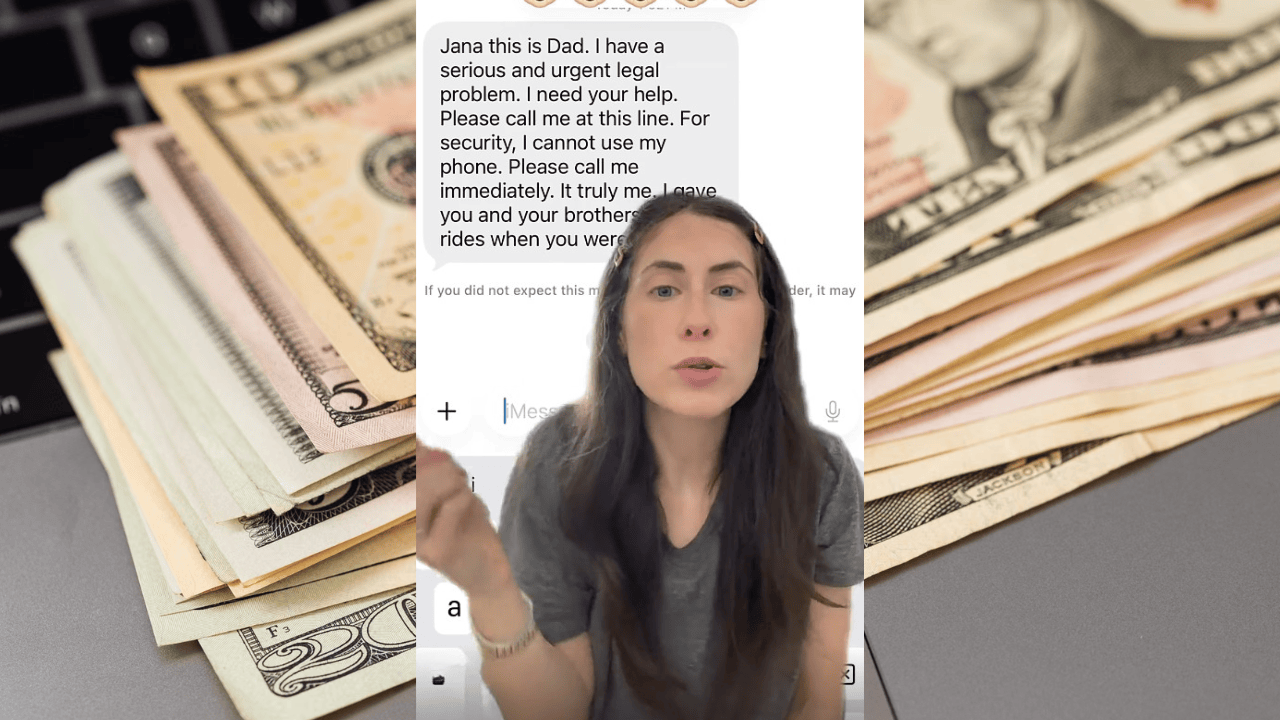
For three weeks, a father checked in with supposed FBI investigators every three hours. According to his daughter Jana (@janarosejana), he even gathered $300,000 for bond, but offering to deliver it in person finally made him question the people threatening to arrest him.
In a TikTok recounting the experience, his daughter said the supposed agents suddenly struggled to tell him where to bring the money. He turned to her for help, unaware that the investigation he was so scared of was actually a scam.
His daughter was a lawyer, but she was also on a flight from New York to Washington state. By the time his lengthy explanation reached her, she said she had about 10 minutes before the supposed investigators called again.
He thought cooperating would clear things up
Her dad texted from his elderly aunt’s phone, saying he couldn’t use his own for security reasons. He proved it was him by mentioning the “towel rides” he gave her and her brothers after their baths.
Since she couldn’t call from the plane, she requested an email. Roughly 50 minutes later, a lengthy message arrived from his band’s account with about 15 attachments, including a signed confidentiality agreement and purported court documents.
In his email, he said the trouble started with a call supposedly from American Express. The caller claimed someone had tried to buy a firearm and ammunition with a credit card in his name, then transferred him to someone posing as an FBI investigator.
The supposed agents told him his name and Florida address appeared on an offshore account holding $4 million. They considered him a suspect and insisted he cooperate without telling anyone about the investigation.
For three weeks, he attended Zoom meetings and reported his location every three hours. He thought he had earned the lead investigator’s trust, only to learn that he was supposedly now a defendant.
The callers showed him paperwork they claimed would freeze his assets and threatened to take him to a detention center in Washington. When they demanded $300,000 for bond, he said he wanted to deliver the money himself instead of transferring it electronically.
That was when he started questioning them. They seemed disorganized, changed their tone, and struggled to tell him where to bring the payment.
He contacted his daughter despite believing it broke his confidentiality agreement. After reading his email, Jana told him it was a scam and urged him to stop answering their calls, cancel his travel plans, and report it.
Jana said he wasn’t convinced and had already gathered the $300,000. In her account, she does not say he had paid the callers.
The secrecy was another warning sign
The details closely match an August warning from the FBI’s Boston division. It describes callers posing as financial institutions, claiming someone used the victim’s information to purchase firearms, and transferring them to fake FBI agents. They also instruct victims not to tell anyone about the conversations.
In this case, the father believed that the restriction applied even to asking his lawyer daughter for help. By the time he contacted her, he had already invested three weeks taking instructions from the callers.
The FBI recommends hanging up and contacting the agency through an official number you find yourself. Anyone targeted should also alert their financial institutions, save the messages, and report the incident to local police and the FBI’s Internet Crime Complaint Center.
His daughter, meanwhile, had questions about the $300,000 for another reason. The TikToker said her father had left her mother to cover much of the cost of raising three children and had not contributed toward her college or law school expenses.
For Jana, the surprise was that he could come up with $300,000 after contributing so little toward his children’s expenses. She said her laughter came from that family history and stressed that she wouldn’t find it funny if someone else’s loved one had been targeted.
Have a tip we should know? [email protected]
Follow The Mary Sue:
