


Boston Woman Promotes a Local Coffee Shop. Then She Finds Out Staff Were Ridiculing Her in Their Work Chat: ‘I Am Being Trash Talked’
Discriminatory attitudes.
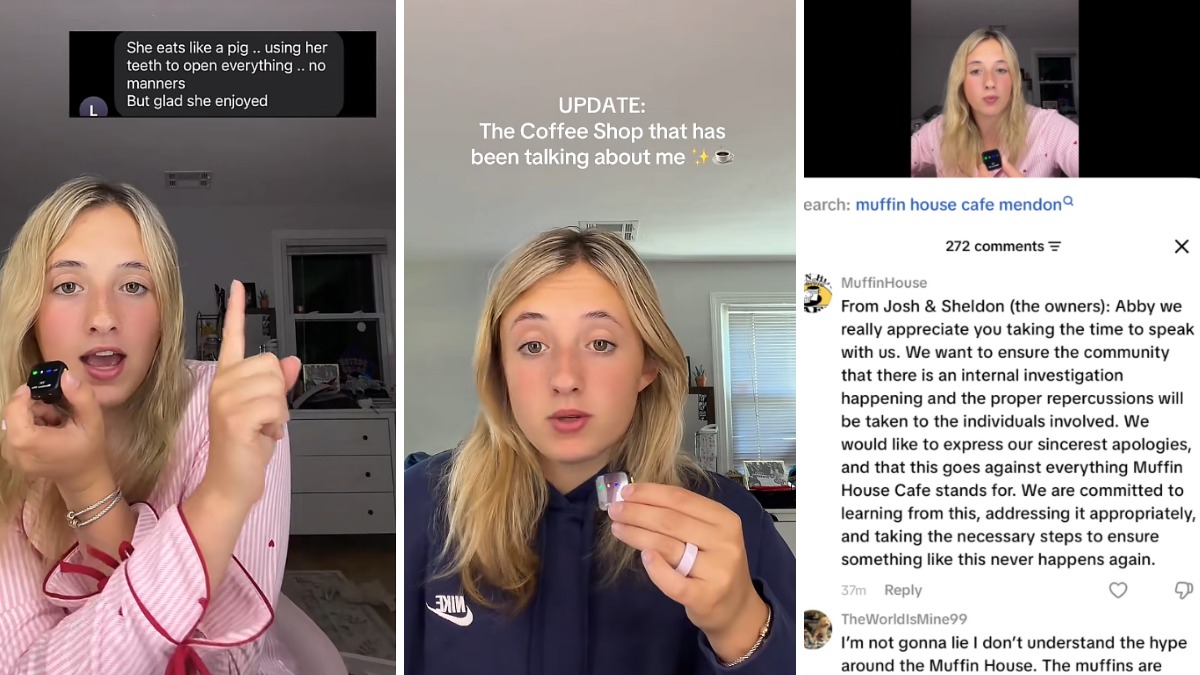
A Boston woman’s glowing review of a local coffee shop took a shocking turn when she discovered staff had been shaming her in their private work chat. Abby Rose (@abbyann880), a 20-year-old TikTok creator known for her food and lifestyle content, posted a video detailing how employees at Mendon Muffin House called her “a pig” and criticized her “no manners” after she shared a positive review of their food.
The revelation came via an anonymous email containing screenshots of the group chat, sparking outrage online and raising questions about workplace professionalism, customer respect, and the power of viral reviews. Abby’s review showed her and a friend enjoying the coffee shop’s lattes and sandwiches, giving the experience a perfect 10/10. The clip was lighthearted, with Abby calling the food “amazing” and praising the shop’s vibe.
But behind the scenes, staff were apparently laughing at her eating habits, despite her glowing endorsement. Calling them out, Abby expressed disbelief that her support for a local business had been met with such disrespect. “I was doing a positive thing for your business,” she said. “I said nothing bad, adding, “I only had positive things to say for your place.” The owners later met with her, apologized, and promised an internal review.
But the damage was already done
Commenters on TikTok were quick to call out the coffee shop’s behavior, with many vowing to take their business elsewhere. The incident has reignited conversations about how private conversations can quickly become public scandals, especially when social media is involved. Abby’s experience mirrors a growing trend of “lunch shaming,” where people are judged for how they eat, often in public or semi-public settings.
According to Yahoo Health, while the term originally referred to schools singling out students who couldn’t afford meals, it has evolved to include broader criticism of eating habits, often amplified by smartphones and group chats. Experts say this kind of behavior can have serious consequences, particularly for young people, who may develop anxiety around eating in social settings or even avoid meals altogether after being targeted.
The parallels between Abby’s story and school lunch shaming are striking. In both cases, private conversations become public knowledge, leading to humiliation. Psychologists warn that this kind of digital scrutiny can make people feel constantly observed, turning everyday activities like eating into sources of stress.
Vanessa Scaringi, a psychologist specializing in eating disorders, said that school cafeterias can sometimes feel like “a paparazzi-filled diner,” where students worry about being photographed and mocked. The same dynamic seems to have played out at Mendon Muffin House, where Abby’s positive review was met with behind-the-scenes ridicule.
Employees engaging in unprofessional behavior is never ok
While the owners of Mendon Muffin House issued an apology and promised to address the issue internally, many TikTok users were skeptical. One commenter joked, “An internal investigation? Y’all are literally in the group chat,” while another said, “This is giving ‘we investigated ourselves and concluded we did nothing wrong.’”
Others pointed out that the shop’s high prices and allegedly overrated food made the situation even more frustrating. “I’d love to support you because I hate cancel culture,” one person wrote, adding, “but unfortunately I’m a messy eater.”
The incident also raises questions about the ethics of anonymous tips. While Abby was clearly upset by the staff’s comments, some online speculated that the whole thing was staged for engagement. Regardless, the screenshots provided proof of the employees’ behavior, leaving little room for the coffee shop to downplay the situation.
The fact that Abby had posted multiple positive reviews of the shop in the past only made the staff’s reactions seem more unjustified. As one commenter put it, “Wait but this is such a nice video. Why would they be mean?”
For Abby, the experience has been a mix of frustration and relief
She told her followers that while she appreciated the owners’ apology, she’d prefer to visit a different location in the future. The episode serves as a cautionary tale for businesses about the risks of unchecked and toxic workplace culture, especially in an era where a single viral post can expose even the most private conversations.
Beyond the coffee shop drama, Abby’s story underscores a broader cultural issue: the growing scrutiny of how people eat, whether in restaurants, schools, or even at home. Experts say this kind of judgment can have long-term effects, particularly on young people who may already feel self-conscious about their bodies or eating habits.
Catherine Bradshaw, a professor at the University of Virginia, found that school cafeterias are among the most common places for bullying, with students often using smartphones to document and mock their peers. The same technology that allows creators like Abby to share their experiences can also be weaponized to shame and humiliate.
Parents and educators are increasingly aware of the problem, with some schools implementing stricter phone policies during lunchtime to reduce opportunities for harassment. But as Abby’s case shows, the issue isn’t limited to schools. The key, experts say, is fostering a culture of respect – one where employees, students, and customers alike feel safe from ridicule, whether in person or online.
(Featured images: Abby Rose @abbyann880 and MuffinHouse @muffinhousema on TikTok)
Have a tip we should know? [email protected]
Follow The Mary Sue:
