


Amazon Workers Asked for a Raise to Cover Soaring Rent, but Management Handed Them an Inflatable Soccer Goal Instead
You can’t make this up.
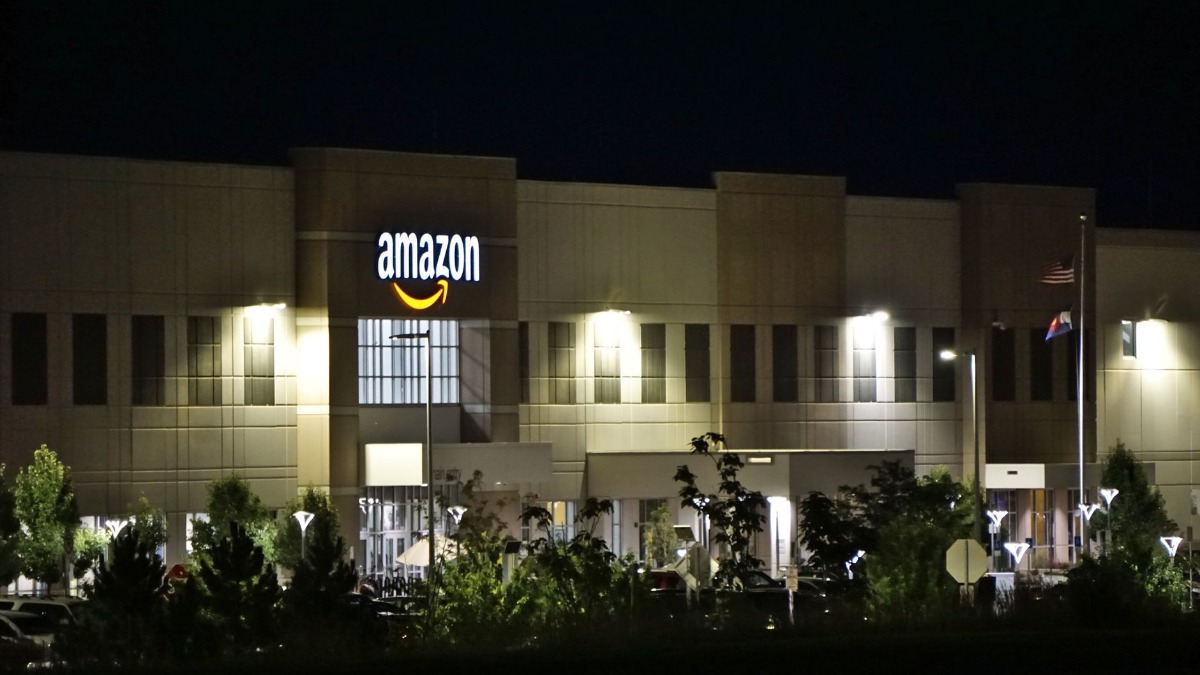
Amazon warehouse workers just got a reality check. A video posted on X by Wall Street Apes shows employees at an Amazon facility being handed an inflatable soccer goal instead of the pay raise they requested. The clip, which racked up over 500,000 views, has turned into a lightning rod for frustration over how companies handle worker compensation.
According to The Daily Dot, the video starts with an employee holding up the inflatable goal and asking viewers, “Here at Amazon, we ask for raises, but you know what we get?” The answer is the giant plastic goalpost, which the worker claims was management’s response to requests for better pay.
Another person in the video shares a similar story, saying their workplace threw a pizza party instead of approving wage increases. The post points out that workers at the warehouse earn $15 an hour, which they say barely covers rent, bills, and taxes. Almost everything they earn in a day, they claim, goes straight to those expenses.
Reactions on X have been split
One person wrote, “Thanks for the trampoline, boss, but my rent won’t go down just because I jump around a bit. If you really want us to be happy, raise our wages first.” Another user said, “As a former Amazon employee, that’s exactly what it is…and after working you like dogs.” Not everyone is sympathetic, though. Some commenters have told workers to just find another job if they’re unhappy.
This isn’t the first time Amazon has faced criticism for how it treats its workforce. The company has a long history of scrutiny over workplace safety and injury rates. The Guardian reports that in 2019, Billy Foister, 48, died after suffering a heart attack inside one of Amazon’s warehouses.
Managers were accused of telling staff to “get back to work” instead of addressing the emergency. When another worker died at a distribution center in Troutdale, Oregon, Amazon claimed the death was due to an “existing medical issue” and denied reports that employees were told to return to their stations.
Amazon’s in-house first aid program, AmCare, has also come under fire
A leaked training PowerPoint from 2022 outlined “best practices” for the program, including how to “maximize AMCARE Utilization,” which it defined as the percentage of employees who pass through without needing to see a workers’ compensation doctor.
The slides advised against recommending rest for injured workers and encouraged employees to report to AmCare early. Amazon dismissed the document as outdated and said it never reflected company policy, but the damage was done. Juan Loera-Gomez, a 46-year-old worker at an Amazon sortation center in California, experienced it firsthand.
In October 2024, he was assigned to work alone in an area that usually required three people. After hours of moving 50 pound-boxes, he injured his back and shoulders. When he reported the injury, he was told to keep working. It wasn’t until November that he was seen by a doctor and placed on light duty. Over the next six months, he was diagnosed with multiple strains, sprains, and a lumbosacral disc disease.
Loera-Gomez’s story took a darker turn when he started organizing with other workers to push for better safety conditions. In May 2025, he was told the company could no longer accommodate his work restrictions and was placed on unpaid leave. By January, he was fired. “I was later fired by a single email. What Amazon did was very hard on my family. We depended on my job to pay for our house, food and monthly expenses for my children.”
Amazon has denied Loera-Gomez’s claims
It called them false and stated that the truth will come out in court. But Loera-Gomez’s case isn’t an isolated incident. Lashone Brown, a worker in Las Vegas, filed a lawsuit in February alleging he was fired while recovering from surgery for two work-related hernias. Another lawsuit in California, which went to trial in January 2026, involves former Amazon workers suing over heat conditions in warehouses. Amazon denies these allegations, insisting employee safety is its top priority.
The numbers tell a different story. In 2019, Amazon’s serious injury rate was 7.7 per 100 employees, nearly double the industry average. The company has since touted a 43% reduction in its global recordable incident rate since then, but the numbers still remain above warehouse industry averages.
In 2024, Amazon employed 39% of U.S. warehouse workers but accounted for 56% of all serious injuries in the industry. The company has disputed these reports, questioning the methodology behind them.
Amazon’s founder Jeff Bezos once pledged to make the company “Earth’s safest place to work,” with a goal to cut injury rates in half by 2025. By its own numbers, it fell short. In 2021, the company reported a recordable incident rate of 7.6 per 100 employees. By 2025, that number had dropped to 5.
Federal oversight of workplace safety has shifted under the current administration
The Occupational Safety and Health Administration (OSHA) launched its first multisite investigation into Amazon in over a decade. In December 2024, the agency reached a settlement with the company to resolve multiple hazardous working conditions cases.
This included ongoing meetings and assessments of Amazon’s progress, but critics argue it didn’t go far enough. OSHA conducted 20% fewer inspections from April to September 2025 compared to the same period in 2024, and workplace health and safety penalties have dropped 45% under the current administration.
Amazon’s political influence has grown alongside its workforce. The company donated $1 million to the current President’s inaugural fund, a significant increase from the $58,000 it gave for the 2017 inauguration.
On X, the debate over the inflatable soccer goal rages on. Some users are calling it a perfect metaphor for corporate America’s approach to worker compensation – flashy distractions instead of real solutions. When rent is skyrocketing and wages aren’t keeping up, a bounce house isn’t just tone-deaf – it’s a slap in the face.
(Featured image: Joshua Brown on Pexels)
Have a tip we should know? [email protected]
Follow The Mary Sue:
