


Alaska woman opens a container of fresh Red Velvet cake. Then something dangerous appears between the layers: ‘It’s not hair in your cake’
A public service announcement.
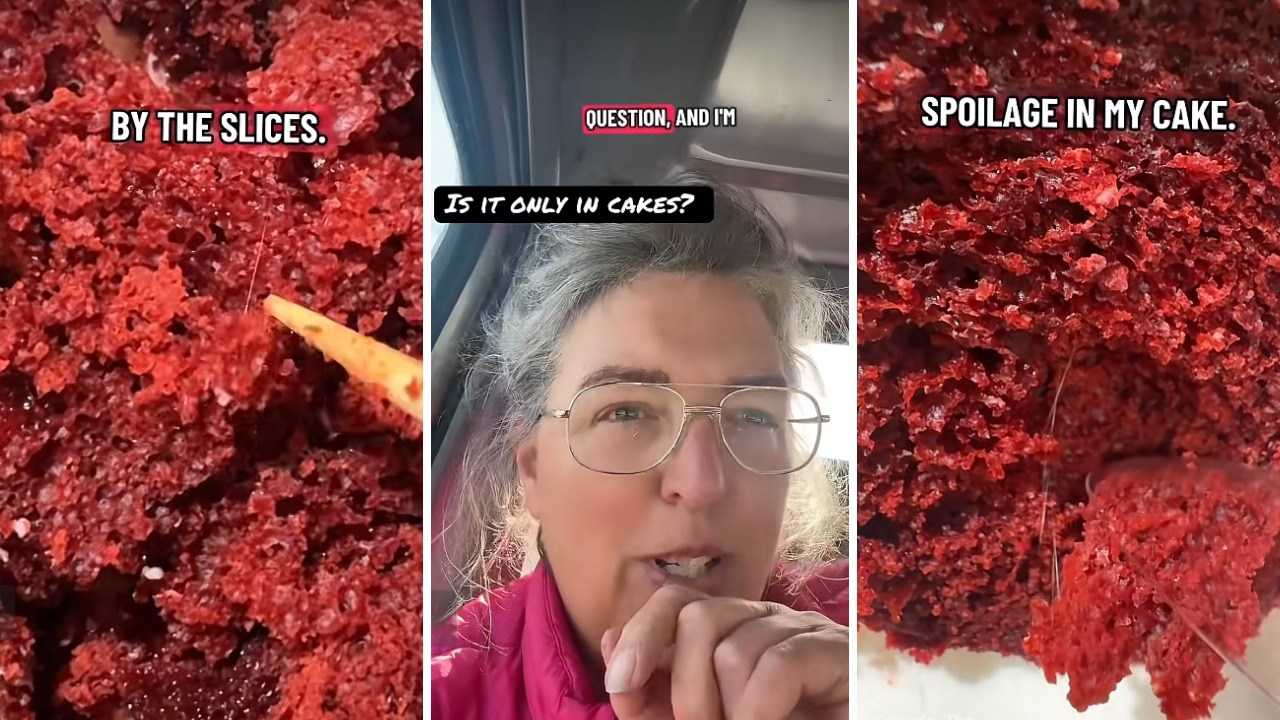
You might think that something stringy in your dessert is just stray hair, but a recent viral discovery shows it could be something much more sinister. Alaska-based content creator, LittleHouseBigAlaska, @littlehousebigak on TikTok, shared a startling look at what happens when a slice of red velvet cake goes bad. It is not a pleasant sight, and it is certainly not something anyone would want to find in their afternoon treat.
After purchasing a slice of cake from a local restaurant, the creator noticed thin, stretchy strands appearing between the layers. In the video, she first uses a spoon and then a clean bamboo skewer to pull the crumb apart, revealing web-like threads that looked almost like spider silk. She quickly clarified the situation for her viewers, stating, “No, I didn’t find a piece of rope in my cake. I found rope spoilage in my cake.”
This is a bacterial issue that can plague baked goods if they are not handled or stored correctly. The bacteria, often linked to species like Bacillus, are incredibly resilient. They can actually survive baking temperatures as high as 400°F. Because the spores remain dormant during the baking process, they do not show up until the product has had time to sit in a warm, moist environment.
There are a number of ways to check for rope spoilage in baked goods
LittleHouseBigAlaska says cakes often develop distinct smells that are sweet, similar to rotting fruit. Following that scent, one might see those telltale wispy threads when you break the cake apart. It is a gross, eye-opening experience that has clearly resonated with viewers, racking up 2.5 million views and thousands of comments. Many people admitted they had likely eaten similar things in the past, assuming the texture was just a bit of sticky frosting or a fluke of the baking process.
She further explains that rope spoilage is a well-documented, if under-discussed, issue in the world of food science. According to BAKERpedia, these spore-forming bacilli, such as Bacillus subtilis and Bacillus licheniformis, are tough enough to laugh at standard oven temperatures. Once inside your food, they wait for the perfect conditions to germinate.
The ideal environment for these spores is a temperature range between 85°F and 105°F, especially when humidity is high. When the bacteria begin to digest the starch and proteins in the bread or cake, they produce enzymes that destroy the crumb structure. Within 24 to 48 hours, the food can become a stringy, foul-smelling mess.
LittleHouseBigAlaska also made sure to distinguish rope spoilage from the other unpleasant experience of finding hair in food. She said, “It’s not hair in your cake, that’s the rope spoilage. And that spoilage can make you sick. It can give you food poisoning and you’re gonna barf and have all the charmings symptoms of food poisoning.”
The creator emphasized that this is not just about having a bad dessert experience
Consuming food affected by this bacteria can lead to food poisoning, which brings along all the unpleasant symptoms you would expect. In one of her many follow-up videos on the same issue, she addressed the concerns of her audience, noting that she had personally contacted the restaurant to ensure they were aware of the issue.
LittleHouseBigAlaska made it clear that her goal was education, not destruction. She explained that she wants to support small businesses rather than ruin them, especially since she already addressed the red velvet cake problem privately with the concerned establishment. The restaurant pulled the product from the shelves.
For those in the baking industry, preventing this requires a strict focus on sanitation rather than just relying on the oven. Standard detergents often fail to break down the protective spore coat, so bakers frequently turn to chlorinated or peracetic acid-based sanitizers to clean their equipment.
Controlling the cooling process is another critical step. If a bakery allows a loaf or cake to cool too slowly in a humid environment, they are essentially rolling out the red carpet for bacterial growth. Experts suggest dropping the core temperature of baked goods to below 80°F in under two and a half hours to keep things safe.
Another effective strategy involves chemistry
Spores struggle to germinate in environments with a low pH, so many bakers incorporate vinegar, cultured whey, or other acidic ingredients to build a chemical firewall. It is also common practice to conduct regular audits on incoming ingredients like flour, as these are often the primary carriers for the spores.
Ultimately, this viral moment serves as a powerful public service announcement. The creator’s calm, authoritative style helped turn a personal takeaway mishap into a lesson on food safety that reached millions. It reminds us that even when food looks and tastes acceptable at first glance, there can be invisible risks hiding between the layers.
As she put it, “We don’t have to be scared, we just have to be educated.” By staying vigilant and knowing what to look for, you can make smarter choices about the food you bring to your table. Whether you are a professional baker or just someone grabbing a slice of cake, understanding these hidden risks is a top-tier way to keep your kitchen – and your stomach – safe.
Have a tip we should know? [email protected]
Follow The Mary Sue:
