


Bisexual, biracial, feminist: how the re-release of The Blood of the Vampire oversells its heroine
In 2026, readers deserve explicitly queer stories, not rebranded hints.
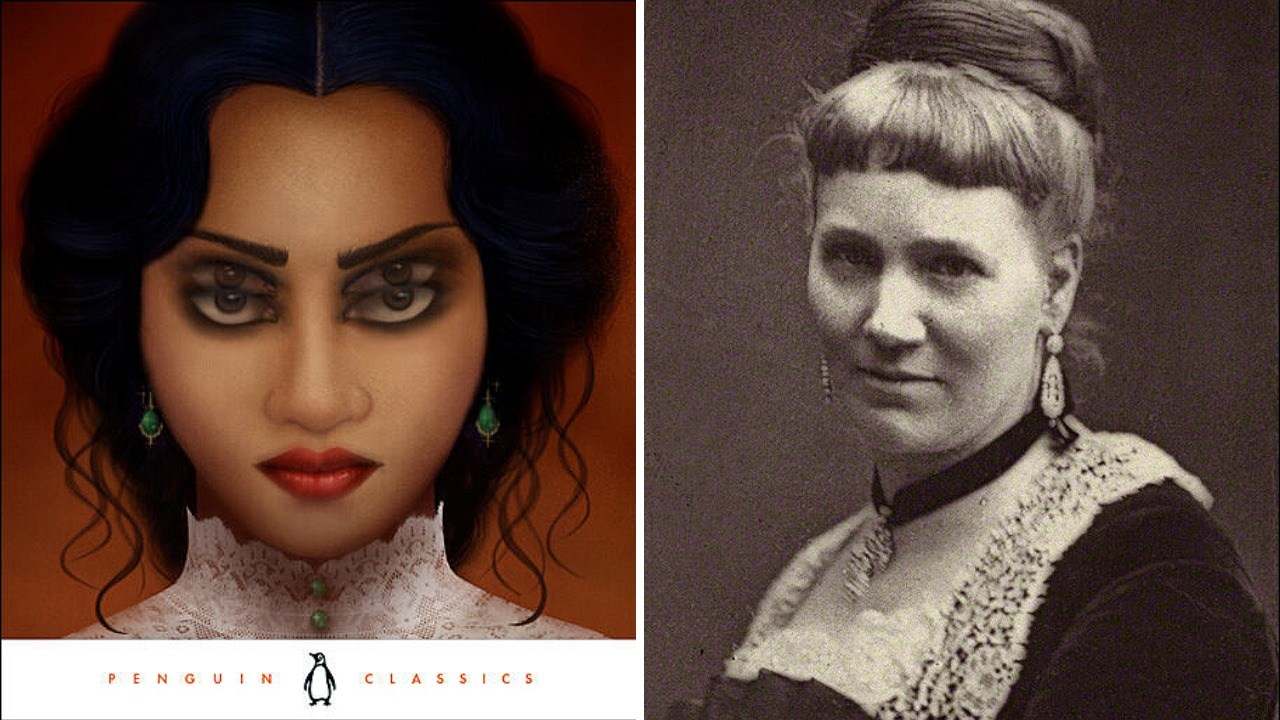
Florence Marryat’s The Blood of the Vampire is back on shelves, and the pitch is hard to resist. The new Penguin Classics edition, with an introduction by Rachel Stewart, sells it as a nineteenth-century novel about a bisexual, biracial, feminist psychic vampire, published the same year as Dracula by a “forgotten legend” of Victorian horror. It is a tidy, shareable hook, and it has clearly worked.
I’m actually glad classics are getting read again, especially underrated stories. Marryat was a popular writer in her day whose work then fell out of critical favor for more than a century, which makes this novel a curious historical artefact. A Gothic novel about a young woman accused of draining the life from everyone who loves her, published in the Dracula year, is worth examining. Scholars have also made serious queer readings of the text, and those readings deserve respect.
But a scholarly reading is an argument, and a cover is a promise. The marketing for this re-release tells readers they are getting representation, and what the novel actually offers is subtext, anxiety and a good deal of ugliness. Each claim in the copy is defensible if you squint, which is exactly what makes it slippery. Stack up “bisexual”, “biracial”, “feminist” and “ahead of her time” and you have implied that Marryat set out to write a character like this, and that the book is on her side. That is a low-key misleading way to sell a novel, and the readers it misleads most are the ones it claims to celebrate.
What the text actually gives us
Harriet Brandt is the daughter of a vivisecting scientist and a mixed-race mother, and the novel treats her as a kind of hereditary hazard. Her intense attachments to the women around her are written as hunger, clinging, and danger. They are never written as an identity or desire that the book is willing to name. When she is drawn to a man, the same machinery applies.
At most, that is queer subtext, and subtext is not the same thing as queer representation. A reader can go looking for same-sex intimacy in the way Harriet’s hunger is written, and some have, but that is a reading brought to the text, not something the book ever states. The copy skips that entirely. It states “bisexual” as a plain fact about the character, and the audiobook blurb says Marryat asks us to sympathise with the vampire and, by extension, the communities she belongs to. That is a lot of authorial intention to read into a book whose heroine’s desires are indistinguishable from her curse. A reader who picks this up expecting a bisexual heroine will find a woman the narrative treats as a danger to everyone who loves her, and whose desire, if it is queer at all, is presented as something to fear.
The trouble with “biracial” as a selling point
The same flattening happens with race. “Biracial” appears in the marketing as a modern, almost aspirational trait, listed alongside “feminist” and “queer.” In the novel, Harriet’s mixed heritage is the explanation for her monstrousness. Her mother’s race and the Caribbean setting of her origins are folded into the horror. And the person doing the folding was a white Englishwoman in the 1890s, imagining a woman of color from the outside. A portrait drawn that way was always going to be racist, and this one is. The racism is not a quirk at the edges of the book. It is doing the plot’s heavy lifting.
It is tempting to excuse a book like this by its date. Context does explain where the pseudoscience of heredity and imperialist assumptions come from. But it doesn’t excuse them, nor does it shrink them. The racism in this novel is shocking even by the standards of the 1890s, and “it was the era” stops being a defense when the text goes this far. The marketing’s claim that the novel offers a critique of racism strains credibility when the book’s central anxiety is a “tainted” bloodline.
Who the sell is for, and who it hurts
Read as a whole, the copy reads like a pitch to the BookTok crowd — sapphic and Gothic, the kind of thing a reader who loves Ethel Cain might pick up next. This is not that book. Whatever pleasures The Blood of the Vampire has, a lush, affirming queer gothic is not one of them, and nothing in the sales copy I have seen prepares a reader for what is.
The readers most likely to be caught out are readers of color. Someone who sees “biracial” and “queer” in the same sentence has every reason to expect a heroine they can recognise themselves in. What they meet instead is a book that builds its horror on a mixed-race woman’s blood, written by a white author who imagined that woman as a menace. Racism runs through the text rather than sitting at its edges, and a reader who dives in unaware gets it with no warning.
A content note costs a publisher nothing. Selling a book with an identity checklist and no honest word about how it treats the people on the list is a choice, and the readers are the ones who pay for it.
Subtext isn’t enough in 2026
For writers in 1897, subtext was often the only door available, where queer lives could not be named in print without risk. So authors, and later readers, learned to read between the lines. That skill is worth honouring, but it was a workaround for censorship.
In 2026, we do not have to settle for it; we can write explicitly queer characters, with names for their desires, interior lives, joy, and futures, and plenty of writers already do. Selling a century-old coded vampire as the representation on offer suggests that hints and ambiguity are the best queer readers can hope for, and that we should be grateful for the scraps. We have been decoding for generations. We deserve stories that do not make us decode.
This is not an argument against reissuing old books. It is an argument about where the marketing energy goes. A publisher that wants to speak to queer readers can put that same energy behind living writers telling explicitly queer gothic stories, including ones with Black and mixed-race characters written by people who know that experience from the inside. Read Marryat, by all means. But read those too, and do not let a rebrand stand in for them.
This is an opinion piece. The views expressed in this article are those of just the author.
Follow The Mary Sue:
