


A Texas Employee Quit Her Job Mid-Meeting, Then Said Her Manager Repeatedly Told Her ‘Those Are Your People’
"I don't feel comfortable working for a company that doesn't take racism seriously."
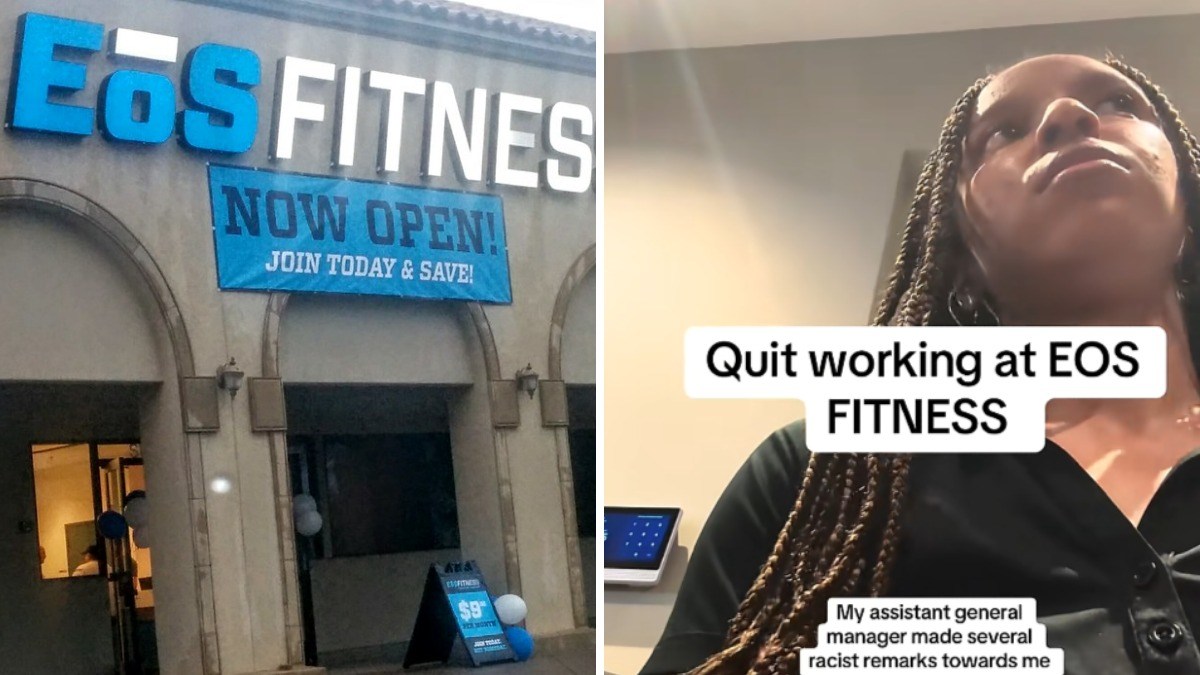
A Texas woman filmed herself quitting her job in the middle of a team meeting, saying she could no longer work somewhere that didn’t “take racism seriously.” According to The Nerd Stash, the woman, who posts as Leeleebeauuty1, told her manager, “Not gonna lie, today is actually my last day,” before explaining she’d reported the assistant general manager for racial remarks multiple times.
She said that when asked about a preferred wing flavor, the assistant general manager responded, “No, I don’t eat chicken. That’s for colored folk.” She also said he made a comment about Black people “sitting in the back” while getting up from her chair, and told her she should handle Black customers herself because “those are your people.”
Leelee said she wasn’t the only employee who’d experienced racism at the location, and that the situation had left her feeling “awkward” in her role despite having once hoped for a promotion there. She ended the conversation by calling him racist as she headed for the door.
What she’s describing could meet a real legal standard
What Leelee describes, if accurate, falls squarely into territory covered by federal and state employment law. Title VII of the Civil Rights Act of 1964 makes racial harassment that creates a hostile work environment illegal for employers with 15 or more employees, and Texas has its own parallel law, the Texas Labor Code’s Chapter 21, often called the Texas Commission on Human Rights Act, that mirrors those protections at the state level.
Quitting doesn’t automatically end an employee’s legal options, either. Under a doctrine called constructive discharge, a resignation can be treated as if the employer fired the employee, if the conditions were so intolerable that a reasonable person in the same position would have felt forced to quit. Texas courts look at factors like repeated harassment or humiliation calculated to push someone out, though attorneys who handle these cases note Texas courts apply the standard strictly and require strong evidence.
Anyone in this kind of situation has to move fast on the legal side. A discrimination charge generally has to be filed with the EEOC within 180 days of the last incident, extended to 300 days in states like Texas that have their own anti-discrimination agency. Filing that charge is a required first step, an employee can’t go straight to a lawsuit under Title VII without it, and once the agency finishes its review, the employee has to request a right-to-sue letter to move the case into court.
If a claim like this succeeded, federal law caps how much an employee can recover. Combined compensatory and punitive damages under Title VII are capped at $50,000 for employers with 15 to 100 employees, rising to $100,000, $200,000, and $300,000 as the employer’s size increases. Back pay and front pay aren’t included in that cap and can be recovered on top of it, and punitive damages specifically require showing the employer acted with malice or reckless indifference, not just that the harassment happened.
At this point, it’s not clear whether Leelee plans to pursue legal action. Neither the employer nor the accused assistant general manager has publicly responded to her claims.
Have a tip we should know? [email protected]
Follow The Mary Sue:
