


A Florida Woman Says She Found Plastic Bits in Her Pizza Hut Box, Then Something Worse: A Spider Allegedly Baked Into the Crust
"Never want to eat fast food ever again."
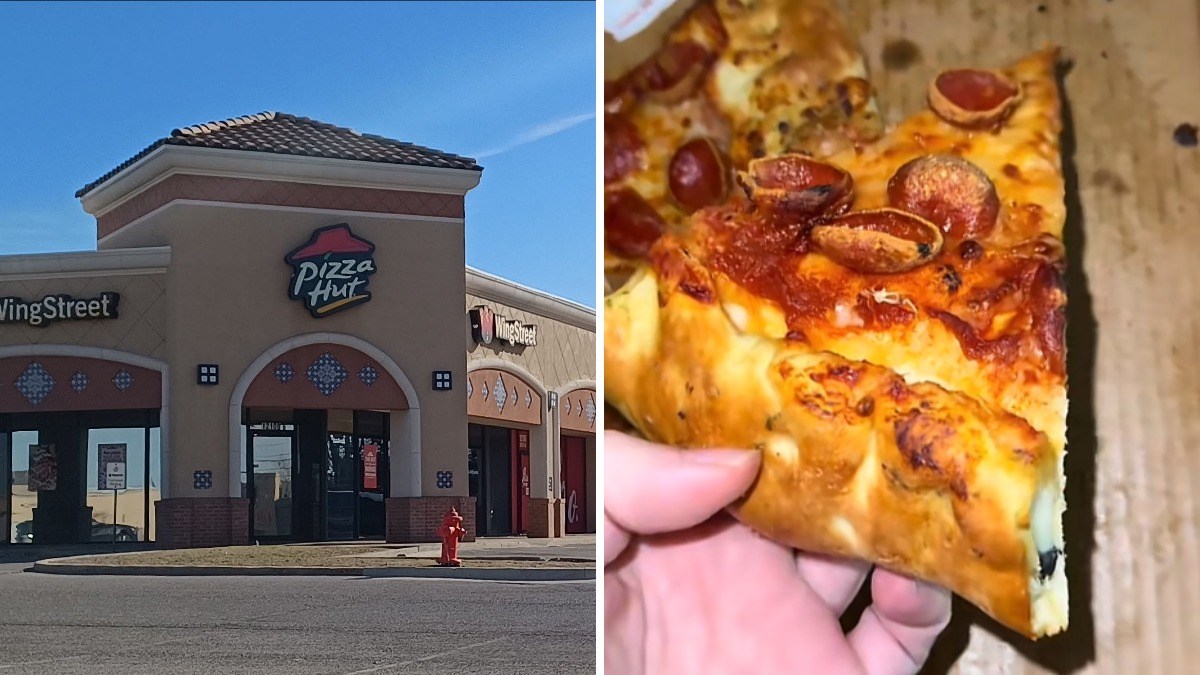
A Florida content creator says she found a spider baked into the crust of a Pizza Hut pizza, prompting her to call a health inspector. According to BroBible, the woman, who posts as Tink, said she and another person first noticed small plastic bits scattered in the box before spotting something worse.
“These are little plastic bits of plastic. We found three of them,” she said in the video. She then held the pizza up for closer examination. “As we were looking at them to see if there was any more plastic in it, we found a spider cooked into the pizza,” she added. She threw down the slice she was holding, though she said she’d already eaten enough of the pizza to be full before noticing the issue.
In an update, Tink said health inspectors had been notified and the location was being inspected. “This experience has made me never want to eat fast food ever again,” she said. “I will be eating food cooked at home for the foreseeable future.”
What Federal Law Actually Says About This
Some viewers offered an alternate explanation for the plastic-looking bits, suggesting they were actually burnt carbon buildup from unwashed baking pans, though none disputed the spider itself. That theory lines up with what inspectors have documented at other Pizza Hut locations. A Pizza Hut in Ocala, Florida, temporarily closed in 2024 after failing a state health inspection with four violations, one marked high priority; it passed a follow-up inspection two days later.
A separate Pizza Hut location in Perryville, Missouri, was cited that same year for “excessive burnt on food-like debris” baked into its pans, along with products kept past their discard date. Whether an incident like this violates federal law depends on specific criteria the FDA has laid out. Under Section 402(a)(3) of the Federal Food, Drug, and Cosmetic Act, 21 U.S.C. § 342, a food is legally considered adulterated if it contains any filthy, putrid, or decomposed substance, language that explicitly covers insects and insect fragments.
A separate provision, Section 402(a)(4), independently makes food adulterated if it was prepared or held under unsanitary conditions that could lead to contamination, meaning a violation doesn’t require proof that anyone actually got sick. For hard or sharp foreign objects specifically, the FDA generally treats a ready-to-eat food as adulterated if the object measures between 7 and 25 millimeters, a range based on choking and injury risk.
Softer contaminants, like a spider baked directly into dough, fall under the broader filth provision instead, since the concern there is contamination rather than a physical hazard. The FDA does allow limited exceptions for naturally occurring, unavoidable defects at very low levels, tracked through what it calls Defect Action Levels, but those thresholds exist for things like a few insect fragments per unit weight, not a visible cooked-in spider or evidence of unwashed equipment.
The outlet said it reached out to Tink and Pizza Hut for more information.
Have a tip we should know? [email protected]
Follow The Mary Sue:
