


Sacha Baron Cohen Resurrects ‘Ali G’, Triggering a Fierce Battle Over Whether the Character Is Mere Satire or a Blatant Racist Relic
Harmful caricatures.
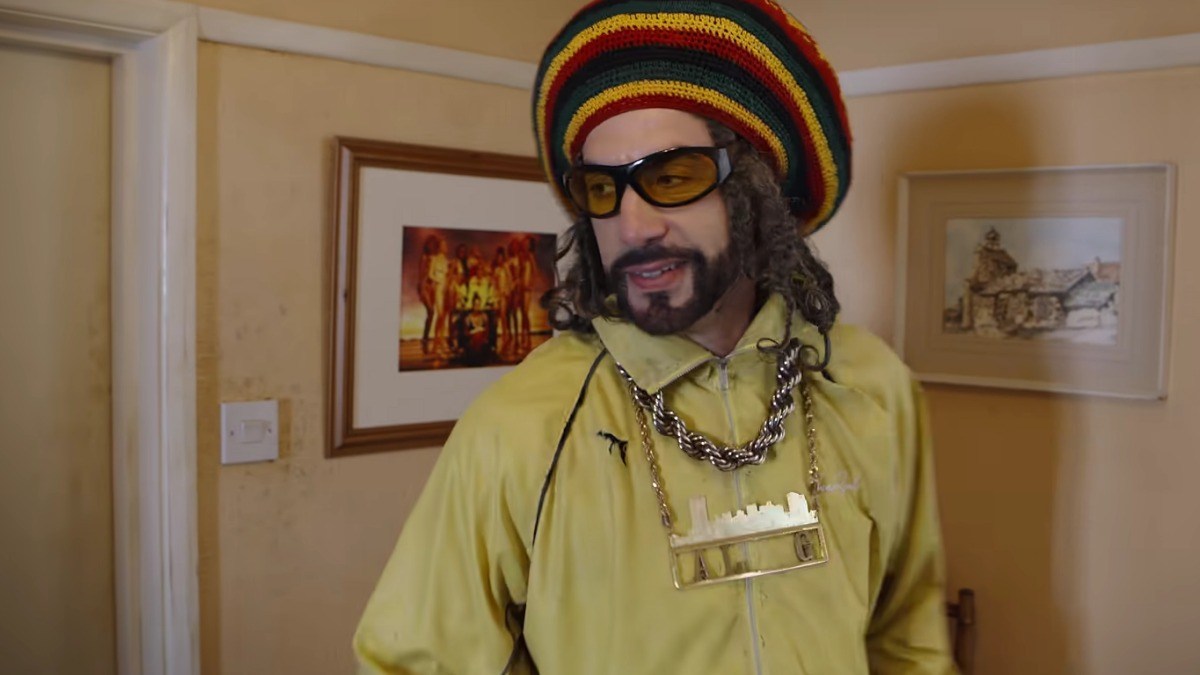
Sacha Baron Cohen is officially bringing back another of his popular characters, Ali G, but the revival is sparking a massive, heated debate about whether the persona remains a valid tool for satire or if it’s simply a dated, racist relic. According to The Hollywood Reporter, the upcoming mockumentary, titled Ali G: Who Iz I?, is set to hit theaters on October 23, marking Cohen’s directorial debut.
While some are excited to see the return of the dreadlocked, tracksuit-wearing character, others are actively fighting to keep the film off the big screen. The controversy reached a boiling point thanks to an organized effort by NewsCord, a U.K.-based watchdog site that uses AI to track media bias. The group has rallied its members to send more than 37,000 emails to cinema chains across the globe, urging them to boycott the Amazon–MGM Studios production.
The campaign specifically targets major theater chains in the U.K., including Odeon, Cineworld, Vue, Everyman, and Showcase, while also extending its reach to exhibitors in the U.S., Canada, Australia, and the Middle East. The core of the argument against the film is that the character of Ali G has historically served as a harmful caricature of Black British and Jamaican culture.
Critics argue that Cohen uses the guise of satire as a cover for enforcing racist stereotypes
This perspective isn’t entirely new. The campaign highlights a 2000 report where Black British comedians described the character as an “alibi for racism.” Complex reports that the late comedian Felix Dexter famously noted that the character allowed liberal middle-class audiences to laugh at Black street culture while maintaining a sense of political correctness.
The criticism intensified significantly after the release of the film’s trailer, which features Ali G in his signature look, complete with fake dreadlocks and a Rastafarian hat. In the footage, the character makes jokes about wanting to be an “absent” father, a choice that has drawn sharp condemnation online.
British writer and broadcaster Afua Hirsch shared her thoughts on Substack, stating, “Black people don’t dress like that anymore. Even white people imitating Black people don’t talk like that anymore. Sexualizing black women and casually mocking working class women is not accepted anymore. Baron Cohen’s so-called ‘humor’ is a crude compound of all these things.”
Cohen seems to be leaning into the controversy
Despite the loud opposition, when he shared the trailer on X, Cohen wrote: “In an age where a comedian’s career can be ended by a single un-PC joke, I thought I’d play it safe and bring this guy back.” It’s an interesting take, though it’s worth noting that the landscape of comedy has shifted quite a bit in recent years, and the threat of a single joke ending a career doesn’t seem to hold as much weight as it perhaps did in the past.
Even so, the comedian has found support from high-profile figures. NBA star Kevin Durant posted his excitement on Instagram, writing, “My brother Sacha Baron Cohen is back. Let’s go.” Rapper A$AP Rocky has also voiced his support for the project.
The pushback has faced some hurdles, including a bit of misinformation. NewsCord initially claimed that the U.K.-based Picturehouse Cinemas would not screen the film, but this was later clarified as a standard response to release queries rather than a specific rejection of this title.
Other chains make a case for artistic freedom
The Danish cinema chain NFBIO issued a statement explaining why they intend to move forward with the film. They noted, “We do not consider it our task as a cinema to exercise censorship or to reject films that are legally distributed and aimed at an adult audience, based on discussions about the film’s moral or satirical justification.”
The NFBIO statement further emphasized that the cinema serves as a space for a broad, diverse program. They acknowledged that while some viewers might find Cohen’s work offensive or provocative, others interpret it as a form of biting satire where no one is safe from the joke. The chain expressed trust in their audience’s ability to make their own informed decisions about what to see.
It is a complex situation. On one hand, you have the argument that Ali G was always intended as a reflection of how privileged, suburban youth perceive Black culture, using the character to expose the absurdity of cultural appropriation. On the other hand, it is clear that the cultural climate of 2026 is vastly different from 1998, when the character first emerged.
Whether the film succeeds as a piece of satire or fails as an outdated caricature remains to be seen when it officially opens on October 23. For now, the battle over the screen space continues, with both sides standing firm in their convictions. Amazon MGM Studios and Sony Pictures, which is handling international distribution, have not provided further comment on the ongoing campaign.
(Featured image: Amazon MGM Studios and Ali G on YouTube)
Have a tip we should know? [email protected]
Follow The Mary Sue:
