


Teen Said She Was Confined at a Mental Hospital at 16. She Had to Earn Her Way Out: ‘I Don’t Know Why I Expected Anything Different’
They did coloring sheets and even attended classes with other patients.
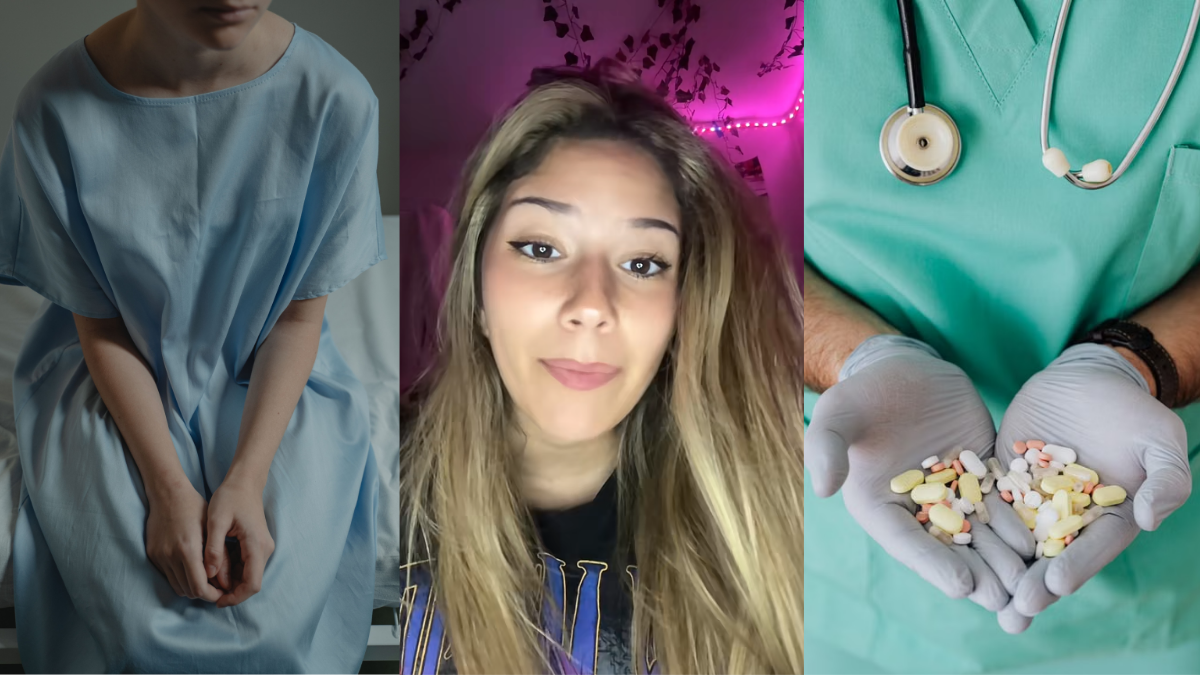
At 16, Dayla (@mellowniq) told TikTok that she was admitted to a mental hospital. While films tend to portray these spaces as dull, white rooms, Dayla talked about the bizarre rules and practices she and other patients had to follow in confinement.
“I remember they told me we cannot wear any hoodies with the strings still attached,” Dayla claimed, adding that she also had to wear sandals or slides. She said she was brought to a nearby mental hospital for children, with all the patients being under the age of 19. After signing some consent forms, she waved her family goodbye and entered the institution without a phone or her personal belongings.
“They take me to this little room, and they basically have me strip down, and they check and make sure I don’t have any weapons on me, any contraband,” Dayla stated. The hospital staff also checked for bruises and asked how she got them. They also allegedly checked their patients for lice. Aside from the initial strip search, Dayla said she also took a pregnancy test before she was let inside the main room, where the secretary’s desk was.
“Mind you, this mental hospital is basically constantly freezing. I think they said that they had to keep it at a certain hospital-grade temperature,” Dayla said. She went to the desk, and after getting some of her information, Dayla said she was sent off to her first class.
A class at the mental hospital
It didn’t quite fit the white room stereotype where patients merely drifted in space. Similarly, only someone who’s been in jail would know that even some convicts thrive on being infamous.
Nevertheless, Dayla said that they were segregated into yellow, red, green, and blue color groups. Because she was already in an older age bracket, they placed her in the yellow group. She introduced herself to the class and got a coloring page to work on. As she got seated, someone slid beside her and asked Dayla, “So, what are you in here for?”
Dayla admitted to self-harm. But instead of being alarmed, Dayla said that the other person shrugged it off and said everybody in the hospital was admitted there for the same reason. “This is the mental hospital. I don’t know why I expected anything different,” Dayla commented. Eventually, she went to her assigned room.
Everything had to be safe and secure for the patients
Dayla explained that even the beds had to have plastic covering. Although there were bedsheets, she claimed they were thin so that patients would be unable to suffocate themselves. She wasn’t alone in the room either—like other patients, Dayla was assigned a roommate.
“It is very uncomfortable, and it is very cold in there. It is not very fun,” Dayla remarked. As the others unpacked in their room, Dayla said she chose not to because she didn’t want to stay institutionalized for long.
“I met my roommate. She’s this older girl who has been in the mental hospital multiple times, to her explanation. But she was very chill, very cool,” Dayla said. While the company was no problem for Dayla, the hospital was meticulous in its handling of its patients. The staff regularly checked Dayla’s vitals, and they were constantly under watch.
Dayla said that everyone had to wake up at five in the morning without fail, no matter how late they slept the night before. Then, they were brought to the bathroom to freshen up.
“No doors to your bedroom, no doors to the bathroom, no doors at all,” Dayla claimed. The patients individually went into the bathroom, and luckily, they allowed Dayla to bring her skincare items. But even during their bathroom routine, someone was seated beside the door to safeguard the patients. After finishing their morning bathroom routine, Dayla said they were brought to another room where patients could play card games like Uno or read books. It acted as a play and holding room before they were ushered in for breakfast. During breakfast, patients claimed their medication from a pharmacy area before taking it.
A semblance of normalcy
“You cycle through each room all day… It’s kind of like school, and you’re going to different classes,” Dayla explained. After breakfast, they went to classes in their groups. She said they had meditation, group therapy, yard time, and also time to do their actual academic schoolwork.
She recalled having to do color sheets but said that they were only allowed to use markers. Crayons and pencils were not allowed since they posed a stabbing risk. Nevertheless, the patients were consistently given snacks throughout the day and were assigned nap times, which Dayla found enjoyable. She looked forward to mealtimes because even though they had some activities, they didn’t have phones or gadgets to keep them preoccupied.
“Graduating” from the hospital
“They had this chart with everybody’s names on it,” Dayla said. She explained that the patients had “points” on the board. Whenever they did something they were not supposed to do (i.e., fall asleep in class, get into a fight, etc.), Dayla said that points would be docked from that person’s name.
“Basically, the incentive was that you’re supposed to earn gold stars. And then the more gold stars you had, the earlier you could leave,” Dayla said. Although people tried to be in their best behavior, Dayla said she’d seen other patients get into fights. Dayla also alleged that she heard one patient threaten to burn down the building, while another one tried to escape.
“A lot was going on at this time,” she shared. She didn’t disclose for how long she stayed, but evidently, she “graduated” from the system.
Have a tip we should know? [email protected]
Follow The Mary Sue:
