




A 60-Year-Old ‘Grandma’ Orca Was Found With Mysterious Puncture Wounds, Sparking a Massive Investigation Into a Possible Act of Cruelty at Sea
The orcas vs. humans battle continues.
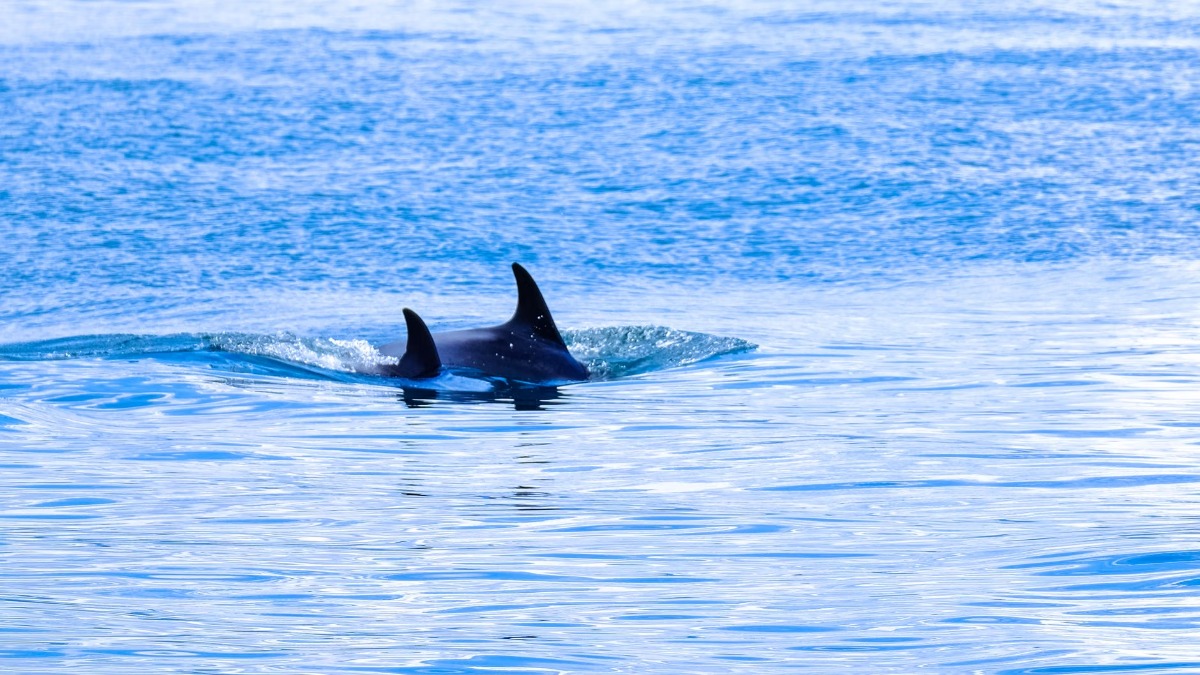
A 60-year-old orca known as “La Abuela” was spotted near the Strait of Gibraltar, with mysterious puncture wounds, launching a full-scale investigation into what conservationists suspect was a deliberate act of cruelty. According to Fox News, the orca, named Toñi, is the oldest known member of the critically endangered Iberian orca population.
Toñi surfaced this week with multiple fresh marks across her dorsal fin and back that officials and marine experts believe were caused by shotgun pellets. Spanish authorities opened a preliminary investigation on August 12, 2026, after receiving reports from conservation group WeWhale, which had photographed Toñi just weeks earlier when she showed no signs of injury.
The wounds had appeared suddenly, with WeWhale counting roughly 10 apparent pellet impacts on the left side of her dorsal fin. At least two or three projectiles seem to have passed straight through the fin, while others may still be lodged inside. The fin plays a crucial role in regulating the animal’s body temperature, and the rich blood supply in the area means the injuries could lead to tissue damage, swelling, or infection.
If pellets remain inside the fin, the risk of a life-threatening infection increases
For now, Toñi appears to be swimming and hunting normally, but conservationists are closely monitoring her condition. Janek Andre, founder and president of WeWhale and the Iberian Orca Guardians Foundation, said the wounds are consistent with a shotgun blast. “We know Toñi. We were with her a few weeks ago and these wounds were not there,” he said.
“If someone has deliberately fired a shotgun at her, this is not only an act of extreme cruelty against an individual animal. It is an attack on one of the last remaining members of a critically endangered population.” Toñi, affectionately called “the grandmother,” is part of a population classified as vulnerable under Spain’s Catalog of Endangered Species. Fewer than 40 Iberian orcas remain in the wild, making every individual critical to the survival of the group.
The investigation is being led by Spain’s General Directorate of Biodiversity, Forests and Desertification. Under Spanish law, killing, capturing, pursuing, or disturbing protected species is illegal, and violations can carry penalties of up to 2 million euros, or about $2.3 million, along with potential criminal liability. Authorities have not yet identified a suspect or announced any leads.
The case has drawn widespread attention, with independent conservation group Sea Shepherd France offering a €10,000 reward for information that could identify those responsible. According to the Gibraltar Chronicle, the reward was announced on August 11, shortly after the wounds were reported, with confidential contact details provided for tips.
The incident comes amid years of tense interactions between Iberian orcas and boats
Since 2020, orcas have repeatedly approached vessels in Atlantic waters, sometimes damaging rudders or even causing boats to sink. In May 2024, two Spanish nationals were rescued after orcas attacked their yacht, the Alboran Cognac, in the Strait of Gibraltar, leading to its eventual sinking.
These encounters have prompted Spanish authorities to issue updated guidance for boaters, advising them to avoid high-risk areas and navigate closer to the coastline when possible. The guidance is especially important between April and October, when orcas are most active in the Gulf of Cádiz and the Strait.
Marine biologist Lewis Stagnetto, of The Nautilus Project, said Toñi had recently returned to the area after several years away and was spotted without injuries just weeks before the wounds appeared. While the cause has not been confirmed, he said the wounds are “highly suspected” to be from a shotgun.
“Lead pellets get stuck inside and can cause some type of blood contamination which could hurt her,” Stagnetto said. If the pellets passed through cleanly, the wound might heal, but there’s still a risk of infection, especially for an older orca like Toñi.
Stagnetto emphasized the broader implications of the incident
“A very sad outcome for a species that is critically endangered,” he said. “We all need to remember that when we go into the ocean, that is not our habitat. We are guests, and we should act like guests.” He noted that pleasure yachts don’t need to cross the Strait of Gibraltar, especially during peak orca activity in summer. “It’s like weather – you wouldn’t sail out of the Bay of Cádiz into a massive storm because you are likely to sink or lose your ship,” he said.
The rise in orca-boat interactions has been significant. According to the Spanish Marina Mercante, these encounters increased by 45% this spring compared to the same period last year. So far in 2026, 31 interactions have been recorded.
Some sailors feel threatened by the orcas’ behavior. “There has been enormous public discussion about Iberian orcas and their interactions with vessels,” Andre said. “Whatever someone’s opinion about those interactions may be, shooting at these animals can never be an acceptable response.”
Toñi’s case highlights the fragile state of the Iberian orca population
With fewer than 40 individuals left, every loss is devastating. The typical life expectancy for an orca in the wild is 50 to 80 years, and Toñi’s age makes her particularly vulnerable. Conservation groups are preserving their original photographs and observational records to assist the investigation and will continue monitoring her physical condition and behavior.
For now, the focus remains on identifying those responsible and ensuring Toñi’s recovery. The authorities have not ruled out any possibilities. If the wounds were indeed caused by a shotgun, the incident would mark a disturbing escalation in human-wildlife conflict in the region.
The Strait of Gibraltar is a critical habitat for Iberian orcas, and their survival depends on both legal protections and public awareness. As the case unfolds, conservationists hope it will serve as a reminder of the importance of respecting marine life and the consequences of human actions in their environment.
(Featured image: Francesco Ungaro on Pexels)
Have a tip we should know? [email protected]
Follow The Mary Sue:
