



New York Home Inspector Checked a New Build That the Builder Called ‘Finished.’ What He Found Would Have Gone Unnoticed: ‘Wood Made of Biscuits’
Stuff of nightmares.
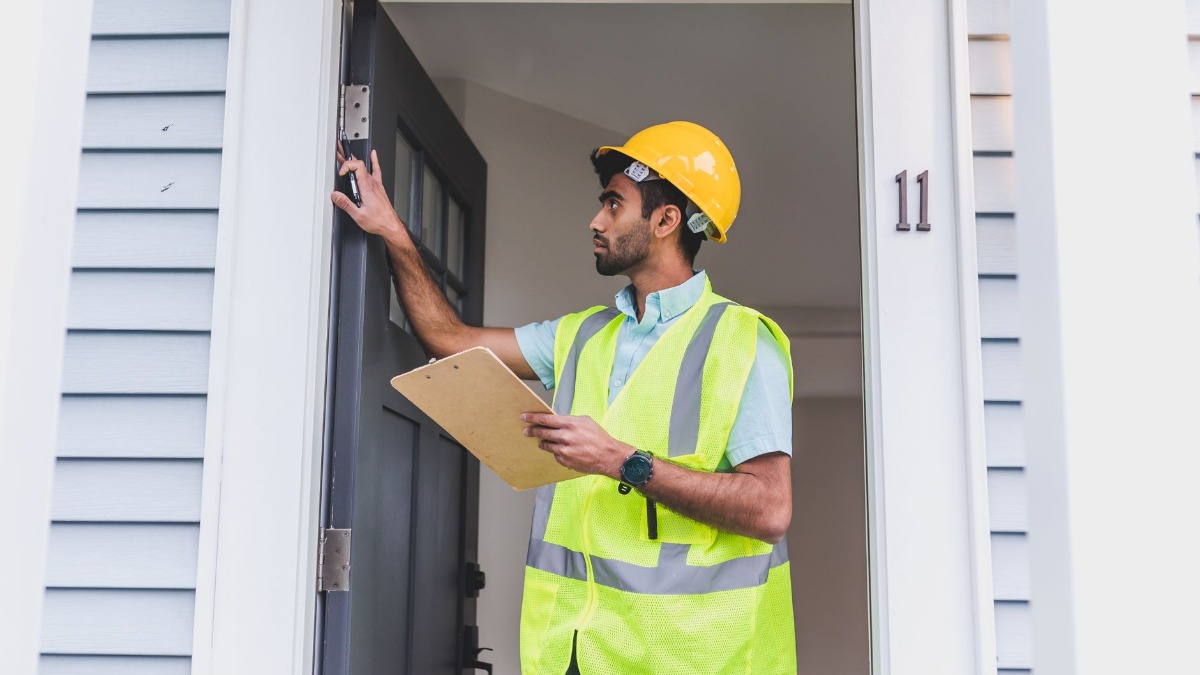
A New York home inspector just exposed a jaw-dropping list of defects in a brand-new home the builder called “finished” and ready for closing. The viral TikTok video, posted by @inspectionhome on May 30, 2026, has already racked up over 21 million views and 1.3 million likes, and it’s easy to see why.
The inspector walks through what should be a move-in-ready house, only to find wood banisters so soft you can poke a hole through them, a glass railing that wobbles dangerously, and planks that look like they’re either crumbling or infested with termites. But the real kicker comes in the second-floor game room, where a window’s glazing is completely separated from the frame, leaving an open gap to the outdoors. The inspector’s dry humor says it all: “No problem. It’s new and ready for closing.”
The creator, who specializes in new construction inspections, has built a following by posting no-nonsense videos that reveal hidden defects in homes buyers often assume are flawless. His straightforward style – clear narration, close-up shots of problems, and a healthy dose of sarcasm – resonates with anyone who’s ever felt pressured to skip an inspection because the builder said everything was fine.
Commenters couldn’t believe the poor quality of work
The comment section was flooded with reactions, from shock to many saying they’d be furious. Some shared horror stories of buyers burned by similar issues. Many also vented frustration about builders cutting corners, especially with labor shortages and high demand making quality control even harder to enforce.
This video couldn’t have come at a worse time for the homebuilding industry. Recent reports highlight a surge in defect claims against large builders, with issues ranging from foundation problems to mold and water intrusion. Public trust in new construction is at an all-time low, and this clip perfectly captures what buyers fear most: paying top dollar for a home that’s far from perfect.
In today’s tight housing market, where inventory is scarce and buyers are stretching their budgets, the message is clear: “new” doesn’t mean “flawless,” and independent inspections are non-negotiable. As one commenter put it, “Never skip the inspection, no matter what the builder says.”
The problems don’t stop at shoddy workmanship
Legal liabilities for big builders have skyrocketed in recent years, with homeowners increasingly suing over construction defects. Blake and Beth Horio, for example, bought a home in Henderson, Nevada, in 2022, thinking it would be their dream retirement spot. Instead, they found cracks spreading across the ceilings, sliding glass doors that wouldn’t open, and a foundation that had sunk several inches.
An engineer dropped a marble on their kitchen floor, and it rolled straight into the corner. “Your home is sinking,” he told them. According to The Wall Street Journal, the Horios are now locked in a legal battle with PulteGroup, the builder, which initially performed only cosmetic repairs before allegedly failing to address the underlying soil issue.
A company representative said about 5% of the homes in the community might have been affected by soil compression but insisted Pulte follows “strict construction and quality standards.” This isn’t an isolated case. Some of the biggest names in homebuilding, like D.R. Horton and Lennar, are facing a surge in legal claims from buyers who say their homes are riddled with defects.
Both homeowners and builders have their own set of complaints
Homeowners allege builders are using cheaper materials, cutting corners, and hiring unqualified or poorly supervised subcontractors. Builders, on the other hand, argue that these claims represent a tiny fraction of the homes they produce and that errors are often the fault of subcontractors, not the companies themselves. They also accuse plaintiffs’ lawyers of actively seeking out homeowners to pursue dubious claims in hopes of landing lucrative settlements.
The Seminole Tribe of Florida is suing Lennar, alleging the company built over 450 defective homes with improperly installed roofs and mold-ridden walls, which they say have caused health problems. Lennar hasn’t commented on the lawsuit. Meanwhile, D.R. Horton is facing litigation from thousands of Louisiana homeowners whose homes allegedly fail to keep out moisture.
Tabatha Hayden, a paraplegic mother of five, bought a D.R. Horton home in Slidell, Louisiana, thinking it would be her family’s forever home. Instead, she’s dealing with a mold infestation caused by poor ventilation and an HVAC system that wasn’t designed to handle Louisiana’s humidity.
Her children have developed sinus conditions, chronic headaches, and rashes. “It’s heartbreaking because we literally bought this house thinking it was going to be our forever home,” she said. D.R. Horton hasn’t responded to requests for comment.
The financial toll on builders is staggering
Lennar’s self-insurance reserve, set aside for liabilities not covered by insurance, rose 21% in fiscal 2025 to $336.9 million. D.R. Horton’s reserves for legal claims jumped 57% to $1.1 billion over the same period.
Nearly all of Horton’s reserves last year were earmarked for construction-defect matters, and the company resolved 405 claims for a total cost of $57.2 million – more than double the number of claims and their costs in 2022. Rising construction costs are also inflating repair expenses, leading plaintiffs to claim larger damages.
One of the biggest factors driving up legal liabilities is the success plaintiffs’ lawyers are having in challenging arbitration clauses. These clauses, often buried in sales contracts, force defect claims into private arbitration instead of court. Lawyers argue that buyers have no real choice in the matter, and recent challenges have allowed some cases to proceed in state court, where juries are often seen as more sympathetic to homeowners.
(Featured image: RDNE Stock project on Pexels)
Have a tip we should know? [email protected]
Follow The Mary Sue:
