


‘Can I just have my money back’: The Supreme Court may have killed Trump’s tariffs but regular Americans have nothing to gain from the move
Game of obscurity.
The Supreme Court’s decision to strike down tariffs may have handed businesses a $166 billion refund windfall, but regular Americans are learning the hard way that they won’t see a dime of it. U.S. Customs just launched its online refund portal, and the first wave of businesses rushed to claim their share.
The system is designed for the “importer of record” – usually a company, not the end customer – meaning millions who paid hidden tariff costs are hoping retailers will voluntarily pass the savings along. For most, that’s not happening. The process is so tangled in supply chains, price markups, and shifting tariff rates that businesses can’t even figure out how much of the burden they actually passed to shoppers.
According to NPR, last year, Will Chyrsanthos imported a sky-blue concrete sink from Bulgaria for his Massachusetts home renovation, shelling out an extra $250 in tariffs. When he logged into the refund portal this week, he hit a wall: the system only refunds the entity that paid Customs directly. For Chyrsanthos, that was DHL, the shipping company he used.
The real problem is the way the system is set up
DHL, along with FedEx and UPS, quickly announced they’d refund customers who paid tariff fees directly to them because those transactions left a clear paper trail. But for everything else Chyrsanthos bought, the extra cost was buried in the final price. He suspects tariffs added thousands to his renovation budget. “I have zero hope for recouping any of that,” he said.
The problem isn’t just that consumers didn’t pay tariffs directly. It’s that the entire system was designed to obscure who paid what. A single product, like a TV, might have parts from multiple countries, each hit with different tariff rates that changed over time. Retailers absorbed some of the cost, vendors absorbed some, and the rest got baked into the price tag.
By the time a product reached a customer, the tariff was so diluted that untangling it would take a forensic accountant. “It’s nearly impossible to determine how much individual consumers paid,” said Terence Lau, dean of Syracuse University College of Law. Robert Shapiro, an international trade lawyer, put it bluntly: “By the time it gets down to the consumers, the whole tariff has been diluted.”
Rebecca Melsky, who co-founded Princess Awesome, a clothing company that sells dresses with solar systems and dragon prints for girls, is facing the same headache. She has no way to automatically calculate how much each customer paid in tariffs, and doing it manually would be “incredibly laborious.” To cope with tariffs, she raised prices and even set up an online “tariff tip jar” for donations.
Now, as a partial refund, she’s considering giving $10 in store credit to customers who contributed. It’s not much, but it’s something. Other retailers are taking a similar approach. Costco’s CFO, Gary Millerchip, said the company might pass along refunds as lower prices. But for most businesses, the math is too messy, and the effort isn’t worth it.
Edwin Martinez, an engineer who paid specific tariff charges for electronic components like power connectors and pressure sensors, is one of the many consumers left empty-handed. “I paid this extra tax, man,” he said. “Can I just have my money back?”
Class action lawsuits have been filed against companies
This includes companies like Costco and FedEx. The argument is that since businesses shared the tariff burden with customers, they should share the refunds too, per NPR. FedEx has already pledged to pass down any refunds it receives. Costco’s CEO told investors the company would return money through “lower prices and better values.” But for most consumers, those promises are just words.
The refund portal itself is off to a rocky start. Businesses that logged in early described the process as “smooth and fast,” but the system is only handling the first phase – tariff payments that are still under federal review. Companies typically pay import duties as soon as goods arrive at the border, but the full review can take nearly a year.
The government’s new system, CAPE, is expected to process refunds within 60 to 90 days, but it’s unclear how many claims it can handle at once. U.S. Customs has estimated that $127 billion of the $166 billion total is owed to importers who signed up for electronic payments. The rest will come later, as the system expands to include older, finalized tariff payments.
For small businesses, the refunds are a lifeline
Sarah Wells, who sells imported backpacks and products for nursing mothers, logged in 10 minutes before the portal launched and said uploading her records was quick. Alfred Mai, whose San Francisco firm ASM Games makes card games in China, had all his paperwork ready and submitted claims for 17 shipments totaling more than $162,000 in tariff fees. “I guess I’ll hold my breath until I actually see the money deposited into my bank account,” he said.
So, will any of this trickle down to consumers? Economics and legal experts say probably not. Tariffs hit during a period of historic inflation, and many companies absorbed the cost to avoid scaring off customers with higher prices.
Joe Kimray, owner of B&W Hardware in North Carolina, said most of his products are made abroad or use imported parts. He didn’t pay tariffs directly but saw higher wholesale prices. “I plan to have conversations with a number of manufacturers and hope that they will do the right thing and share some of the tariff refund money with us,” he said. It seems like for now, the only way for consumers to get their money back is through lawsuits or sheer luck.
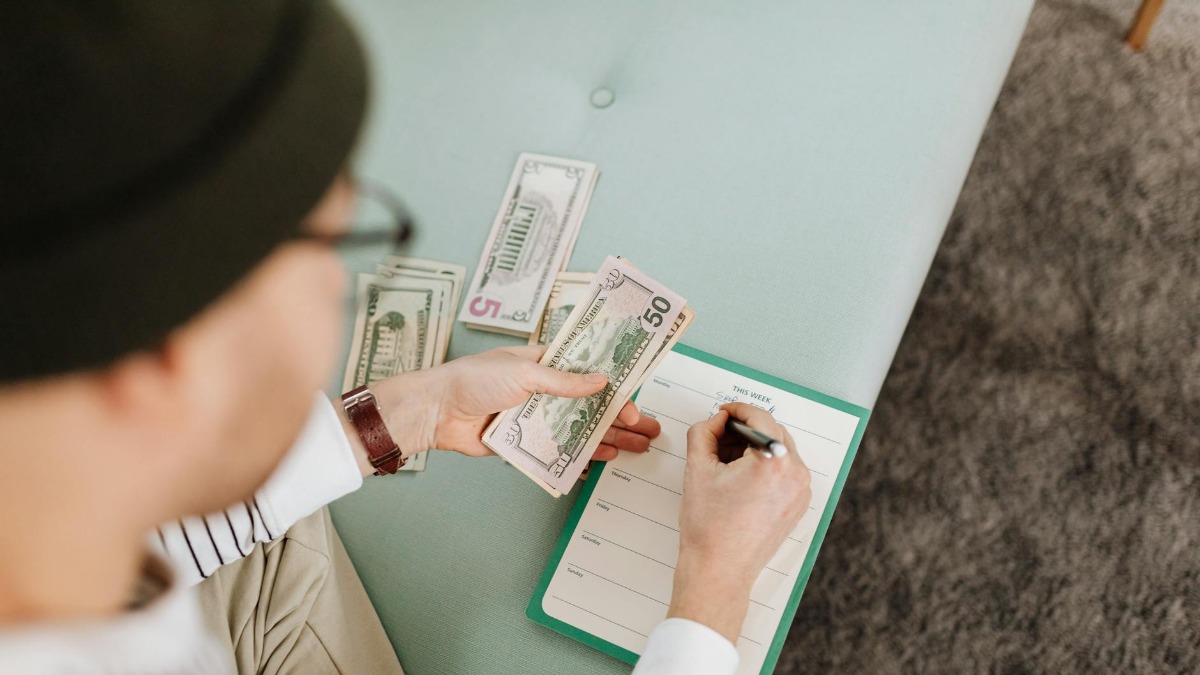
(Featured image: www.kaboompics.com on Pexels)
Have a tip we should know? [email protected]
Follow The Mary Sue:
