


Donald Trump just became the first president in history to owe the American people $166 billion in refunds
A massive shift in trade policy.
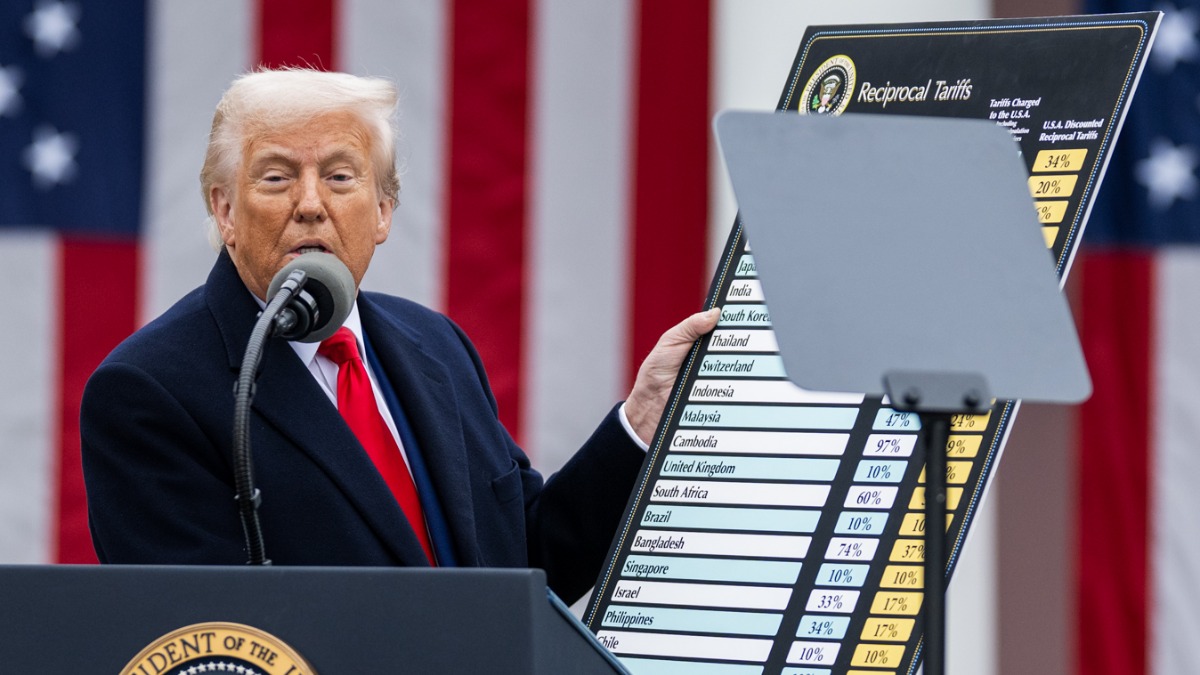
Donald Trump’s administration just kicked off the largest tariff refund in U.S. history, and businesses are about to get $166 billion back. Starting at 8 p.m. ET on April 20, U.S. Customs and Border Protection (CBP) will open the first phase of a new claims system, letting importers file for refunds on tariffs that the Supreme Court ruled were illegally imposed.
According to Fox Business, the refunds stem from a February Supreme Court decision that struck down the legal basis for Trump’s tariffs. The court found that the International Emergency Economic Powers Act, the law Trump used to justify the duties, didn’t actually give the president authority to impose tariffs. That power, the justices said, belongs to Congress.
Lower courts quickly followed up, ordering the government to reverse the policy and refund the money, plus interest. Now, the numbers are staggering. Court filings show over 330,000 importers paid duties on more than 53 million shipments, adding up to about $166 billion. That’s not just a big check; it’s a massive shift in trade policy, and businesses are scrambling to get their money back.
Companies can file refund requests through the Automated Commercial Environment portal
Refund requests can be filed using a new tool called the Consolidated Administration and Processing of Entries, or CAPE. The system lets importers submit declarations listing the shipments they want refunds for. Once a claim is validated, CBP will recalculate the duties without the invalidated tariffs and issue repayments. Most refunds should land within 60 to 90 days, though complex cases could take longer.
The process won’t be smooth sailing. CBP has already warned that the volume of claims is “unprecedented,” and existing systems weren’t built to handle this kind of workload. Some claims may require manual processing, which could slow things down. The agency is rolling out the refunds in phases, starting with unliquidated entries and those within 80 days of final accounting. If you’re an importer, you’ll want to get your paperwork in order.
So, what exactly are tariffs, and why does this matter? Tariffs are taxes on imported goods, designed to either generate revenue or protect domestic industries. They’re calculated as a percentage of the value of the goods and collected by CBP when products enter the country.
The U.S. tariff system is governed by the Harmonized Tariff Schedule, which classifies goods and sets duty rates. While Congress holds the primary authority to impose tariffs, presidents can adjust them under certain laws, like the Trade Expansion Act of 1962 or the Trade Act of 1974. These laws allow tariffs for national security, trade imbalances, or retaliation against unfair practices.
Tariffs can have a ripple effect across the economy
They often lead to higher prices for consumers and businesses that rely on imported materials, but they can also help domestic producers by reducing competition. On the flip side, tariffs can spark trade wars if other countries retaliate with their own duties. That’s exactly what happened during the Trump administration, when tariffs on steel, aluminum, and Chinese goods led to counter-tariffs from trading partners like the European Union and China.
The $166 billion refund is more than just a financial windfall for businesses; it’s a correction to a policy that never should have been. The Supreme Court’s ruling made it clear: the president can’t unilaterally impose tariffs without Congress’s approval. Now, the government is stuck playing catch-up, processing refunds for a policy that was doomed from the start.
If you’re a business owner who paid these tariffs, the refund process is your chance to recoup some of those costs. The CAPE system is your entry point, but don’t expect instant results. CBP’s warning about manual processing means delays are likely, especially for complex claims. Still, with $166 billion on the line, it’s worth the effort.
For the broader economy, the refunds could provide a much-needed boost. Businesses that were hit hard by the tariffs now have a shot at recovering some of their losses, which could free up cash for investments, hiring, or price cuts. That’s good news for consumers, who might finally see some relief from the higher costs that tariffs often pass along.
The refunds also highlight the legal limits of presidential power
The Supreme Court’s decision was a clear rebuke of the idea that the president can bypass Congress on trade policy. That’s a win for checks and balances, but it also means future administrations will have to think twice before using emergency powers to impose tariffs.
One thing’s for sure: this refund process is a historic moment. The $166 billion payout is the largest in U.S. history, and it’s a direct result of a legal battle that challenged the boundaries of presidential authority. For businesses, it’s a rare chance to recover costs from a policy that never should have been. For the rest of us, it’s a reminder that trade policy isn’t just about economics but about the rules that govern how our government operates.
(Featured image: The White House)
Have a tip we should know? [email protected]
Follow The Mary Sue:
