


Trump insists he started the Iran war all by himself and threatens to bomb Iran back to the Stone Age if they don’t surrender soon
A familiar refrain.
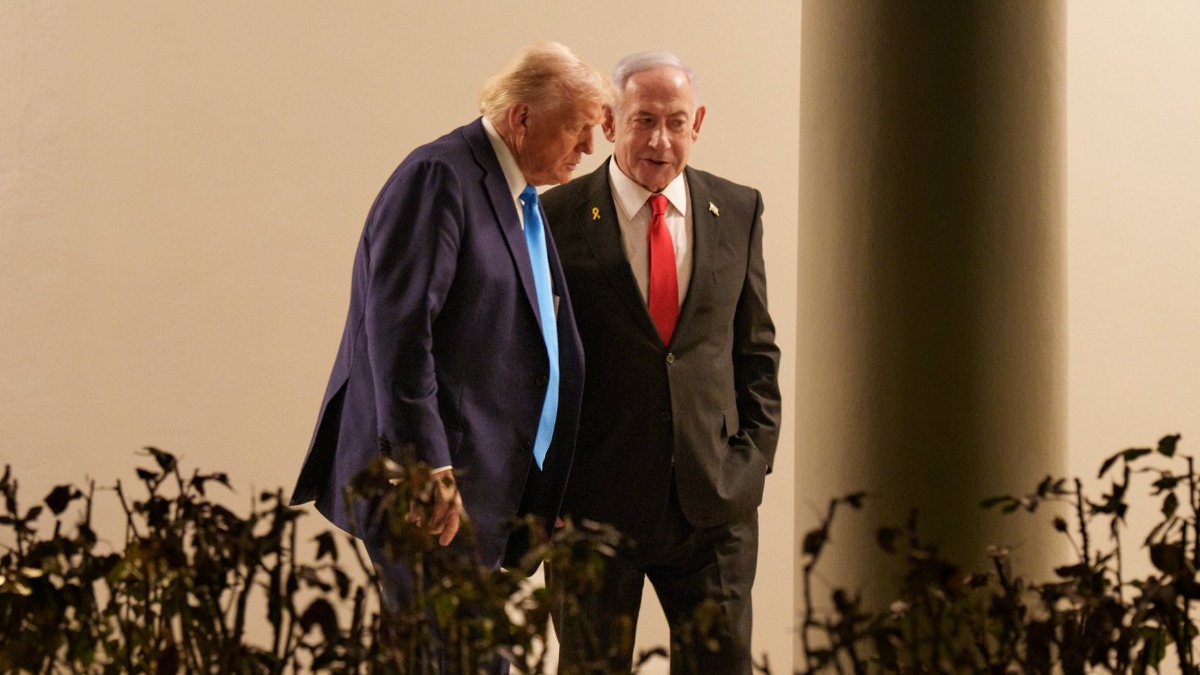
President Donald Trump just doubled down on his claim that he – not Israel – was the driving force behind the decision to launch Operation Epic Fury against Iran. In a Truth Social post on April 20, 2026, Trump insisted he was “never” pressured into the war, pointing to the October 7, 2023, Hamas attack on Israel as the main push. He also issued a stark warning: if Iran’s new leaders don’t come to the table soon, he’s ready to escalate dramatically.
Trump’s post was direct and unapologetic. “Israel never talked me into the war with Iran,” he wrote, according to Mediaite. “The results of Oct. 7th, added to my lifelong opinion that IRAN CAN NEVER HAVE A NUCLEAR WEAPON, did.” He didn’t stop there. Trump took aim at the media, calling out what he sees as biased coverage and rigged polls.
“I watch and read the FAKE NEWS Pundits and Polls in total disbelief,” he wrote. “90% of what they say are lies and made up stories, and the polls are rigged, much as the 2020 Presidential Election was rigged.” It’s a familiar refrain, but this time, he tied it to the ongoing conflict with Iran.
Trump also drew a comparison between the war on Iran and his handling of Venezuela
“Just like the results in Venezuela, which the media doesn’t like talking about, the results in Iran will be amazing,” he wrote. Trump suggested that if Iran’s new leadership plays its cards right, the country could still have a “great and prosperous future.”
But he made it clear that the U.S. is in control of the timeline. During a Fox News interview on Sunday night, Trump said he expects a deal to be signed in Pakistan on Monday. If that doesn’t happen, he didn’t mince words: “I will blow up every single power plant and bridge in Iran.”
This isn’t the first time Trump has pushed back against claims that Israel forced the U.S. into the war. Last month, ABC’s Rachel Scott asked him point-blank if Israel had “forced” America to attack Iran.
Trump’s response was blunt. “No, I might’ve forced their hand,” he said. “You see, we were having negotiations with these lunatics and it was my opinion that they were going to attack first. They were going to attack if we didn’t do it. They were going to attack first, I felt strongly about that.”
The president’s praise for Israel has been consistent
Just days ago, he called Israel a “GREAT ally,” heaping on the compliments. “They are Courageous, Bold, Loyal, and Smart, and, unlike others that have shown their true colors in a moment of conflict and stress, Israel fights hard, and knows how to WIN!” he posted.
It’s a stark contrast to some of the criticism coming from other corners of the political spectrum, where figures like Tucker Carlson have called the war “absolutely disgusting and evil.” Trump dismissed those critiques, saying Carlson’s comments had “no impact” on his decisions. The back-and-forth over who pushed whom into the war has been a recurring theme.
Recently, Secretary of State Marco Rubio added fuel to the fire when he suggested the U.S. acted preemptively to avoid higher casualties from an anticipated Iranian attack. “The president made the very wise decision — we knew that there was going to be an Israeli action, we knew that that would precipitate an attack against American forces, and we knew that if we didn’t preemptively go after them before they launched those attacks, we would suffer higher casualties,” Rubio said.
The White House quickly pushed back, with Press Secretary Karoline Leavitt sharing a National Review story titled “No, Marco Rubio Didn’t Claim That Israel Dragged Trump Into War With Iran.”
His comments make it clear he’s not backing down from his version
He’s framing the war as a necessary move to prevent Iran from gaining nuclear capabilities, and he’s positioning himself as the decisive leader who made the call. The president’s confidence in the outcome is unwavering. “The results in Iran will be amazing,” he promised. But with the threat of further escalation looming, the stakes couldn’t be higher.
For now, the world is watching to see if a deal materializes in Pakistan. If it doesn’t, the consequences could be severe. Trump’s rhetoric leaves little room for doubt about how far he’s willing to go to ensure Iran doesn’t emerge from this conflict with any leverage.
The question is whether Iran’s new leadership is ready to meet his demands or if they’re prepared for the alternative. Either way, he is determined to dictate the terms of the war’s end, with or without their cooperation.
The broader implications are hard to ignore. Operation Epic Fury has already reshaped the geopolitical landscape in the Middle East, and Trump’s insistence that he acted independently could have lasting effects on U.S.-Israel relations. If his version of events holds, it suggests a shift in how the U.S. approaches its alliances, particularly when it comes to military action.
Past administrations often framed U.S. military interventions as collaborative efforts with allies. Trump’s approach is more unilateral, reflecting his broader foreign policy philosophy of putting America’s interests first.
(Featured image: Dan Scavino)
Have a tip we should know? [email protected]
Follow The Mary Sue:
