


More money to drop more bombs, exactly what the ‘President of Peace’ needs
Now, the Navy wants $3 billion more.
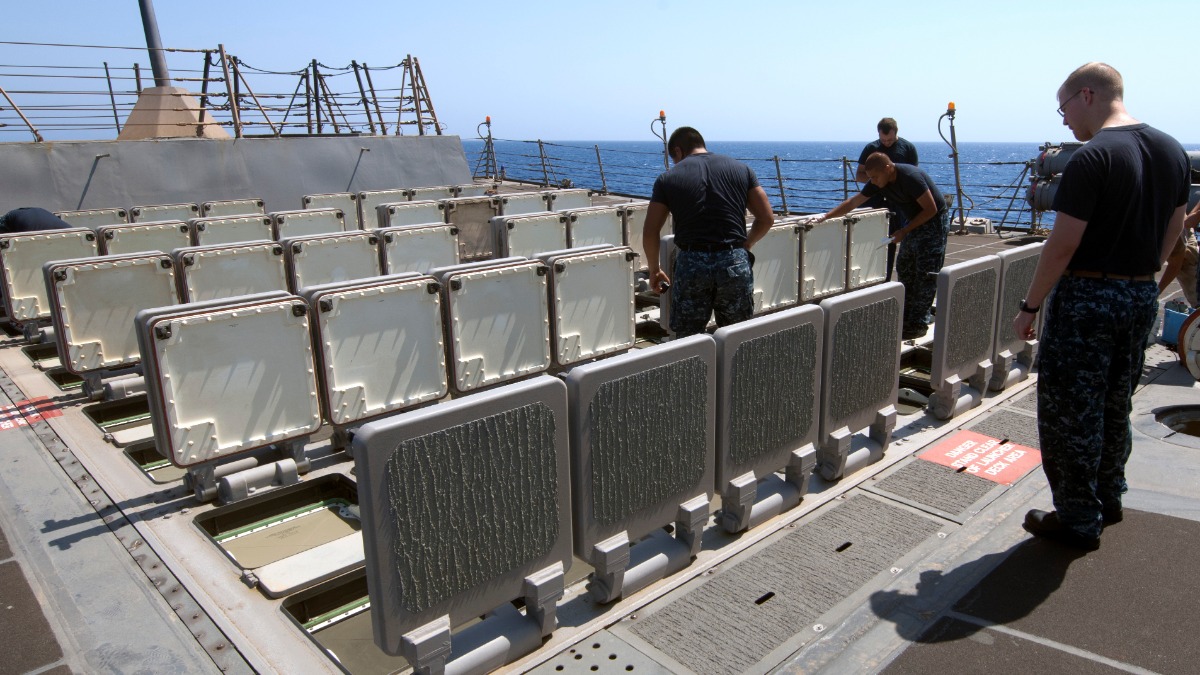
The United States Navy is officially requesting $3 billion in additional funding to replenish its dwindling supply of Tomahawk missiles following their heavy use in the ongoing U.S.–Israeli war on Iran. This request surfaced on April 8, 2026, as part of the broader $1.5 trillion budget proposal unveiled by the Pentagon for the 2027 fiscal year.
According to Fox News, the sheer scale of this procurement is massive, representing a 1,200% increase in production compared to the previous year. To put that into perspective, Congress authorized the purchase of 58 missiles last year for a total cost of $257 million, but the current request aims to secure funding for 785 missiles.
This surge in production is a direct result of the high operational tempo since the war against Iran began on February 28, 2026. Data suggests that the United States military has already launched at least 850 Tomahawk missiles during this period. The Pentagon is clearly scrambling to replace these assets as quickly as possible
The war on Iran has placed intense pressure on existing munitions stockpiles
It is a striking shift in defense spending that underscores just how much hardware is being consumed in modern combat scenarios. President Donald Trump, who has been called a ‘President of Peace’, has made this massive $1.5 trillion budget request a central pillar of his administration strategy. This proposal includes about $1.1 trillion in base discretionary funding for the Department of War, paired with an additional $350 billion in mandatory funding.
While the total figure is eye-watering, the Pentagon claims these resources are essential to address threats from Russia, China, and other global adversaries. If Congress approves this plan, it would mark one of the most significant jumps in defense spending in several decades. The administration is essentially looking to combine discretionary and mandatory resources to ensure the defense industrial base can keep up with the demands of an active war.
Beyond the missiles, the budget places a heavy emphasis on rebuilding the broader weapons inventory. Defense officials have identified the current manufacturing capacity as a critical vulnerability that needs immediate attention.
Shipbuilding is a major priority in this proposal, with $65.8 billion requested to acquire 18 Navy battle force ships and 16 non-battle force vessels. This is part of a larger, long-term effort to expand maritime capacity, which seems to be a response to the challenges observed in the Pacific and the Middle East.
The technology side of this budget is equally ambitious
The proposal continues to back the Golden Dome missile defense system, which utilizes space-based sensors and interceptors to create a layered homeland defense. It is interesting to see the continued investment in artificial intelligence, drone swarms, and counter-drone systems.
The administration is also pushing for the development of the F-47, a sixth-generation fighter aircraft designed to work alongside autonomous systems. The program is aiming for its first flight as early as 2028, which is an aggressive timeline for such complex technology.
The political environment surrounding these numbers is complex. Some Republican lawmakers have pushed for defense spending to reach 5% of the national GDP, a significant increase from the current 3.5%. Representative Don Bacon of Nebraska has been vocal about the need for a permanent commitment to higher spending, suggesting that 4% or better is what it will take to modernize the Navy, Air Force, and nuclear triad.
The 2026 budget only hit the $1 trillion mark because Congress injected an extra $150 billion through a reconciliation bill, but the President’s new proposal attempts to bake these higher costs into the baseline of year-on-year spending legislation.
It is worth noting that this push for more money comes despite Trump’s recent friction with defense contractors. The president has publicly criticized major defense companies for their performance, high executive salaries, and the practice of buying back their own stock.
He has stated that he would not allow these companies to prioritize dividends for shareholders over national security needs. He also slammed these firms for moving too slowly and charging too much for the weapons the military needs.
Despite this tension, the administration is moving forward with an unprecedented level of investment in the defense sector, aiming to ensure that the production lines for critical munitions like the Tomahawk remain active and fully funded as long as the war is on. The focus remains on strengthening domestic manufacturing capacity, ensuring that the next time the Navy needs to replenish its stores, the industry is already prepared to scale up production without delay.
Have a tip we should know? [email protected]
Follow The Mary Sue:
