


‘$2 Pinecone’: People Are Exposing the Prices at Goodwill – And They’re Allegedly Higher Than Expected for a Thrift Store
Where's the goodwill?
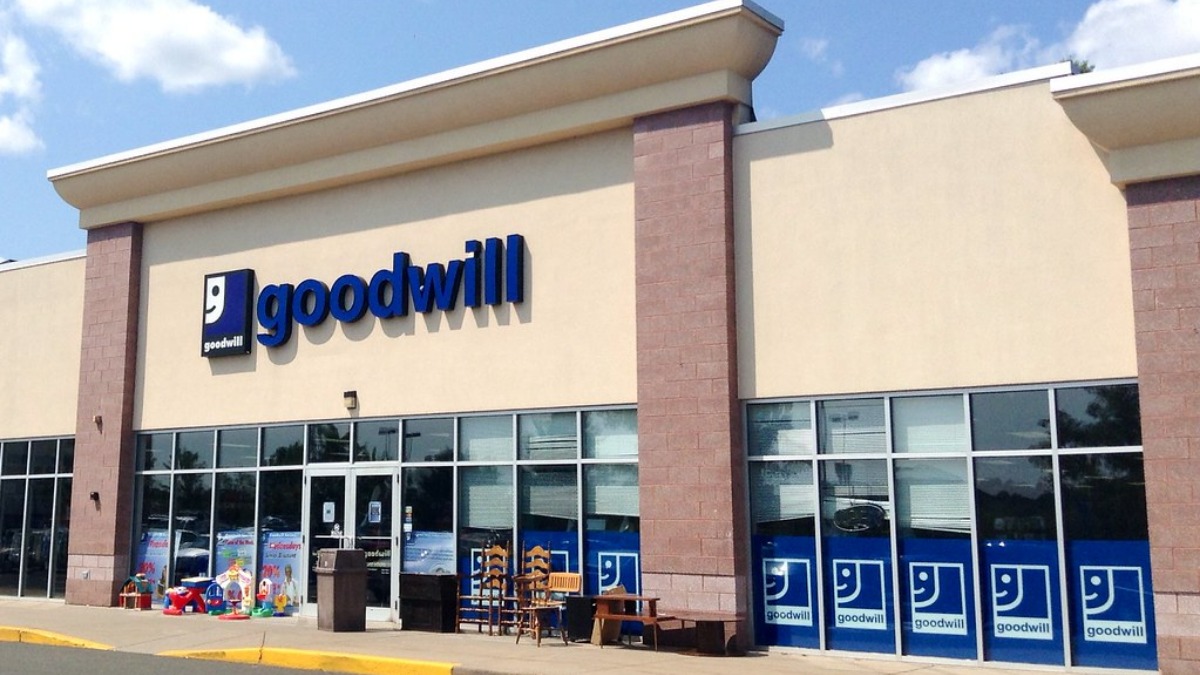
Goodwill is under fire again after a viral Reddit video allegedly exposed what shoppers call outrageous prices on basic items, including a $2 pinecone and a $2 empty pickle jar.
The post in r/trashy shows bargain hunters walking through stores, pointing out high price tags on donated goods like a $499 guitar, a $10 turtle shell, and $3 kitchen spatulas. The video has reignited long-standing frustration with Goodwill’s pricing, with many arguing the nonprofit has abandoned its mission of affordability in favor of profit-driven tactics. The backlash taps into a growing trend of ‘thrift grift’ content, where shoppers document overpriced secondhand items and question whether Goodwill is still a viable option for low-income families.
For many, the video confirms what they’ve suspected for years: Goodwill’s charitable image no longer matches the reality of its stores. Goodwill’s business model relies on donated items, which are sold to fund job training, employment programs, and other community services. But critics say the organization has become too focused on revenue, pulling high-value items for online auctions on ShopGoodwill.com and pricing everyday goods at near-retail levels.
The disconnect is stark
Shoppers donate items for free, only to see them marked up beyond what many can afford. The pinecone, in particular, has become a symbol of the problem, with commenters joking that they’d rather pick one up from a park than pay Goodwill’s price.
Reactions to the Reddit post are overwhelmingly negative, with many calling Goodwill a “scam” or “Greedwill.” Some users share personal stories of being priced out of the store, while others point to broader issues like executive pay and labor practices. A few defend the nonprofit, arguing that pricing varies by location and that revenue funds important programs. But even those who acknowledge Goodwill’s mission say the pricing feels exploitative.
The frustration isn’t new. Complaints about Goodwill’s pricing have circulated for years on platforms like Reddit, where subreddits like r/ThriftGrift and r/goodwill document overpriced junk and questionable business practices. The latest video, however, has struck a nerve amid ongoing economic pressures and the growing popularity of secondhand shopping.
Resellers, who once relied on Goodwill for cheap inventory, are also feeling the pinch. Many say they’ve had to adjust their own pricing or reduce their inventory because Goodwill’s markups make it harder to turn a profit.
The debate over Goodwill’s pricing isn’t just about individual items
It’s about the organization’s role in the community. For decades, Goodwill was seen as a lifeline for low-income families, teachers, and budget-conscious shoppers. But as prices rise, many feel the store has lost its way.
Hezekiah Herrera, a special education teacher in Southern California, told The Sun in January 2026 that he used to rely on Goodwill for educational materials like children’s books, which he could once buy for 99 cents. Now, those same books are priced between $3.99 and $5.99, making them no cheaper than new copies on Amazon or Walmart.
Hannah Matthews, a Utah-based reseller, said Goodwill’s price increases have forced her to rethink her business model. She used to find affordable items to resell on platforms like eBay and Depop, but now she sees t-shirts priced at $25 and designer purses locked behind glass cases. “It’s insane to me that they can get something for free and sell it for $25,” she said.
Matthews started thrifting after being laid off, and Goodwill became a “lifesaver” for her. But now, she says, “the prices have really just gone out of control.” Goodwill’s pricing strategy isn’t arbitrary. The organization has said that each of its 150 member locations sets prices based on local market demand and the potential resale value of items.
Items that don’t sell in stores are often moved to outlet locations, where shoppers pay by the pound, or to ShopGoodwill.com, where high-demand goods can fetch even higher prices. The goal, according to Goodwill, is to maximize revenue to support its programs. But for shoppers like Herrera and Matthews, the strategy feels like a betrayal of the nonprofit’s original mission.
Not everyone agrees that Goodwill has lost its way
Marcia Layton Turner, an avid thrifter from Rochester, New York, said that she believes shoppers misunderstand the organization’s mission. “I don’t believe Goodwill ever claimed to serve low-income consumers,” she said. Turner points out that Goodwill’s website describes its goal as strengthening communities and eliminating barriers to opportunity, not providing cheap goods.
In her area, revenue from Goodwill stores supports the Association for the Blind and Visually Impaired. “Just look at its online store, ShopGoodwill, where it lists its higher-end items to maximize its profits,” she said. “That suggests that it is aiming to earn as much as possible in order to support its local partners, rather than keeping prices as low as possible.”
The tension between Goodwill’s charitable mission and its business practices isn’t likely to disappear anytime soon. The organization plans to open 78 new stores in 2026, a move that could either ease pricing pressures or further alienate budget-conscious shoppers.
For now, many are voting with their wallets, turning to alternatives like local charities, buy-nothing groups, or other thrift stores like Salvation Army and Habitat for Humanity. The $2 pinecone might seem like a small thing, but for a lot of people, it’s a sign of a much bigger problem.
(Featured image: JeepersMedia)
Have a tip we should know? [email protected]
Follow The Mary Sue:
