


Trump jets out of Beijing with zero deals on Taiwan, Iran, or tariffs but insists his talks with Xi were ‘very good’
Strategic ambiguity.
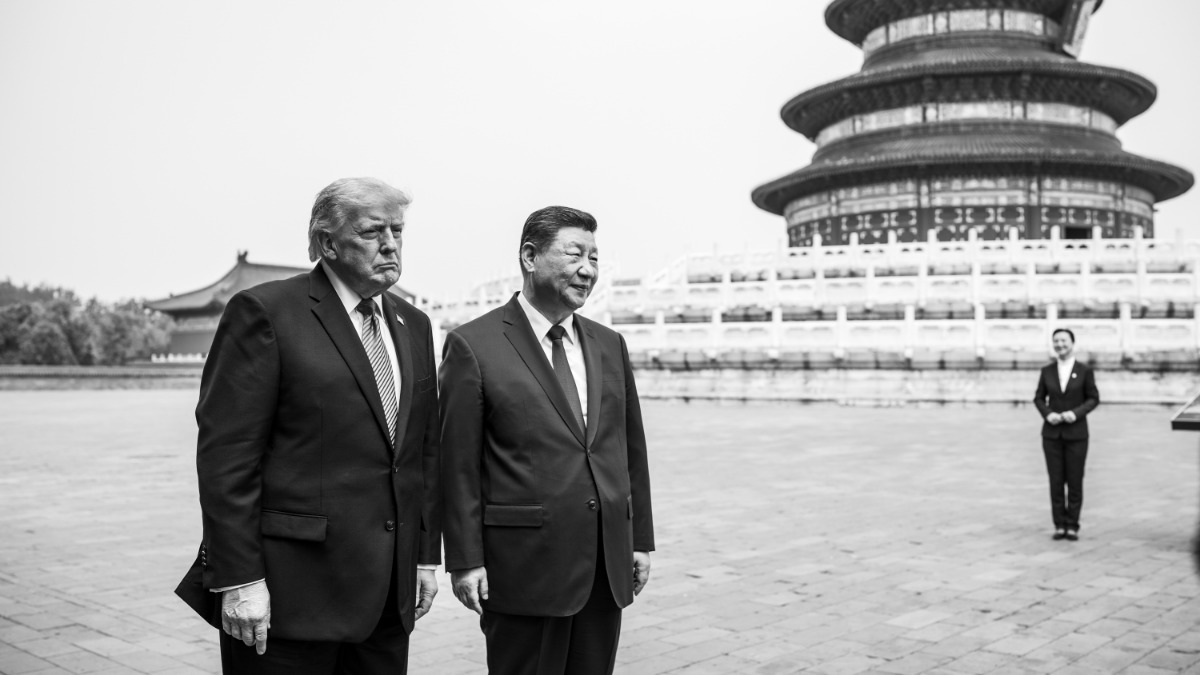
President Donald Trump left Beijing empty-handed on the biggest sticking points between the U.S. and China, wrapping up a two-day summit with no deals on Taiwan, Iran, or tariffs. Despite the lack of concrete progress, Trump insisted his talks with Chinese President Xi Jinping were “very good,” framing the meeting as a step toward a stronger relationship.
The summit, which included a grand welcome ceremony at Beijing’s Great Hall of the People and a visit to the historic Temple of Heaven, ended with vague promises of future cooperation. The most pressing issue – Taiwan – remained unresolved, with Xi delivering a stark warning about the potential for “clashes and even conflicts” if the U.S. doesn’t handle the situation carefully, according to NBC News.
Trump, however, told reporters he discussed arms sales to Taiwan “in great detail” with Xi and plans to make a decision on a long-delayed $14 billion package soon. His comments alarmed Taiwan supporters, who say consulting with Beijing on arms sales violates longstanding U.S. policy.
Trump’s approach to the Taiwan question was characteristically unpredictable
When Xi asked whether the U.S. would defend Taiwan militarily, Trump said he declined to answer, sticking to the policy of “strategic ambiguity.” But he downplayed the risk of conflict, saying, “The last thing we need right now is war 9,500 miles away.” His refusal to engage directly on the issue frustrated some observers, who noted that his willingness to even entertain the question marked a departure from past U.S. policy.
Trade was another major sticking point, with no movement on tariffs or broader economic disputes. Trump made it clear he wasn’t interested in reducing tariffs, and Beijing, facing its own economic challenges seemed resigned to the status quo.
A former senior Trump administration trade official, speaking anonymously, said China has accepted that U.S. trade policy won’t change anytime soon. “Trump clearly is not in the mood to make concessions,” the official said. “If you look at the arc of his decision-making, he goes through periods of being less stubborn. That doesn’t seem to be the situation we’re in now.”
The ongoing Iran war loomed over the summit, with China remaining a key partner for Tehran
Trump said he’ll decide in the coming days whether to lift sanctions on Chinese oil companies that buy Iranian oil. He also reiterated his hardline stance on Iran that failure to negotiate a nuclear deal would result in “annihilation.”
While Trump claimed Xi promised not to provide military equipment to Iran, China’s official readout made no mention of the war, instead framing the discussion as a broad exchange on “major international and regional issues.” Trump later said he didn’t ask Xi for any favors on Iran, saying, “When you ask for favors, you have to do favors in return.”
The summit did produce a few tangible outcomes, though none were groundbreaking. Trump announced a deal for China to buy 200 Boeing aircraft, with the potential for more if the initial order goes well. He also said China agreed to purchase “billions of dollars” of U.S. soybeans.
On rare-earth minerals, a critical component in everything from smartphones to military hardware, the two sides extended a one-year moratorium on export licenses, a move that could ease supply chain tensions. But a former Trump administration official noted that U.S. efforts to boost domestic production of these minerals have been slow, leaving China with significant leverage.
The human rights issue of Jimmy Lai, the Hong Kong pro-democracy publisher sentenced to 20 years in prison, was also on the agenda. Trump said he raised Lai’s case with Xi but acknowledged it was a “tougher one” with no clear resolution. China has accused Lai of being the “mastermind” behind the 2019 anti-government protests in Hong Kong, a charge Lai denies.
The summit’s tone shifted noticeably over the two days
The first day began with an elaborate welcome ceremony, complete with leaping schoolchildren and a military band. Trump and Xi exchanged warm handshakes and praise, with Trump calling their relationship “fantastic” and Xi urging the two countries to be “partners, not rivals.” By the second day, however, the mood had cooled. During a visit to the Temple of Heaven, the two leaders barely interacted, and Trump’s demeanor turned serious.
Trump’s delegation included some of the biggest names in American business, like Elon Musk, Tim Cook, and Jensen Huang, who joined the trip in Alaska. The presence of these CEOs underscored Trump’s focus on economic ties, with the president saying his “very first request” to Xi would be to grant American companies greater access to China’s market.
Despite the lack of major breakthroughs, both sides seemed eager to frame the summit as a success. Chinese Foreign Ministry spokeswoman Mao Ning called it “a new beginning,” while Trump took to Truth Social to express optimism about the future. “Hopefully our relationship with China will be stronger and better than ever before!” he wrote.
Experts warn that underlying tensions could pose problems
Craig Singleton, a senior fellow at the Foundation for Defense of Democracies, said the summit “helped manage the moment, but the underlying contest now returns to the same pressure points.”
One of the most striking moments of the summit came when Xi invoked the Thucydides Trap, a historical theory that warns of conflict when a rising power threatens an established one. Trump dismissed the idea, saying Xi’s reference to the U.S. as a “declining nation” was actually a nod to the “tremendous damage” done during Joe Biden’s administration.
He also claimed Xi congratulated him on his “many tremendous successes in such a short period of time.” The exchange highlighted the starkly different narratives each side is pushing, even as they seek to stabilize relations.
(Featured image: The White House)
Have a tip we should know? [email protected]
Follow The Mary Sue:
