


Trump Is Boasting About a Secret 100-Million-Barrel Oil Operation That Defies Every Known Rule of Naval Logistics
No end in sight.
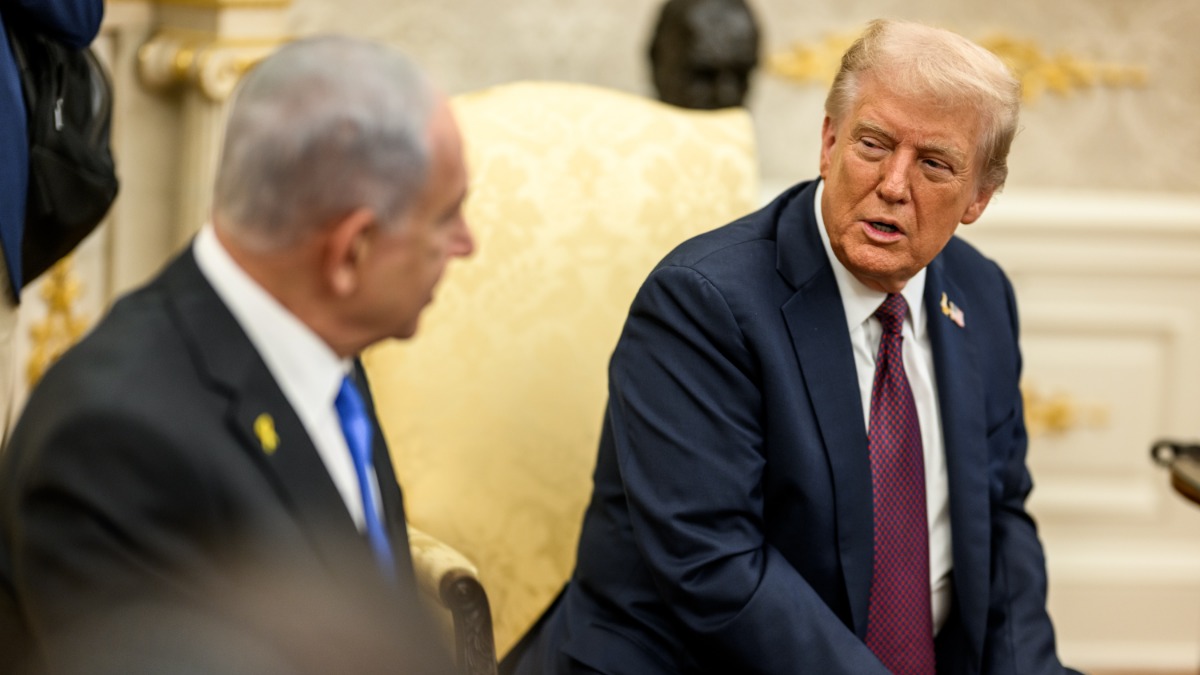
President Donald Trump just dropped a bombshell claim that the U.S. secretly moved over 100 million barrels of oil through the Strait of Hormuz, a move that defies every known rule of naval logistics. According to The Hill, in a Truth Social post on June 10, 2026, he said he “directed” the military to execute a covert mission to support oil tankers and commercial ships navigating the high-risk waterway.
The operation, he claimed, resulted in more than 100 million barrels making it through the strait, with over 200 commercial ships safely completing the journey. “This wildly successful effort is because the UNITED STATES of AMERICA CONTROLS the Strait of Hormuz – NOT Iran,” he wrote. “Their military is defeated, and their economy is lost. It’s over for Iran.”
The announcement came during an Oval Office appearance where Trump doubled down on the operation’s success, even tying it to recent inflation numbers. “I love the inflation,” he said, despite the consumer price index rising to 4.2% over the past year.
Trump claimed that 22 ships were moved under the cover of night
“We’ve been taking out millions of barrels of oil. Nobody knows it.” He went on to claim that 22 ships were moved under the cover of night, exploiting what he described as Iran’s lack of radar after U.S. strikes took it out. “That’s why oil is $85 a barrel,” he added, suggesting the secret operation was directly responsible for stabilizing prices.
But the claims raise serious questions about how such a massive operation could have gone unnoticed. The Strait of Hormuz is one of the most heavily monitored chokepoints in the world, with satellite tracking, naval patrols, and global shipping data providing near-constant visibility. Before the conflict escalated, about 20 million barrels of oil passed through the strait daily, accounting for roughly 20% of the world’s petroleum supply.
Since the U.S. and Israel launched strikes on Iran on February 28, traffic has plummeted, with Iran retaliating by attacking ships and mining the sea lane. The effective closure has led to the loss of over 1 billion barrels of oil, the largest supply disruption in history.
Trump’s assertion that 100 million barrels slipped through undetected seems to contradict the reality on the ground. Helima Croft, global head of commodity strategy at RBC Capital Markets, told CNBC that ship traffic through Hormuz remains well below prewar levels, and the world is still losing significant volumes of oil every day.
However, JPMorgan analysts suggested last week that more oil might be moving through the strait than publicly visible, estimating around 2 million barrels per day could be transiting on tankers that switched off their transponders. “Despite the ongoing naval blockade and the steep decline in commercial traffic, surprising volumes of crude and petroleum products still appear to be transiting the Strait,” the bank’s analysts wrote in a June 4 note.
The idea of a secret U.S. operation to facilitate oil shipments isn’t entirely new
In May, Trump announced and then abruptly canceled a mission called Project Freedom, which was supposed to escort tankers stranded in the Persian Gulf. U.S. officials later hinted that the Navy was quietly assisting ships through Hormuz but didn’t disclose the scale of the effort.
A defense official said last week that U.S. forces aren’t escorting vessels but are communicating and coordinating with ships that seek to transit the strait safely. The official emphasized that the military’s role is to ensure ships can move freely, not to provide direct protection. That stance aligns with recent statements from U.S. Central Command, which said clashes with Iran last week began after Tehran launched drones toward “civilian mariners that were rightfully transiting regional waters.”
Secretary of State Marco Rubio confirmed to Congress that the U.S. is responding to Iranian attacks on commercial ships, warning that Iran’s drones lack precision and could strike any part of a vessel, risking an ecological disaster. “If they don’t shoot at those ships, we don’t shoot, but we have to respond,” Rubio told the House Foreign Relations Committee.
The timing of Trump’s announcement is also curious
It comes just a day after the U.S. launched another round of strikes on Iran. The president has repeatedly tied inflation and oil prices to the ongoing conflict, suggesting both would drop once the war ends. But with negotiations in limbo and a fragile ceasefire hanging in the balance, the future of oil shipments through Hormuz remains uncertain. If the U.S. is indeed facilitating secret transits, it’s doing so in a way that keeps the global market guessing.
What’s clear is that the Strait of Hormuz has become a high-stakes chessboard for oil geopolitics. Before the war, the strait was a predictable artery for global energy supplies, but now it’s a battleground where every barrel counts.
Trump’s claim of a 100-million-barrel operation suggests the U.S. is playing a far more active role than previously acknowledged, even if the details remain murky. Whether this is a sustainable strategy or just a temporary fix, it’s reshaping how the world thinks about energy security.
For now, the market is left to parse Trump’s words against the backdrop of ongoing conflict. Oil prices have stabilized around $85 to $90 per barrel, a far cry from the $200-plus nightmare scenario some analysts predicted. But with Iran still a wildcard and the U.S. deepening its involvement, the Strait of Hormuz is far from returning to normal. If anything, Trump’s latest claims prove that in this war, the real battles might be happening in the shadows.
(Featured image: The White House)
Have a tip we should know? [email protected]
Follow The Mary Sue:
