


Texas officials who targeted a journalist just got a response from the Supreme Court that will change how the First Amendment works for everyone
A bad precedent.

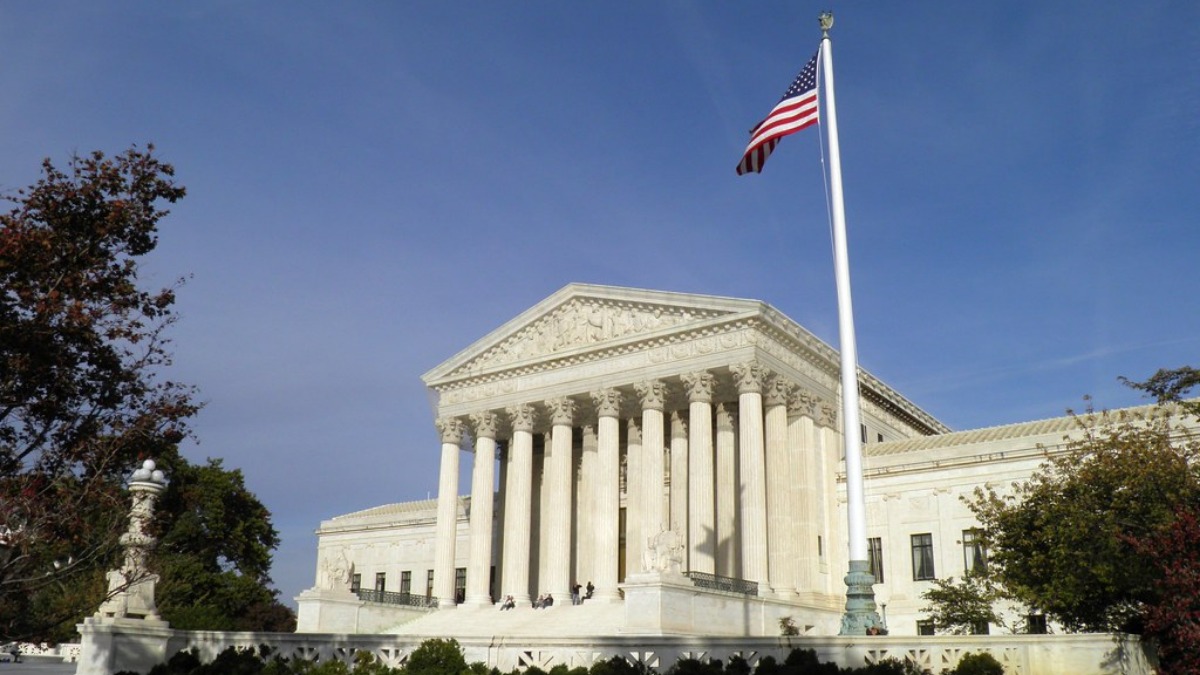
The Supreme Court just delivered a significant blow to citizen journalists, rejecting a case brought by Priscilla Villarreal against Texas officials who had arrested her for reporting. This decision, announced on Monday, means Villarreal’s civil rights claim, which argued her First Amendment free speech rights were violated, cannot move forward.
According to NBC News, Villarreal, an online journalist from Laredo, Texas, has built a substantial local following through her Facebook page. Back in 2017, she reached out to a police officer to confirm the identities of a suicide victim and a car accident victim, details that weren’t yet public. After getting the information, she reported it to her audience. You’d think a journalist doing their job would be fine, but Laredo officials saw it differently.
They had Villarreal arrested, alleging she violated an obscure state law that prohibits soliciting information from a public employee to obtain a benefit. This law is quite contentious, because if enforced broadly, it could technically apply to countless journalists who routinely seek information from the government and then share it with their readers or viewers.
The ruling is a tough outcome for anyone who believes in the right to information
While the charges against Villarreal were quickly dropped, the damage was done. She wasn’t going to let it go, so she filed a civil rights lawsuit, arguing her free speech rights were clearly violated.
The core issue in Villarreal’s case revolved around “qualified immunity,” a legal defense that shields government officials from being sued unless their conduct violates clearly established statutory or constitutional rights, and those rights were known to the official at the time. Essentially, it makes it really tough to sue police officers and other officials for alleged constitutional violations.
Villarreal’s lawyers argued that qualified immunity shouldn’t apply here because the officials should have known that enforcing such a state law against a journalist was an obvious free speech violation. Despite their arguments, Villarreal lost in the lower courts on this qualified immunity question, which led her to ask the Supreme Court to step in.
The Supreme Court had even told the New Orleans-based 5th U.S. Circuit Court of Appeals to take another look at its ruling that favored the defendants, including Laredo’s now-former police chief, Claudio Trevino, and District Attorney Isidro Alaniz. But even after that second look, the appeals court reached the same conclusion last April. Now, with the apex court’s refusal, qualified immunity stands, and Villarreal’s fight for her First Amendment rights in this instance is over.
Liberal Justice Sonia Sotomayor wasn’t quiet about her disapproval, dissenting strongly from the court’s decision. She called the refusal to take up the case a “grave error,” clearly stating, “It should be obvious that this arrest violated the First Amendment.” This is a significant statement from a Supreme Court Justice, highlighting how concerning the outcome is.
Of late, qualified immunity has been drawing criticism from legal groups across the political spectrum. Many argue it unfairly favors defendants and makes it difficult to hold officials accountable for constitutional violations. The doctrine itself was adopted by the Supreme Court, not Congress, but the current justices have largely avoided revisiting it, despite numerous requests.
It’s a recurring theme, too. On the very same day, the Supreme Court also handed a win to a police officer in Vermont in another qualified immunity case, where he faced an excessive force claim for handling a protester. Sotomayor, and fellow liberal Justices Elena Kagan and Ketanji Brown Jackson, also dissented in that case.
They held that the court often leans towards protecting officers in these situations. She wrote that the decision gives officers “license to inflict gratuitous pain on a nonviolent protestor even when there is no threat to officer safety or any other reason to do so.”
Have a tip we should know? [email protected]
