


‘I have never been so mortified in my life’: Woman picks a seat on Southwest Airlines—until a gate supervisor tells her she should’ve bought two
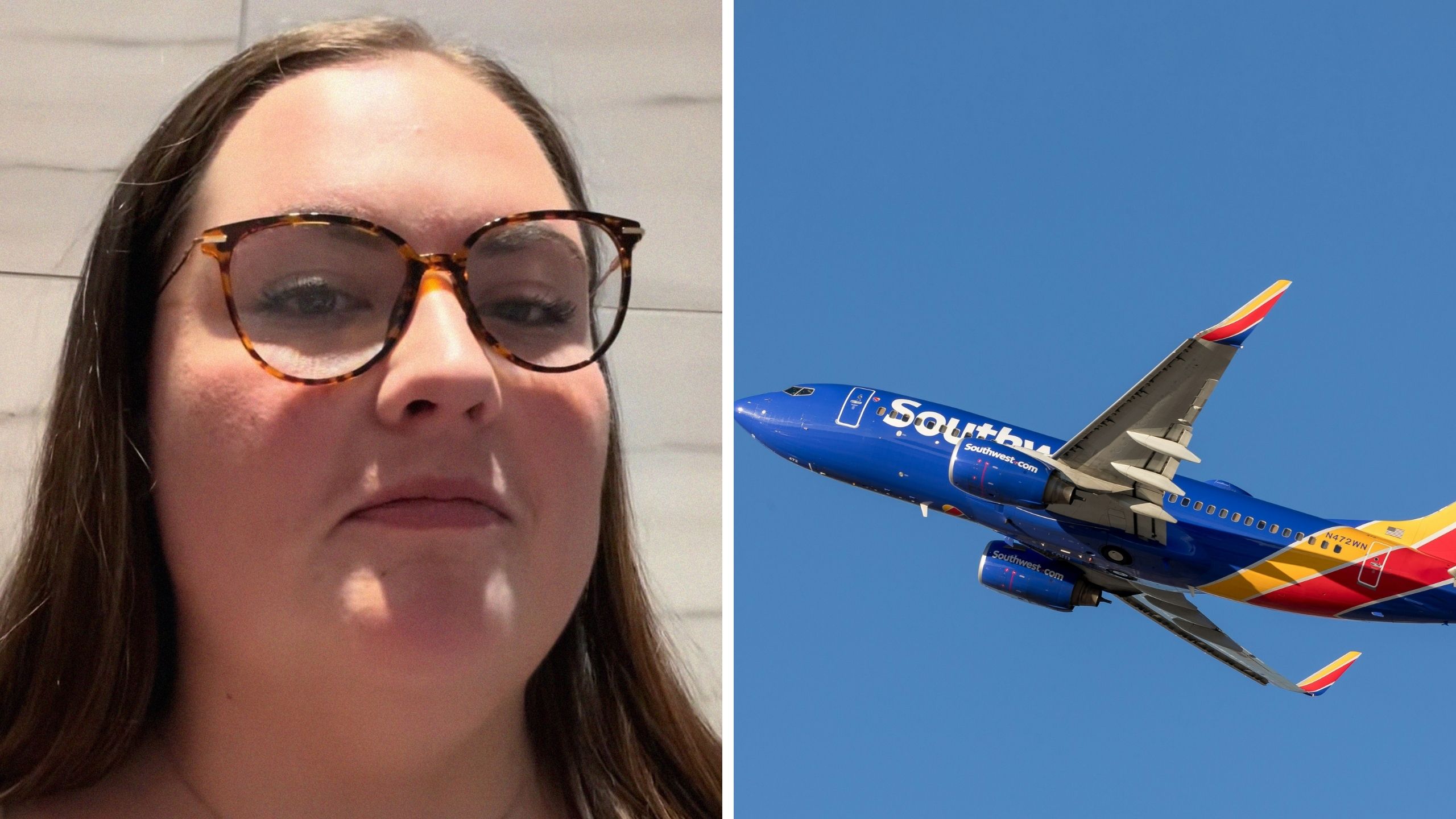
A TikToker has gone viral after her encounter with an airline staff member proved one thing: fatphobia remains alive and well.
In the clip, TikToker Grace Simpson (@graceplattesimpson) shared a troubling experience she had with Southwest Airlines. It has since amassed 573,200 views.
It started off in what appeared to be an airport bathroom.
What happened at the airport?
She explained that she was pulled aside at the gate, with the assistant telling her, “It’s been flagged to me that you might be a customer of size.” He said he wanted to tell her about the airline’s policy, which, in short, is that she had to buy two seats. Simpson said she wasn’t doing that, explaining that she has never been asked or had this conversation before. The assistant then told her he moved her and tried to reassure her about her appearance.
Visibly emotional, Simpson said, “Moments like this make me wanna crawl under a rock and live there forever.”
The camera then cut to a clip of Simpson seemingly in a car, as she explained that she recorded the conversation right after her interaction with the attendant. Upon reflection, she said she was “mad, appalled, and disappointed.” According to her, discriminating against fat people is still tolerated discrimination. She also noted that, despite not being the only large person on the plane, she was the only one approached.
This new approach, she added, feels like a “witch hunt against fat people” and a “money grab.” She said she was also troubled by a particular nuance of this purported policy. According to Simpson, when it comes to purchasing an extra seat, if the seat next to you happens to be empty, you will be refunded. However, if someone else wanted to buy a seat next to you and it’s not open, you’d get charged for it.
She ended the video by emphasizing that she felt embarrassed, belittled, and singled out.
@graceplattesimpson I had the worst flying experience of my life while flying @Southwest Airlines. I was a loyal customer, but not anymore. Their new policy truly discriminates against people of size. I have never been so mortified in my life. In my personal opinion, if an airline is going to strictly enforce such a policy there should be clear parameters and guidelines for how a person of size is classified. ##southwest##fyp##fypシ##plussize##southwestairlines ♬ original sound – Grace Simpson
What did commenters say?
Commenters were split. Some were supportive of Simpson, with one saying that Southwest Airlines is “inviting a class-action lawsuit.”
Another asked, “Would they treat a 6’5” muscular man the same way? That’s the real question.”
While a third pointed out, “THEY shrunk the size of their seats.”
However, others were less so. “Not that I’m agreeing with them, but nobody wants somebody else’s body squishing them into another seat,” a fourth wrote.
“If you’re spilling into the next seat, then yeah you should be required to buy a extra seat,” a fifth added. “Not sure why this is controversial.”
And a sixth levied, “I’m really asking…if you admit you spill over then what do you think the solution should be? Each seat costs money. Airplanes can only handle so much weight. I don’t know what a fair solution would be.”
What is Southwest Airlines’ policy?
Per the Southwest Airlines website, “customers of size” are expected to “proactively purchase” a second seat if they “encroach upon the neighboring seat.” However, the site notes that extra seats should not be purchased for the sole purpose of keeping the adjacent seat empty.
If it is “determined” that a customer needs a second seat, they are expected to purchase one there and then at the airport. If there aren’t available seats to do this, they will be rebooked on a different flight. Customers can then request a refund for the extra seat after travel, provided that: the flight has departed with at least one open seat, both seats are in the same fare class, and it is within 90 days of travel.
The TikToker issued two follow-ups
Simpson then made two follow-up videos.
In the first, she addressed some viewer comments. She specifically called out commenters who said that they hoped this was the wake-up call/push she needed to lose weight. Simpson pointed out that she had already undergone a gastric bypass, and that hurtful comments aren’t motivation.
She also singled out a commenter who posted screenshots of a video of Simpson working out. They wrote, “This is why they pulled you aside.”
In response, Simpson noted how “you hate a fat person either way.” As for the policy itself, she said that she understands, but that being squashed while flying is an “inevitable truth.” She closed the video by telling plus-sized people that they have “every right” to “take up space.”
Then, in a second follow-up, she responded to a commenter suggesting that she should sue. She asked her audience whether they thought she’d actually have a case.
Simpson didn’t immediately respond to The Mary Sue’s request for comment via TikTok comment and TikTok direct message. Southwest Airlines didn’t immediately respond to The Mary Sue’s request for comment via email.
Update Feb. 24, 2026:
In an email interview with The Mary Sue, Simpson revealed that while Southwest Airlines hadn’t contacted her, she would “welcome” a conversation with the leadership team.
“The conversation with the Southwest supervisor made me feel small, embarrassed, and targeted,” she said. “I was traveling for work with the Animal Agriculture Alliance and was in the middle of speaking with my boss when I was approached. Being pulled away mid-conversation by airline leadership was humiliating.”
She went on to say that it was “clear” the supervisor was “uncomfortable” with the interaction.
“He told me he personally would not have approached me or questioned my ability to fit in a single seat, but that a desk agent had flagged me, and he was obligated to follow up. That explanation reinforced how subjective the policy is — anyone can flag a passenger based on personal opinion. That is what made the experience feel like a ‘witch hunt on fat people.’”
Simpson added that when she told the supervisor that she would not be purchasing a second ticket, he moved her to the back row with no additional charge. However, she also claims that he told her that she might be required to purchase a second ticket or risk being unable to fly home.
“As my return travel day approached, I was extremely nervous about facing another public and embarrassing experience,” she said. “It felt as though he was attempting to pressure me into purchasing another ticket to avoid potential humiliation. I want to add that I flew home without any issues.”
She also described Southwest’s policy as “half-baked and poorly communicated.”
“During my conversation with the supervisor, I even asked — seriously — whether there would be a scale or some type of measurement system used before boarding. He reacted as though the question was unreasonable, but my concern was genuine. How can a policy be enforced fairly without clear, measurable standards?”
As for the video itself, Simpson described the reception to her viral video as a “crazy experience.”
She said, “The response has been overwhelmingly supportive. I would estimate that about 75% of the comments have been kind, encouraging, and critical of Southwest’s policy. Many people have shared similar experiences or expressed empathy. That said, about 25% of the comments support the policy and include negative opinions about sitting next to plus-size travelers. Seeing that range of reactions has been eye-opening, but overall, I’ve been grateful for the support and the conversations the video has sparked.”
In regard to viewer takeaways, Simpson argued that “policies impacting people’s bodies must be clear, consistent, and applied with dignity.”
“If an airline is going to implement a policy that requires someone to purchase an additional seat, there should be transparent, objective guidelines and proper communication so passengers aren’t blindsided at the gate. No one should feel embarrassed or singled out simply for existing in their body,” she added. “At the end of the day, this is about fairness, respect, and making sure policies are applied in a way that doesn’t cause unnecessary fear and harm.”
Have a tip we should know? [email protected]
Follow The Mary Sue:
