Small business owner sells a man 5 Chanel bags, then gets a warning text and realizes he stole $24,000 worth of inventory from them: ‘This is fraud’
Another card scam.
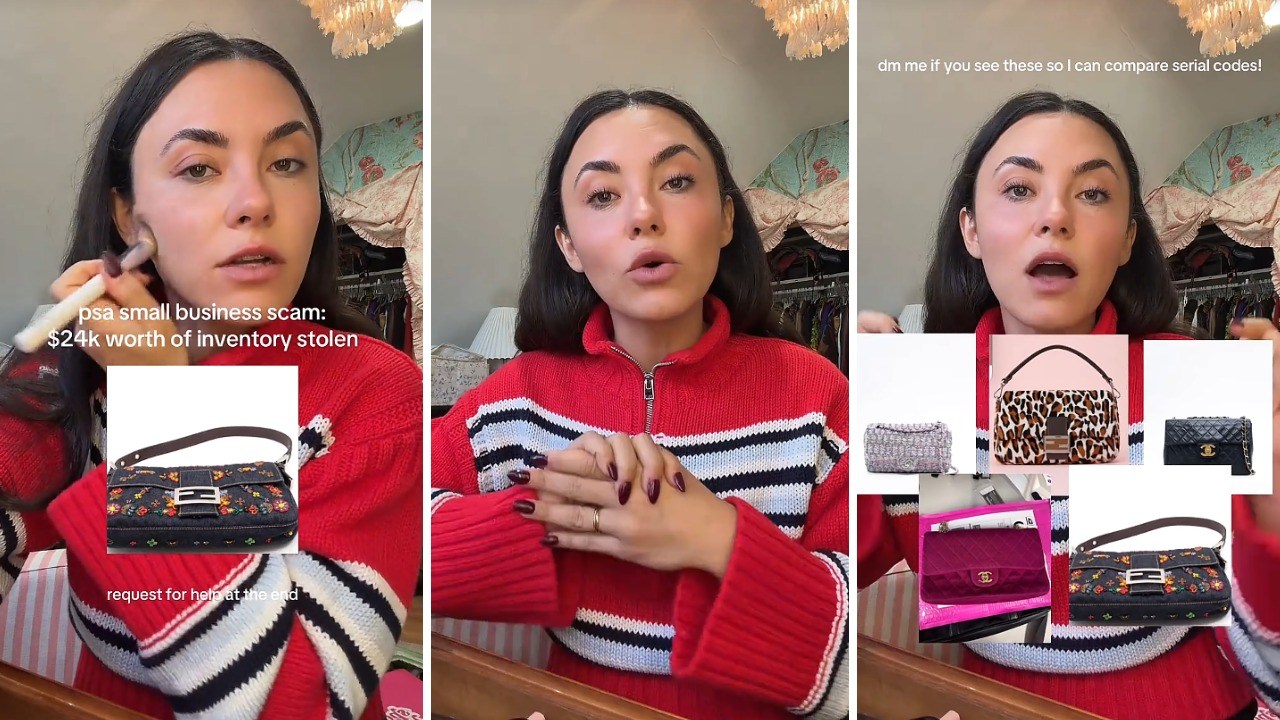
Nik Pollina, a Brooklyn-based entrepreneur who runs the vintage studio Seven Moods with her husband Fred, recently revealed that their small business lost $24,000 in inventory after a man allegedly used compromised payment methods to secure five Chanel bags from them. The content creator, who has built a following of 230,000 people across TikTok as @nikpollina, and Instagram as nikpollina_, shared the details of the incident on November 26, 2026.
According to Pollina’s video, the ordeal began at a market where a buyer attempted to purchase a bag, only for his card to be declined. He was then allowed to manually enter his card information, a common occurrence in retail that unfortunately opened the door for this scam. The situation escalated when the man asked to exchange numbers and browse the business website for additional items.
He eventually arranged to meet Fred at a hotel to complete further transactions. Pollina alleges that the man continued to use manual card entry for four more luxury bags, and every single transaction initially appeared to clear in their bank account. Things took a turn when the man requested to purchase two additional Chanel bags for $22,000, asking to split the payment across multiple transactions.
Suspicion set in when Pollina used an AI tool to analyze the payment data
Pollina says Claude made her realize that the credit cards used in the previous transactions were from different countries. The scam was confirmed the following day when a woman, claiming to be the man’s girlfriend, contacted Fred with a stark warning via a text message. The message stated, “Please don’t sell him these bags. This is fraud. He is stealing credit cards.”
While the couple successfully avoided the final $22,000 sale, the five bags already handed over were lost to chargebacks. Pollina is now using her platform to raise awareness, warning other small business owners that a payment that clears is not necessarily a payment that stays.
The incident highlights the growing vulnerability of small businesses during the holiday shopping season. As retailers scramble to process high volumes of orders, they often have less time to scrutinize individual transactions, making them prime targets for sophisticated fraudsters.
Retail Insider notes that card-not-present fraud – which includes online, phone, or keyed-in payments – accounts for roughly 65% of reported fraud cases. Unlike large retailers with dedicated security teams, many small business owners are left to manage these risks alone, often while balancing the pressures of customer service and inventory management.
The scam described by Pollina fits the pattern of card-not-present fraud
In card-not-present fraud cases, criminals use stolen details to make purchases without physically presenting a card. Because these transactions are conducted remotely, they are susceptible to chargebacks, where the legitimate cardholder disputes the charge, leaving the merchant without both the goods and the funds.
Fraudsters often use time pressure and emotional appeals to convince merchants to skip standard verification procedures. As noted by security experts, a sudden wave of small payments or requests to split payments across different cards are significant red flags that often indicate someone is testing stolen card numbers to see which ones work.
Small business owners are increasingly urged to implement layered security measures to protect themselves. Tools like 3D Secure, which requires authentication through the cardholder’s bank, can shift liability away from the merchant in the event of fraud. Additionally, businesses are encouraged to maintain clear records, including transaction logs, delivery confirmations, and device data, which are vital if a merchant needs to contest a chargeback.
Forte.net states that federal laws like the Fair Credit Billing Act (FCBA) provide consumers with robust billing-error protections. However, these same protections can be exploited through deliberate chargeback fraud, where a purchaser knows the transaction is legitimate but disputes it anyway to keep the goods.
The financial toll of these scams extends beyond the initial loss of inventory
Merchants may face dispute fees, higher-risk payment processing rates, and even the potential closure of their merchant accounts if their chargeback ratios climb too high. Mastercard and Visa monitor these ratios closely, and exceeding established thresholds can lead to a business being placed on monitoring lists that make it difficult to secure future payment processing services.
Pollina’s story serves as a practical, high-stakes reminder for creators and entrepreneurs to treat unusual payment requests with extreme caution. Whether it is a request for manual card entry, a split payment, or an urgent delivery, these actions often deviate from standard customer behavior.
By slowing down the verification process and utilizing modern security protocols, small businesses can better defend themselves against the sophisticated schemes that are becoming more common in the booming vintage and luxury resale market. While Pollina assumes the lost bags may not be recovered, her decision to share the experience is intended to help her peers avoid similar losses as they navigate the busy holiday period.
Have a tip we should know? [email protected]
Follow The Mary Sue: