


Senate Faces Pressure to Confirm Jay Clayton as Trump Abandons His Controversial Pick for Intelligence Director
Waiting game?
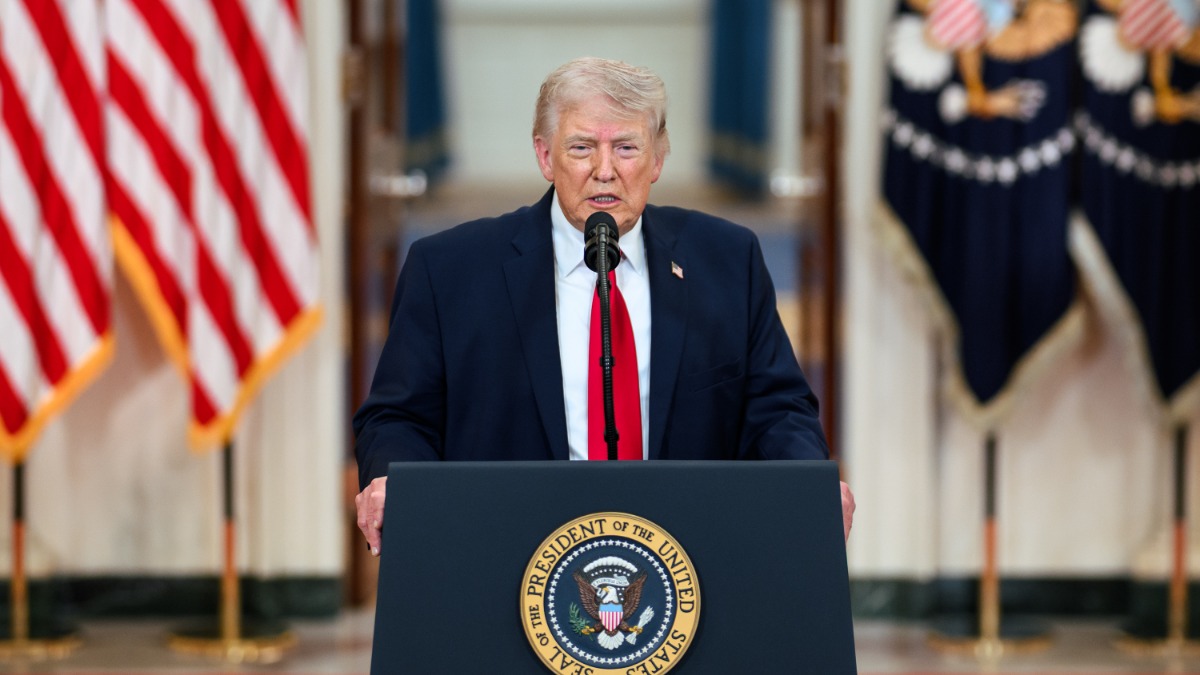
The Senate is scrambling to confirm Jay Clayton as the next director of national intelligence after President Donald Trump abandoned his controversial pick for the role. Clayton, the former chair of the Securities and Exchange Commission and current U.S. attorney for the southern district of New York, was nominated late Thursday, June 11, 2026, following intense pushback over Trump’s initial choice, Bill Pulte.
The move comes just days before a critical surveillance law expires, adding urgency to an already messy transition. According to The Guardian, Trump announced Clayton’s nomination on Truth Social, urging the Senate to confirm him “as soon as possible.” The president framed the pick as a straightforward solution, but the reality is far more complicated.
Clayton’s lack of intelligence experience mirrors the same red flags that doomed Pulte’s candidacy. Neither has operational background in the 18 agencies that make up the intelligence community, a fact that’s raising eyebrows even among Clayton’s supporters.
Still, there are early signs of bipartisan support for Clayton
A Wall Street corporate attorney for most of his career, Clayton has spent decades navigating high-stakes financial deals. During the 2008 financial crisis, he played a key role in negotiating bailouts and fire sales, including the collapse of Bear Stearns and Lehman Brothers. That experience might reassure some lawmakers, but it’s also drawing scrutiny.
His work defending Deutsche Bank in a sanctions-evasion case involving Russian oligarchs is likely to resurface during confirmation hearings. The case, which involved so-called “mirror trades” where Russian clients moved money through the bank to avoid sanctions, settled for $425 million just days into Trump’s first term.
Clayton’s tenure at the SEC also wasn’t without controversy. He represented Ally Financial in a $25 billion settlement over “robo-signing” foreclosure fraud, a case that left many homeowners in legal limbo. Critics argue that his Wall Street ties could pose conflicts of interest, especially in a role that oversees intelligence agencies with significant financial and cybersecurity portfolios.
As U.S. attorney in Manhattan, Clayton now oversees one of the most high-profile prosecution offices in the country, handling everything from terrorism to public corruption. That experience might help him navigate the intelligence world, but it’s a far cry from the operational expertise typically expected of a director of national intelligence.
The bigger problem, though, is timing
Tulsi Gabbard, the current director, is stepping down this month as her husband undergoes cancer treatment. That leaves a gap that Trump initially tried to fill with Pulte, a move that backfired spectacularly. Pulte, a vocal Trump ally with no intelligence background, was widely seen as a political appointment. His lack of qualifications and combative online presence made him a non-starter for many lawmakers, including some Republicans.
Even after Clayton’s nomination, Trump doubled down on Pulte, insisting he’d stay on as acting director, albeit temporarily. That’s not sitting well with key figures in Congress. Senate Minority Leader Chuck Schumer has been blunt about the situation. “Pulte has to go,” he said. “He cannot be in the DNI role. Our national security is too important.”
House Democratic Leader Hakeem Jeffries said “under no circumstances should the American people be asked to trust their privacy and national security” to Pulte. The pushback isn’t just coming from Democrats.
Mark Warner, the vice-chair of the Senate intelligence committee, called Clayton a “capable public servant” but made it clear that Pulte’s removal is a prerequisite for moving forward. “Before the Senate can take up a FISA extension, there needs to be a clear guarantee that Mr. Pulte will not serve as acting DNI,” Warner said.
That FISA extension is the ticking clock here
Section 702 of the Foreign Intelligence Surveillance Act, which allows US intelligence agencies to intercept foreign communications without a warrant, expires Friday. The House already failed to pass a short-term extension this week, and the Senate is running out of time.
Warner suggested two possible solutions: either Gabbard stays on until Clayton is confirmed, or the Senate-confirmed principal deputy director of national intelligence takes over as acting head. Neither option is ideal, but both would remove Pulte from the equation.
The irony here is that Clayton’s nomination might actually make things harder in the short term. Since Gabbard is leaving before Clayton can be confirmed, there’s still a need for an acting director. If Pulte stays, even temporarily, it could derail the FISA extension entirely. That’s a risk Congress isn’t willing to take. The intelligence community relies on Section 702 for critical foreign surveillance, and letting it lapse would leave a gaping hole in national security.
For now, all eyes are on the Senate
Clayton’s supporters argue that his legal and financial experience makes him uniquely qualified to oversee the intelligence community’s sprawling budget and complex operations. Critics, however, worry that his lack of hands-on intelligence work could leave him ill-prepared for the job. Either way, the Senate doesn’t have the luxury of a slow deliberation. With FISA set to expire and Pulte still in the mix, lawmakers are under pressure to act fast.
Trump’s decision to nominate Clayton is a clear attempt to reset the narrative after the Pulte debacle. But the damage might already be done. The president’s insistence on keeping Pulte in an acting role, even temporarily, has poisoned the well for any smooth transition. If the Senate moves quickly on Clayton, it could salvage the situation. If not, the intelligence community could be left in limbo just as a critical surveillance tool is set to disappear.
(Featured image: Daniel Torok)
Have a tip we should know? [email protected]
Follow The Mary Sue:
