


New York’s latest flashpoint over West Bank real estate just got uglier as protesters face off with police and the law may just be on their side
Breaking international law with complete impunity.
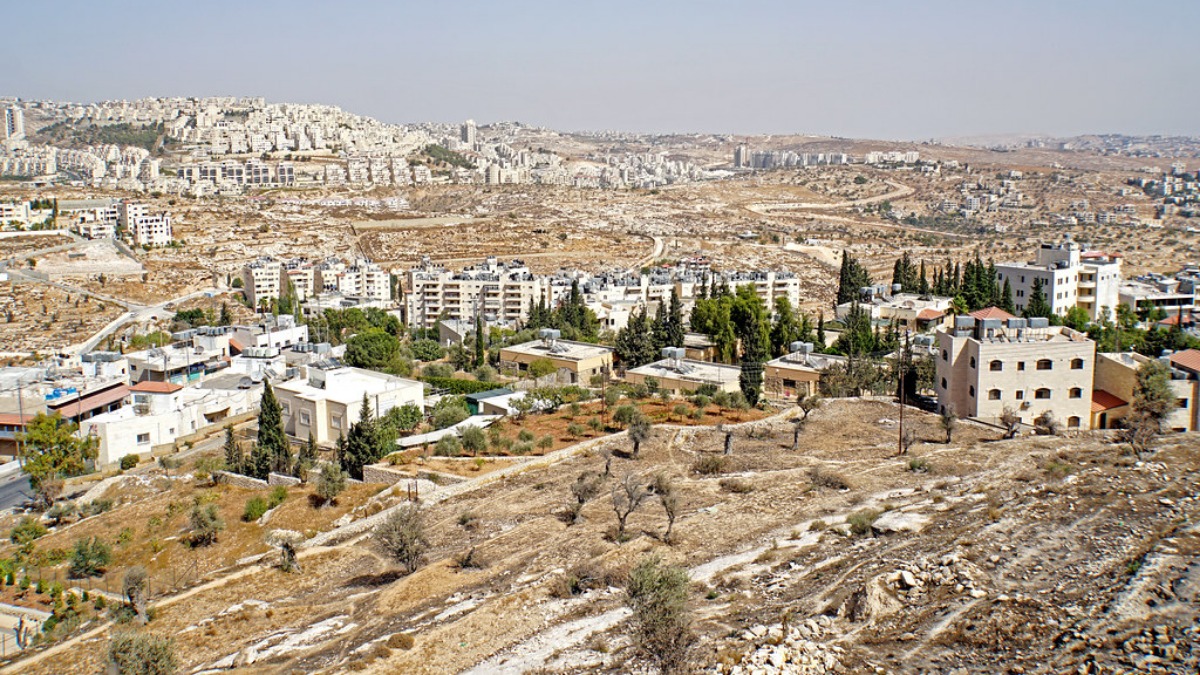
New York’s latest showdown over West Bank real estate just escalated as protesters clashed with police outside a synagogue hosting an Israeli property expo, and the law might actually back the demonstrators this time. About 100 pro-Palestinian activists from Pal-Awda NY gathered outside Park East Synagogue on Manhattan’s Upper East Side on May 5, 2026, evening, marking the second protest in six months against the Great Israeli Real Estate Event.
According to Al Jazeera, the expo, held in cities across the U.S. and Canada, markets properties in Israeli settlements in Palestine, many of them in the occupied West Bank, where international law explicitly deems such construction illegal. Counter-protesters also showed up, and scuffles broke out as police tried to keep the groups separated.
Protesters accused officers of heavy-handed tactics. This came after some demonstrators attempted to push past security barriers, while police enforced new buffer zone rules the city council passed earlier this year to restrict protests near religious sites.
The real estate event itself has become a lightning rod for controversy
Organizers describe it as a private, invitation-only affair, but critics argue the properties being sold are built on land confiscated from Palestinians. An Intercept reporter who attended Tuesday’s expo said the event’s website highlighted settlements like Gush Etzion, southeast of Jerusalem, while one company displayed listings in Kfar Eldad and Karnei Shomron, both in the West Bank.
The American-Arab Anti-Discrimination Committee has long accused these expos of discriminatory practices, including religious screening of attendees. In 2024, the group filed a complaint with the U.S. Department of Housing and Urban Development and the Department of Justice, arguing that refusing to sell property based on race or national origin violates U.S. law.
That same year, New Jersey’s Civil Rights Division questioned organizers of a similar expo after reports surfaced that attendees were asked for details about their synagogue and rabbi. Jewish Voice for Peace, one of the groups opposing the event, called out the choice of venue. “Yet again, these events are attempting to cynically shield themselves from protest by holding their sales at a synagogue,” the group wrote.
“No one should enable the sale of stolen land, let alone a religious institution.” The statement also labeled the event “racist, exclusionary, and perpetuating the ongoing ethnic cleansing of Palestinians.” But not everyone sees it that way. State Assemblyman Micah Lasher condemned the protesters, accusing them of trying to “create fear in the hearts of Jewish New Yorkers and stigmatize our community.”
The legal landscape around these protests is shifting
New York’s city council recently passed legislation requiring police to establish buffer zones during demonstrations near places of worship, a move that could limit how close protesters can get to such events. But the bigger question is whether the real estate expos themselves are breaking the law.
Under international law, Israeli settlements in the West Bank are illegal, and rights groups argue that selling properties there, especially in a way that excludes non-Jewish buyers, violates anti-discrimination statutes. The U.S. government has historically condemned settlement expansion, though it’s rarely taken concrete action.
In 2019, the U.S. reversed its long-standing position and declared that settlements no longer violate international law, but even that shift didn’t lead to punitive measures against Israel. Washington still provides billions in military aid annually, and the expos continue to operate with little interference.
The controversy isn’t just about New York
West Bank settlements have been a flashpoint for decades, but the pace of expansion has accelerated under Israeli Prime Minister Benjamin Netanyahu’s right-wing government. In April, Israel approved 34 new settlements in a single security cabinet session – the largest batch ever greenlit at once. The decision was reportedly made in secret, with no official announcement from the Israeli government.
Ten of the approved sites are existing outposts, which are illegal even under Israeli law but will now be retroactively legalized. The remaining 24 are new constructions, many in remote areas or within Palestinian neighborhoods where Israeli forces rarely operate. Rights groups say the move is part of a broader strategy to entrench Israeli control over the West Bank, making a future Palestinian state nearly impossible.
The international community has reacted sharply. The Organisation of Islamic Cooperation condemned the new settlements as a “flagrant violation of international law,” while the European Union called them “unlawful” and demanded Israel reverse the decision. Sweden’s Ministry of Foreign Affairs echoed those concerns, warning that the settlements undermine peace efforts. Türkiye also criticized the move, calling it a “serious violation of international law and UN resolutions.”
But Israel has shown little interest in backing down. Since 1967, more than 500,000 Israelis have moved into West Bank settlements, living among roughly three million Palestinians. The expansion has only intensified since October 2023, with rights groups documenting a surge in land seizures, settler violence, and new construction approvals.
For protesters, the fight is about more than just real estate
It’s about whether the U.S. will hold Israel accountable for actions that violate international law or continue to enable them. The Great Israeli Real Estate Event has become a symbol of that tension, drawing activists who see the expos as complicit in the displacement of Palestinians.
With the city’s new protest rules in place, the next demonstration might not get as close to the action. That could be a win for the event’s organizers, but it’s unlikely to silence the broader debate on who can buy, sell, or live on land in the West Bank.
(Featured image: archer10 Dennis)
Have a tip we should know? [email protected]
Follow The Mary Sue:
