


California Town’s Children Reportedly Stricken With Rare Form of Cancer, as Decades-Old Note Deepens Mystery: ‘Not to Be Built Over’
Officials are investigating what caused the cancer outbreak.
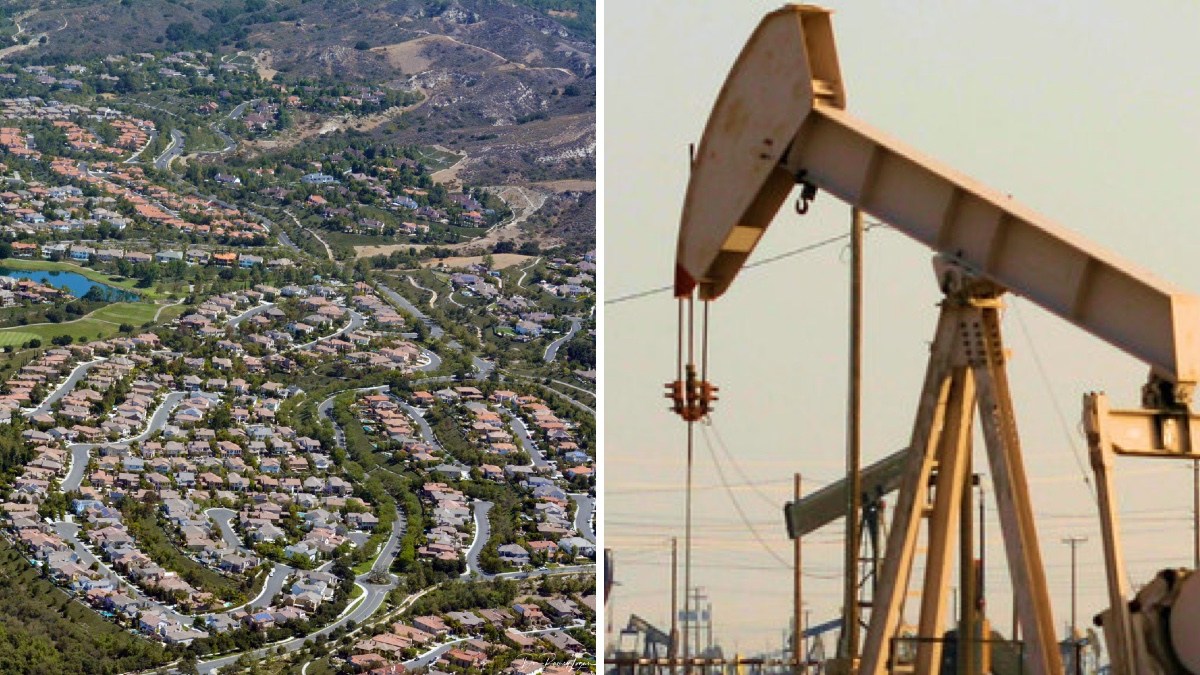
A decades-old warning about an abandoned oil well beneath Ladera Ranch, California, has emerged as residents seek answers about a series of rare cancer diagnoses among children and young adults in the Orange County community. The warning appears in records for an abandoned well near Citrus Lane, a street in the city.
Written twice by hand and later included in the well’s final abandonment report, the note states: “This well is not to be built over without further consideration.” The records do not explain why someone added the warning, the Los Angeles Times reported Aug. 30.
That unexplained warning has drawn attention because the well sits beneath a community where residents have raised concerns about childhood cancer. Developers built Ladera Ranch in the 1990s, a 4,000-acre planned community now with roughly 26,000 residents.
The Ladera Ranch Ewing sarcoma outbreak.
The cancer concern centers in part on Ewing sarcoma, an aggressive cancer that develops in bone or soft tissue. The disease primarily affects children and young adults, particularly those between the ages of 10 and 20. The American Cancer Society estimates that about 200 children and teens in the United States receive an Ewing sarcoma diagnosis each year, underscoring how uncommon the disease is.
But Ladera Ranch has reportedly seen at least six cases of Ewing sarcoma involving children and young adults between 2013 and 2024. One of those children, 17-year-old Brody Matteson, died in March 2026 after a 20-month battle with the disease. Another Ladera Ranch resident, Ryan Regan, died from Ewing sarcoma in October 2025 after an eight-year battle that began with his diagnosis at age 29.
Those cases prompted residents to look more closely at possible environmental factors. Ladera Health Watch, a community group, has gathered information about local health data, pesticide use, and historical environmental conditions. Residents have also raised questions about two abandoned oil wells beneath the community and the nearby Prima Deshecha Landfill.
The Citrus Lane well is now receiving particular scrutiny because of the old warning. The two abandoned wells reportedly had no history of producing oil or gas. Developers abandoned the wells in the early 2000s when Ladera Ranch construction began.
Residents have asked the California Geologic Energy Management Division, known as CalGEM, to reevaluate the integrity of the Citrus Lane well. A California Department of Conservation spokesperson told the Los Angeles Times that the warning may have resulted from a clerical error. Kenneth Henderson, who served as acting state oil and gas supervisor when the final report was approved, told the newspaper he did not remember why the note appeared.
The research continues.
The Los Angeles Times reported that a study published in January found no statistically significant correlation between proximity to active or abandoned oil and gas development and the risk of childhood Ewing sarcoma in California. California health officials have not identified an environmental cause for the Ladera Ranch cases. The California Department of Public Health (CDPH) says no known lifestyle or environmental cause of Ewing sarcoma has been established and that it remains unknown whether pesticides or other chemicals created an exposure risk in the area.
The state is now conducting a more focused review. The California Cancer Registry is analyzing cancer data for Ladera Ranch using information through 2023 and census-tract-level data. CDPH expects to complete the assessment in fall 2026, although the agency says the timeline could change depending on the scope of the review and additional information.
The assessment will determine whether cancer incidence in Ladera Ranch appears higher than expected. CDPH cautions that even if researchers identify an unusual pattern, the assessment alone cannot establish that an environmental exposure caused it.
Have a tip we should know? [email protected]
Follow The Mary Sue:
