


Woman’s Plane Is Headed for Utah. Then She Finds Out They Landed in Idaho Instead: ‘I Didn’t Know Planes Could Just Run Out of Fuel’
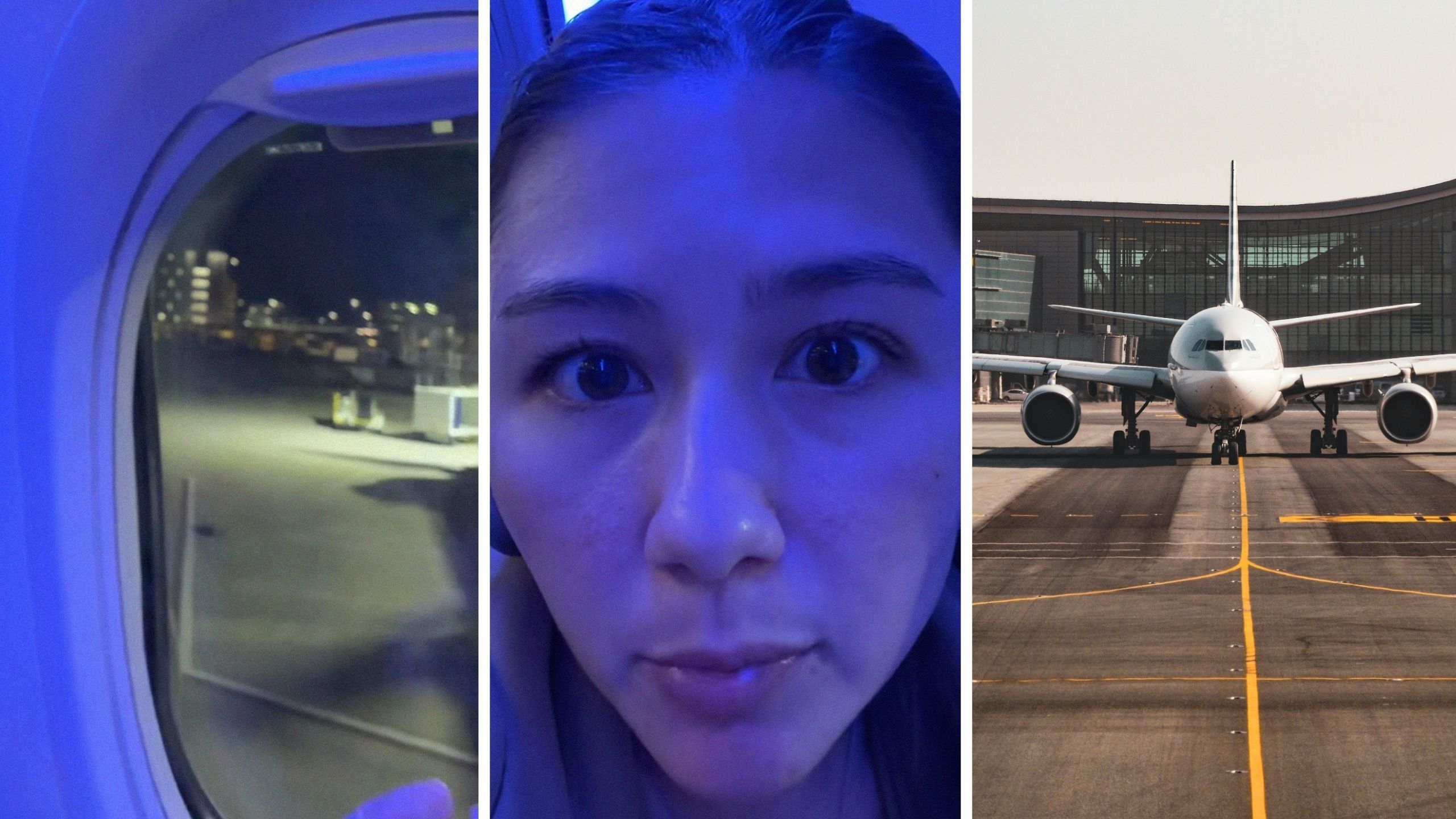
Commercial flights are so routine now that most passengers do not think much about what is happening behind the cockpit door. Many people board, find their seat, half-listen to the safety demonstration, and expect the plane to land exactly where the ticket says it will. One woman traveling to Utah says that this did not happen on her flight.
Instead, the pilot landed more than 300 miles away, and the reason passengers were allegedly given was unusual.
Content creator Kirsten (@spamuffin) posted a video from her seat while she was still on the plane, explaining what was happening. The clip has gotten over 84,300 views.
Woman Says Flight Rerouted
“Guys, I’m on the plane right now,” Kirsten begins. “We’re supposed to land in Utah, but we landed in Idaho because the plane ran out of fuel,” she says.
According to the TikToker, the plane had stopped so it could refuel.
“So they’re refueling,” she adds. “I didn’t know planes could just run out of fuel, but yeah.”
Kirsten does not name the airline or explain whether the pilot gave passengers any details about the sudden landing.
However, it is important to note that a plane does not reroute only to refuel. Flights can divert for many other reasons, including severe weather, poor visibility, strong winds, mechanical warnings, airport congestion, or other operational issues, according to a report by the Federal Aviation Administration.
How Often Do Planes Have To Refuel?
The answer depends on the aircraft, its fuel tank capacity, weight, route, altitude, and other conditions.
According to a Skycop blog post, short-haul aircraft are generally designed for flights lasting up to 3 to 4 hours. Medium-range aircraft are designed for flights around 5 to 7 hours, while long-haul aircraft can handle flights lasting roughly 10 to 18 hours.
But aircraft do not only carry the fuel needed to get from point A to point B.
Skycop notes that international aviation has clear fuel-reserve requirements, defined by IATA and ICAO standards, to keep flights safe. That means an aircraft must carry enough fuel for the planned route, plus additional fuel for unforeseen situations.
Usually, that includes fuel for the flight itself, a reserve for waiting in the air for around 30 to 45 minutes, fuel to reach an alternate airport if the destination cannot be used, and an additional safety reserve.
On average, Skycop says airlines set aside about 5% to 10% of the total fuel volume as an extra reserve.
Viewers Were Split
In the comments, several viewers questioned whether the plane truly “ran out” of fuel.
“Planes don’t take off on half tanks bestie,” one commenter wrote. “They always refill to the required amount for the rest of the journey wherever they land.”
Another viewer, however, thought the situation needed a closer look.
“That’s a miscommunication between a contracted Fueller and an oversight by a pilot if this is going on it really needs to be investigated before there’s a disaster,” they wrote.
Someone else compared it to a car running out of gas.
“I mean your car can run out of fuel right ? somebody didn’t add enough fuel. not a big deal,” they said.
A fourth person said they had been through something similar on a different flight.
“Omg this happened to me once going to seattle,” they wrote. “We had to stop in slc and they said we were low on fuel but then made us change planes and eventually cancelled everyone’s flights”.
@spammuffin ♬ original sound – Curse10
The Mary Sue has reached out to Kirsten via email for comment.
Have a tip we should know? [email protected]
Follow The Mary Sue:
