


Her 4-Year-Old Keeps Removing Medical Tubing and Escaping at Night. Then Doctors Deny Him a Safe Bed Because He Can Walk
Short-sighted bureaucracy.
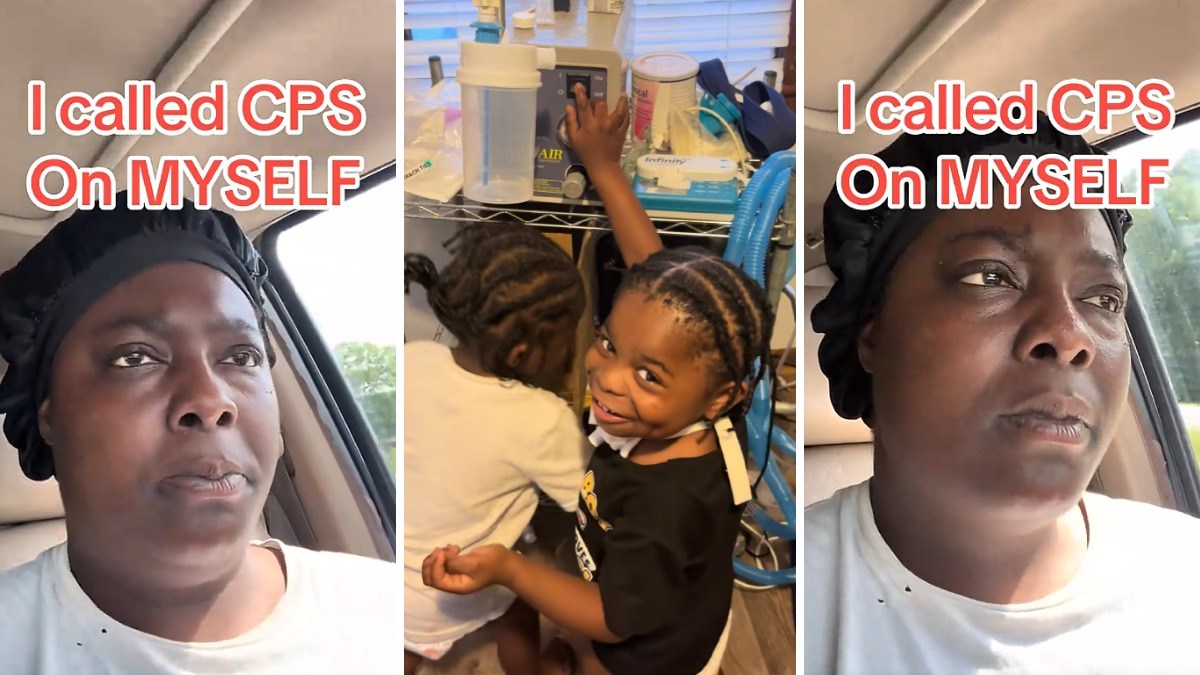
Nesha Byrd @neshabyrd1995 on TikTok, a mother in Alabama, is currently navigating a nightmare scenario where her 4-year-old son’s medical needs are being ignored by the very systems designed to support him. She recently shared her raw, unfiltered frustration regarding the repeated denial of a specialized safe bed for her son, who requires a tracheostomy and a feeding tube in a video that has gone viral.
Despite the clear medical necessity for a secure sleep environment, bureaucratic hurdles have left her feeling completely abandoned by her healthcare providers and social services. The core of the issue is a rigid, nonsensical policy that denies her son a safe bed simply because he is ambulatory. Because he can walk, the insurance and Medicaid processes refuse to classify him as non-mobile, effectively disqualifying him from receiving the equipment he desperately needs.
Nesha explained in her video and follow-ups that her son frequently removes his humidifier tubing at night, pulls out his G-tube while moving, and has even attempted to leave their home unsupervised. These aren’t just minor inconveniences, they are life-threatening situations that occur while she is trying to manage his complex care.
‘I called CPS on my damn self. Yep, I sure did’
In this particularly harrowing moment, Nesha, clearly at her wit’s end, admits, “I called CPS on my damn self. Yep, I sure did.” Her decision to contact Child Protective Services was a desperate move to force the system to acknowledge the risks her son faces, yet even that failed to produce a solution.
When she asked a CPS worker what would happen if someone else reported the lack of a bed, the worker couldn’t even provide an answer. It’s infuriating that a mother who is proactively seeking help is met with silence, while the threat of having her child removed from her home looms over her head because she lacks the proper equipment to keep him safe.
The irony is palpable. As Nesha noted, “If I call my damn self for help, y’all can’t help me. Make that make the f— sense.” She has attempted to work with medical supply companies and organizations like Sleep in Heavenly Peace, but every route she takes has been blocked by a lack of required physician paperwork.
Doctors have repeatedly refused to sign off on the equipment, leaving her to fend for herself. She is now planning to file a formal complaint with the Alabama Medical Examiner’s Office, determined to hold someone accountable for a system that prioritizes policy over the actual safety of a medically fragile child.
The situation highlights a much larger, systemic failure regarding pediatric durable medical equipment
Many families find themselves in this exact position, where clinical needs collide with inflexible, outdated eligibility criteria. According to National Seating and Mobility, experts like pediatric emergency physician Alison Curfman say that nighttime is a critical safety window for children with neurodevelopmental conditions.
Up to 80% of children with Autism Spectrum Disorder experience chronic sleep disturbances, and nearly half attempt to elope. For these children, a safety bed isn’t just a luxury, it is a medical-grade device designed to prevent wandering, falls, and the accidental removal of life-sustaining medical equipment.
These enclosed bed systems are specifically engineered to provide a sensory-friendly, secure environment that can prevent injury and even lower long-term healthcare costs. By reducing the risk of emergency room visits from accidents or elopement, these beds can actually save the system money in the long run.
Research indicates that residential placement, which often becomes the final resort for families who can no longer keep their children safe at home, costs approximately $129,000 per year per child. In contrast, a safety bed typically costs between $10,000 and $15,000. It is a classic case of short-sighted bureaucracy creating massive, unnecessary burdens for families already stretched to their breaking point.
Nesha’s story has gone viral
Her post garnered over 5.6 million views and 1.1 million likes, proving that people are fed up with this lack of support. The comments section is a mix of solidarity and outrage, with many users pointing out the hypocrisy of a system that claims to be protective but fails to provide basic dignity and safety for children who need it most.
Some viewers even offered to help, with one person noting, “I have a bed. Located in MS. My daughter used it roughly 6 mos before passing away. It has a feeding pole connected to it.”
For now, Nesha has turned to crowdfunding to bridge the gap while she fights the bureaucracy. Her GoFundMe link in her bio has already seen significant support, with one commenter noting it reached $11,544. While this community support is heartwarming, it highlights a sad reality: parents shouldn’t have to rely on the kindness of strangers to secure medical equipment that their child clearly needs.
Nesha’s fight is far from over, but she is continuing to advocate for her son and for all the other parents who have been turned away by a system that refuses to listen. If you’re a parent in a similar spot, it’s vital to document every single interaction with providers in writing and continue to push for specialist referrals or second opinions.
(Featured images: Nesha Byrd @neshabyrd1995 on TikTok)
Have a tip we should know? [email protected]
Follow The Mary Sue:
