


Gianni Infantino Is Pushing for a Massive 64-Team World Cup, a Move Critics Warn Will Destroy the Sport’s Ecosystem
Pros Vs. Cons.
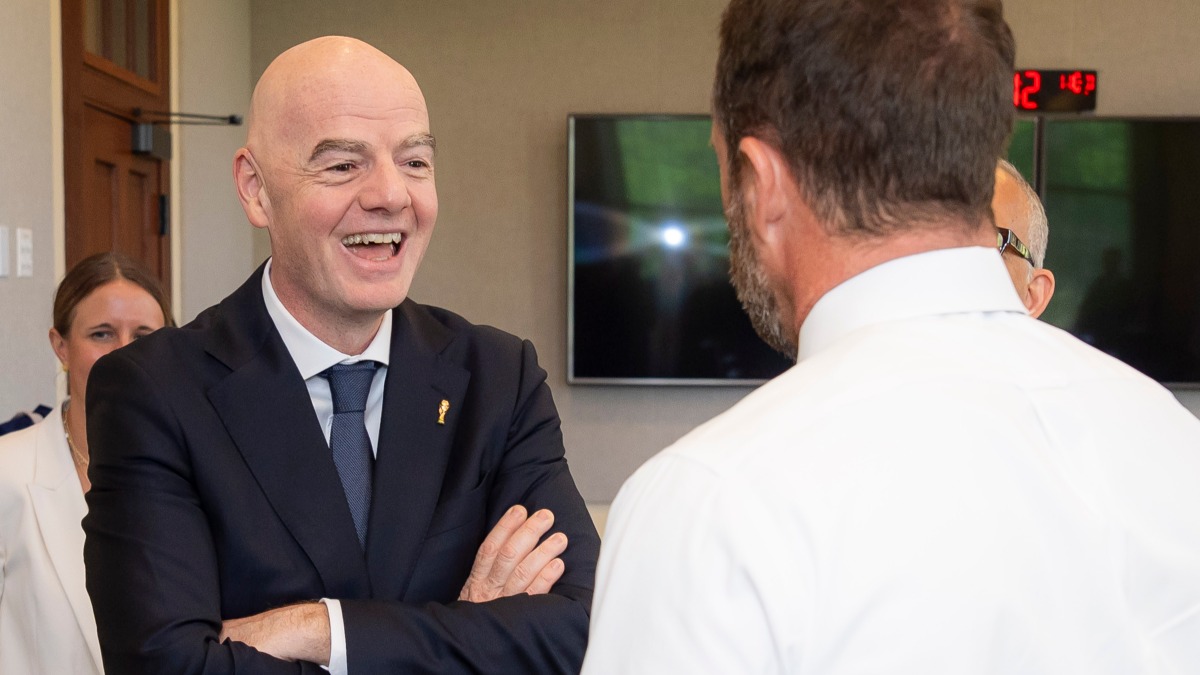
Gianni Infantino is pushing for a 64-team World Cup, a move that could reshape the tournament’s future but has critics warning it will wreck the sport’s ecosystem. According to the BBC, the FIFA president confirmed plans to assess the expansion after the 2026 edition, arguing the World Cup should be “for the whole world” and not just traditional powerhouses like Europe and South America.
Infantino told Swiss broadcaster Blue Sport that every nation deserves the chance to dream of qualifying, pointing to the success of the 48-team format as proof smaller countries can compete at the highest level. The proposal isn’t new. South American governing body CONMEBOL officially suggested expanding the 2030 World Cup to 64 teams in April 2025, though no decision has been made yet.
The 2030 tournament will already be a logistical challenge. Co-hosted by Spain, Portugal, and Morocco, it will see opening matches in Argentina, Uruguay, and Paraguay to mark the competition’s 100th anniversary. Infantino’s vision would take that complexity to another level, with nearly a third of FIFA’s 211 member nations potentially qualifying.
Critics aren’t buying it
UEFA president Aleksander Ceferin called it “a bad idea” for both the tournament and the qualifying process, while Asian Football Confederation president Sheikh Salman bin Ibrahim Al Khalifa warned it would bring “chaos.” CONCACAF president Victor Montagliani went further, saying the expansion “doesn’t feel right” and would damage “the broader football ecosystem.”
Their concerns aren’t just about the quality of play. A 64-team World Cup would mean 128 matches, stretching host nations to their limits. The 2026 tournament, with 48 teams, is being held across three countries – Canada, Mexico, and the U.S. – to manage the scale. The 2030 edition will span six nations. Saudi Arabia, set to host in 2034, would face an even bigger challenge if the expansion goes through.
Infantino isn’t backing down. He called the 48-team format “a huge success,” pointing to Africa’s performance in the last tournament as proof of concept. Nine out of 10 African teams advanced to the knockout stages, compared to just five in the previous 32-team edition. “If you don’t give smaller countries a chance to participate in the World Cup, they’ll lack the incentive to keep improving,” he said.
It’s a compelling argument for inclusivity, but it may ignore the logistical and competitive trade-offs. More teams mean more matches, longer tournaments, and potential fatigue for players and fans alike. The current 48-team format already stretches over a month. Doubling the field could turn the World Cup into a two-month marathon, risking burnout for the sport’s biggest stars.
The financial incentives are hard to ignore
A bigger tournament means more revenue, which FIFA can distribute to its member associations. That’s a powerful motivator for smaller nations, who stand to gain the most from the expansion.
Andrew Giuliani, executive director, White House World Cup Task Force, suggested the U.S. could bid for the 2038 edition and “handle” a 64-team tournament. It’s a bold claim, but one that highlights how the expansion could reshape the hosting landscape. Countries with vast infrastructure, like the U.S., might see it as an opportunity, while smaller nations could be priced out of the bidding process entirely.
The debate isn’t just about numbers. The tournament has always been a celebration of the best of the best, a rare moment where the world’s top players compete on the biggest stage. Expanding to 64 teams risks diluting that prestige. Imagine a group stage where powerhouses like Brazil or Germany face off against teams with little to no international pedigree.
The drama of the knockout rounds could lose its luster if half the field is made up of teams that have no realistic shot at winning. The FIFA president’s argument that “every nation should be allowed to dream” is romantic, but it clashes with the reality that not every nation is ready to compete at that level.
The logistical hurdles are just as daunting
Hosting a 64-team World Cup would require an unprecedented number of stadiums, training facilities, and transportation networks. The 2022 tournament in Qatar was already a logistical marvel, but it was contained within a single country. The 2026 edition spans three nations, and 2030 will add three more. A 64-team tournament would likely need even more hosts, turning the World Cup into a sprawling, continent-spanning event.
That might work for countries with existing infrastructure, but it could exclude smaller nations from ever hosting again. The World Cup’s charm has always been its ability to bring the world together in one place. Spreading it across multiple countries risks losing that intimacy and shared experience.
Infantino’s push for expansion isn’t happening in a vacuum
When he was first elected in 2016, his manifesto included increasing the World Cup to 40 teams. Within a year, that number jumped to 48, and the idea of going even further has been floating around ever since. The 2022 World Cup was originally considered for expansion, but Qatar’s limited capacity made it impossible. That hasn’t stopped the speculation, though.
The 2030 tournament’s six-nation format is already a test case for how far the World Cup can stretch. If it succeeds, Infantino’s 64-team vision might gain traction. If it fails, the idea could be shelved indefinitely.
The financial and political stakes are high. More teams mean more revenue, more exposure, and more opportunities for FIFA to strengthen its global influence. But it also means more matches, more travel, and more strain on players and fans. The World Cup is already the most-watched sporting event on the planet. Does it need to be bigger to be better? And is there a point where expansion does more harm than good?
(Featured image: DHSgov)
Have a tip we should know? [email protected]
Follow The Mary Sue:
