


College senior goes out with finance major. Then he teaches her a lifelong lesson: ‘Drop his name’
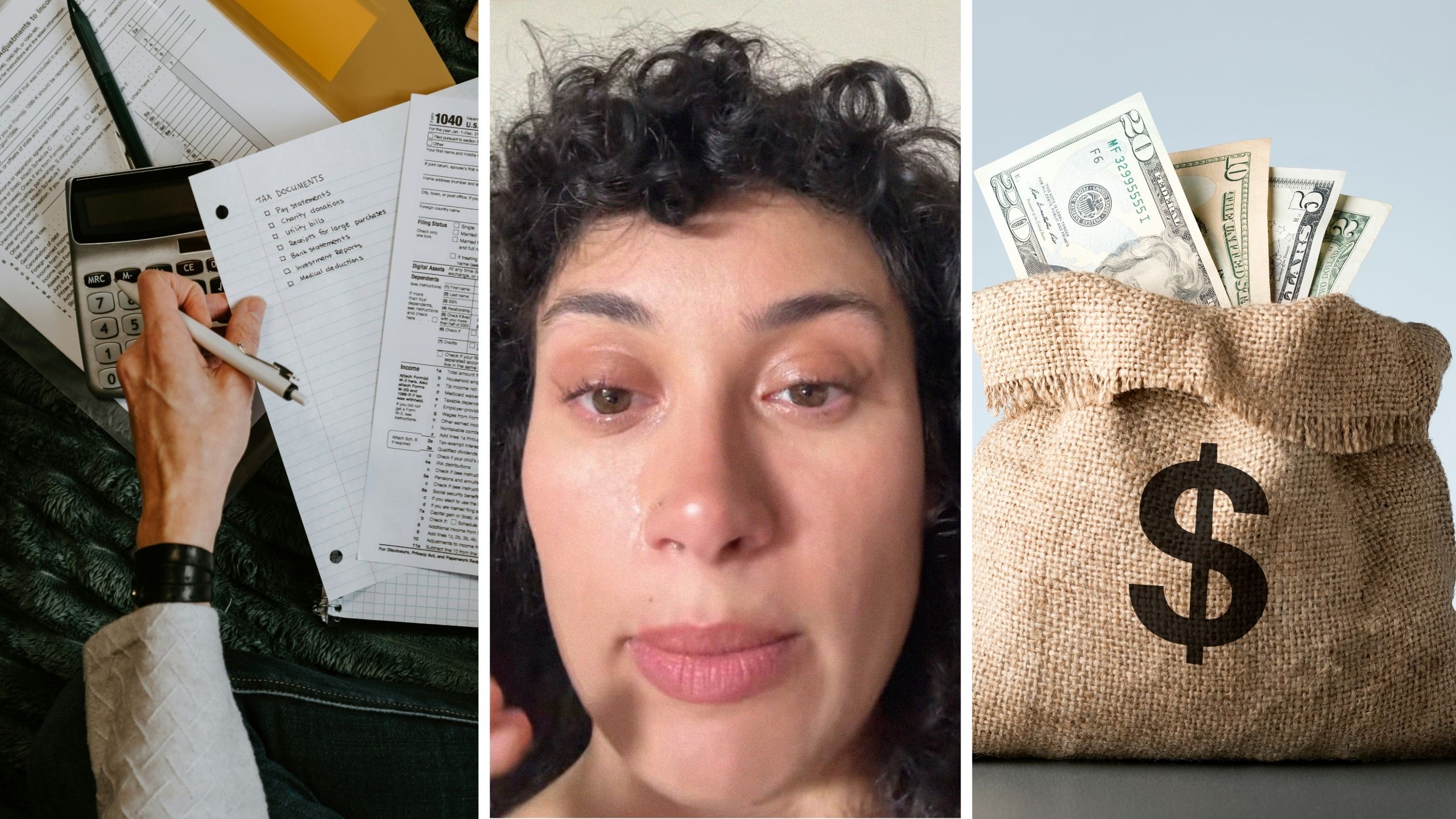
A woman was set to enter the workforce with $70,000 in debt and no specific plan on how to pay it off. Then she had a conversation with a finance major, which completely changed how she looked at her financial literacy.
New York City writer Alyssa Azál (@lysazal) said she hooked up with a finance major in college who ended up shifting her perspective. She said originally, her family’s plan to save was to buy lottery tickets. But the finance major told her a few tips to learn more about her finances. That ended up being a springboard for her to learn more, and that changed her life.
“If it wasn’t for your advice and the things I taught myself over the past few years, I wouldn’t be able to take the chance and the leap that I’m taking,” she said.
As of this writing, Azál’s post has more than 7.4 million views. But what exactly did the finance major tell her? And how can adults who are entering the workforce learn financial literacy, even without a guide?
The financial advice that helped her
Azál said she hooked up with a finance major during her senior year of college. He ended up changing her life in an unexpected way.
It wasn’t because of their relationship—Azál mentioned that she now identifies as queer—but it was because of the advice he gave her when they knew each other.
“ You taught me all of the basics on retirement planning, how to open up a 401(k), Roth IRA, what a brokerage account was, and what a high-yield savings account was,” Azál said, while addressing the man. For that, she said she was thankful.
Paying off student loan debt
Even after he gave her the advice to open those accounts, she mentioned a caveat. She told him she had $70,000 in student loan debt—a figure that’s unfortunately not uncommon for those entering the workforce. In 2023, the average bachelor’s student at a public four-year school graduated with $27,100 in debt, according to College Money Matters. For a student at a private institution, the average debt increased to $33,800. And for those without material support through scholarships, grants, or family, that figure can increase.
The finance major gave her advice on how to pay it off.
“ As long as the interest rate on your loans is less than the rate of return in the market, you should put as much money as you can in the market,” he told her. He then advised Azál to subtract $20,000 from her income every year. He told her to start putting it toward her financial future.
She followed his advice.
“When I was 21, I took $20,000 off of my salary … I put any extra dollar I had toward my private student loans because the interest rate was higher,” she said. “I paid the minimum on my government loans because the interest rate was less than 5%.”
When she got new jobs, she always capped her salary. She lived off of $60,000 every year, regardless of the income she had. Azál said she didn’t succumb to lifestyle creep and simply continued saving. She added to her Roth IRA, 401(k), and high-yield savings account each year.
Because of that and her own financial discoveries, Azál said she was able to quit her job to take a chance on her future.
@lysazal from the bottom of my heart, thank you ? #generationalwealth #saving #retirementplanning #quittingmyjob #corporate ♬ original sound – lysazal
Financial literacy in 2026
Viewers humorously joked about their own college flings and how they compared to Azál’s.
“Wow. Your college fling was a lot more helpful than mine. He’s a bat biologist,” one said.
But others emphasized the importance of financial literacy. The TIAA Institute found that 25% of U.S. adults have low financial literacy compared to 17% in 2017. Gen Z, the newest age group entering the workforce, only answered 38% of questions regarding personal finances correctly.
In addition, the TIAA Institute found that there is a gender gap in financial literacy. Women, on average, scored six points less than men when tested on personal finance. But it’s never too late to learn.
Some viewers said that following content creators who post about financial literacy had a monumental impact on their personal growth. It offered them an easy stepping stone to learn more.
“I started following financial advisors on tiktok … I’ve had more money saved now than in my entire lifetime,” one TikToker added.
Others recommended books and courses to learn financial literacy.
“[To] the people in the comments who wanna learn these things read, ‘how to be a rich old lady!'” another commenter added.
Online, a number of resources, such as the Federal Deposit Insurance Corporation (FDIC) Money Smart program, the Consumer Financial Protection Bureau, and even Khan Academy, have tools for anyone to further their financial literacy, regardless of age.
The Mary Sue reached out to Azál via email for comment.
Have a tip we should know? [email protected]
Follow The Mary Sue:
