


Elon Musk-Championed Far-Right AfD Deals Merz a Historic Blow. German Chancellor Immediately Calls for Sweeping Reforms
Divide and conquer?
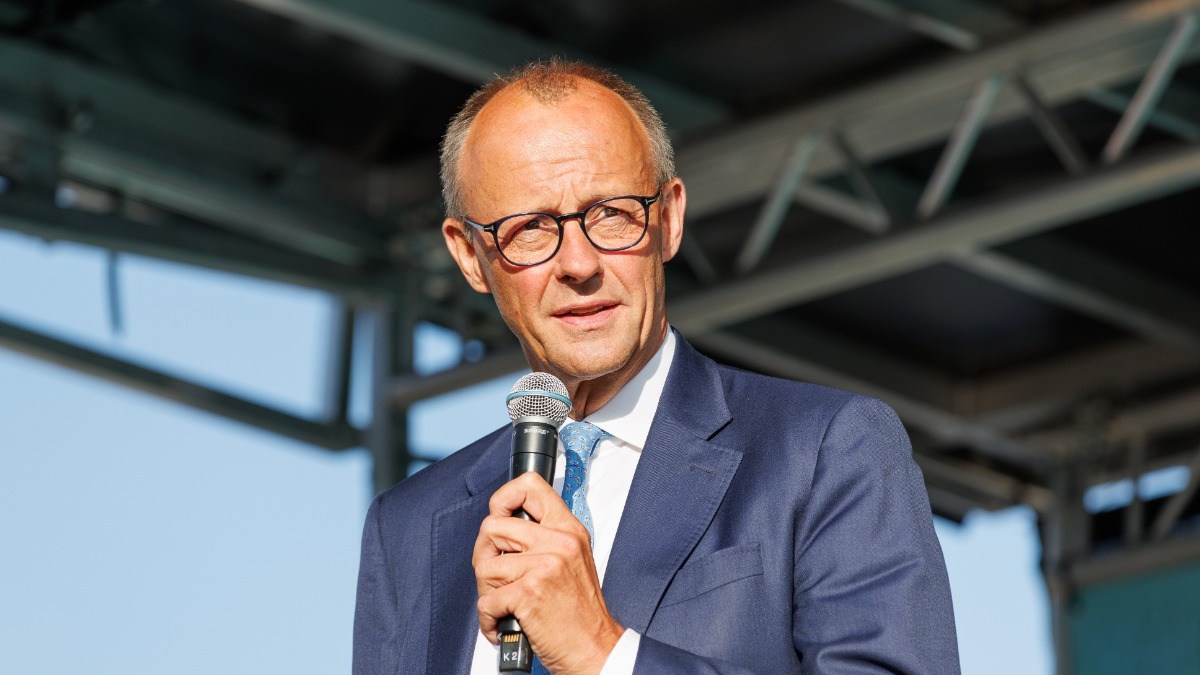
The political landscape in Germany has been rocked by a historic election result in the eastern state of Saxony-Anhalt, where the far-right Alternative for Germany, or AfD (Alternative für Deutschland), secured a commanding victory that has sent shockwaves through the European Union. According to the Daily Mail, the result, which saw the AfD capture 43.8% of the vote, has left Chancellor Friedrich Merz and his centre-right Christian Democratic Union (CDU), in a state of disarray.
The CDU, which leads the national ruling coalition, managed only 17.2% of the vote in this regional contest. For Merz, who has been grappling with low popularity ratings and a sluggish economy, the loss is nothing short of catastrophic.
At a press conference held on September 8, 2026, a day after the vote, a crestfallen Merz admitted he was deeply shocked by the outcome. He described the result as the heaviest electoral defeat his party has suffered in decades, and he acknowledged that the situation necessitates immediate consequences for his government.
Despite the pressure, Merz is doubling down on his agenda
He stated that giving up is not an option for him, and he remains determined to push through fundamental reforms to the German economy, including changes to the pension system. He maintains that these moves are essential for the future of the country and the opportunities of the next generation. However, he also recognized the need to justify these potentially painful reforms in a way that resonates with voters both rationally and emotionally.
Merz was quick to reassure international allies that Germany’s institutions remain resilient and that the country will continue to uphold its values and its firm stance against Russia. According to the Associated Press, he vowed that he would not budge one millimeter from his conviction that Germany must defend its freedom.
The AfD’s success is a landmark moment, as it brings a far-right party closer to leading a German government than at any point since the Second World War. The surge in support is widely attributed to deep-seated economic frustrations that have lingered since the 1990 reunification, as well as a strong sense of nostalgia for life in the former communist East Germany.
The party’s platform is explicitly anti-immigration and Russia-friendly, with promises to close borders, deport those without residency permits, and halt state funding for integration programs. They have also proposed mandatory work for asylum-seekers and have drawn significant controversy for their language regarding the Bauhaus school of design, which critics argue mirrors rhetoric used by the Nazis.
Many high-profile figures across the globe celebrated the win
Tech billionaire Elon Musk stated, “Well done!” following the results. The AfD’s lead candidate in the state, Ulrich Siegmund, was quick to reply, thanking Musk for his support and his clear perspective on modern political developments. Mediaite reports that Siegmund expressed a strong desire for cooperation, suggesting that Germany could become a place worth investing in once again under their leadership.
Meanwhile, President Donald Trump amplified the news by posting a screenshot of the election projection on Truth Social without adding a comment. Russian presidential envoy Kirill Dmitriev also shared the image, hailing the result as a historic win for the pragmatic AfD.
Not everyone is celebrating, however. EU leaders are in a state of panic, and there is growing concern about the potential ripple effects across the continent. France’s Emmanuel Macron has seen his allies call for a broad coalition to keep the hard right out of power. Clement Beaune and Philippe Grangeon, two loyalists close to the French president, argued in a joint text that no one will win or govern alone in 2027.
They urged moderate political factions to unite before the presidential election rather than improvising a coalition in the heat of the moment. Beaune wrote that we can see it once more in Germany, where the far right is on the threshold of power, and insisted that we cannot carry on as before.
The atmosphere in Poland and Spain has been equally tense
Polish Prime Minister Donald Tusk issued a sharp rebuke, stating that in Poland, only idiots or traitors could rejoice at the AfD triumph. Similarly, Spanish Prime Minister Pedro Sanchez warned that an extremist threat is advancing across the globe.
Within Germany, the path forward for the AfD remains complex. While they won by a wide margin, they fell three seats short of the 42 needed for an absolute majority in the 83-member parliament. Other mainstream parties have maintained a so-called firewall, refusing to enter a coalition with the AfD, which has been designated as a suspected extremist group by German intelligence.
Siegmund has insisted that his party has a clear mandate to govern and has rejected the idea of a minority government. The AfD is now looking at potential paths to power, including reaching out to individual lawmakers or the hard-left BSW party, which also holds a Russia-friendly stance.
As Germany approaches two more regional elections on September 20 in Berlin and Mecklenburg-Western Pomerania, the pressure on the national government to respond to this populist wave is reaching a breaking point. Alice Weidel, the AfD co-founder, has already predicted that the current chancellor will be replaced before Christmas, adding another layer of uncertainty to an already volatile political environment.
For now, the nation remains divided, waiting to see how these tricky negotiations will unfold.
(Featured image: Steffen Prößdorf)
Have a tip we should know? [email protected]
Follow The Mary Sue:
