


DHS warns citizens would face the ‘full extent of the law’ if they ‘lay a finger’ on federal agents, but it was fine when they did it for Trump
Reminder: This is the same administration that treated law like a prop after Jan. 6.

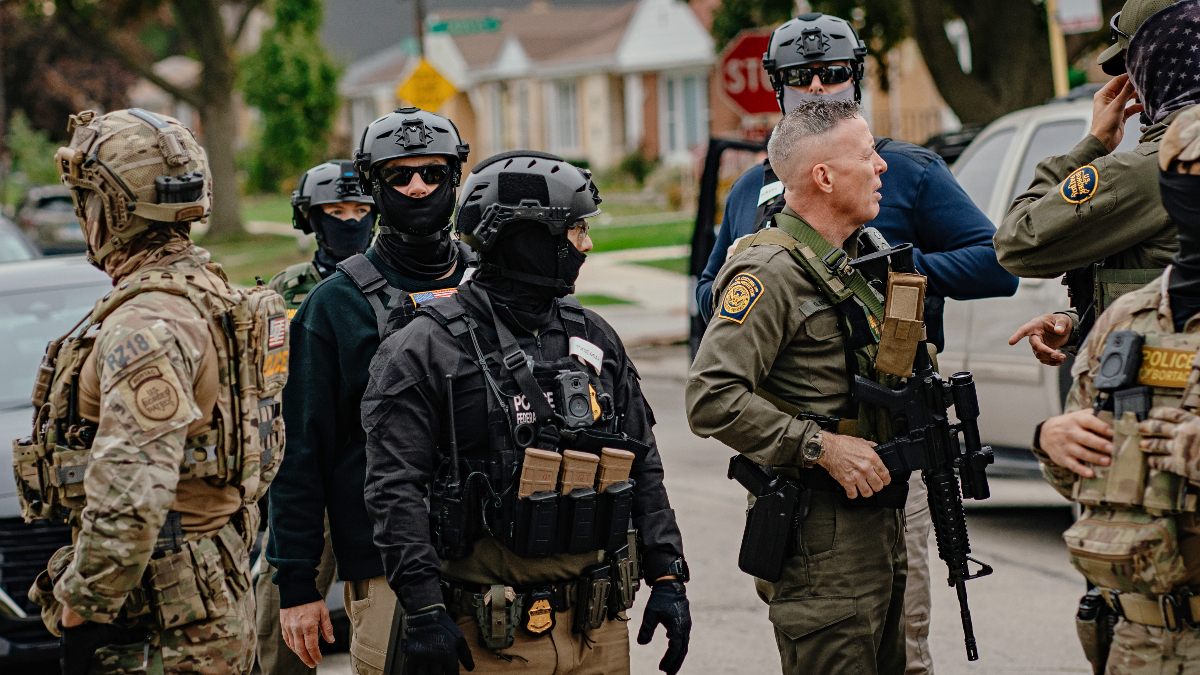
The Department of Homeland Security used its official X account to issue a blunt warning to citizens on Saturday. On paper, that’s a standard “don’t assault officers, or we’ll use law against you” message. In practice, coming from this administration, in this moment, it reads more like a political threat.
On Jan. 10, the DHS issued a reminder to citizens in the wake of Renee God’s murder. “If you lay a finger on a federal officer or agent, you will face the full extent of the law.” But the same people posting this have spent years excusing, minimizing, and ultimately pardoning violence against law enforcement. Especially when it was committed in the service of Donald Trump. Remember January 6?
In legal terms, DHS is pointing to statutes that prosecutors use for assaults, resistance, obstruction, and interference with federal officers. The big one is 18 U.S.C. § 111, which makes it a crime to “forcibly assault, resist, oppose, impede, intimidate, or interfere with” covered federal officers. Courts also make it easier for the government to get away with such prosecutions than many people realize.
The DHS is trying to use the argument in favor of Renee Good’s murder
Under the Supreme Court, a defendant doesn’t need to know the person assaulted was a federal officer to be convicted under §111. But the timing of the post is revealing. The DHS is trying to justify Renee Good’s murder as ICE exercising “the full extent of the law.” But the truth of that incident remains pixelated. Yet, enough footage shows that Good was neither assaulting, intimidating, nor interfering with those agents.
In one video, it’s even clear that she announced she’s “pulling out” from the scene. Yet, officers tried to forcibly open her car door and order her to come out. So, the only thing Good can be accused of is resisting the officers’ orders. But who is going to put the agents on trial for intimidating and assaulting a U.S. citizen, before eventually murdering her?
A government agency is allowed to say: Don’t assault federal officers; you will be prosecuted. That’s not inherently unconstitutional. Where it becomes constitutionally problematic is when a broad, intimidation-flavored statement is used to chill protected activity. The DHS is threatening people filming agents, shouting criticism, protesting, or refusing to cooperate in ways that are legally protected.
The law is only applicable where it suits Trump’s political movement
In other words, the Constitution protects your right to protest the government. It does not protect assaulting officers. But the DHS is weaponizing ambiguous messaging to imply that any friction with federal agents will be treated as criminal. But the social-media backlash immediately landed on the glaring double standard. Where was this “full extent of the law” energy when Trump’s supporters assaulted police on Jan. 6?
Trump issued pardons to roughly 1,500 Jan. 6 rioters, as part of his administration’s effort to reframe the attack. As one user reminded, “more than 600 of them had been charged with assaulting, resisting, or obstructing law enforcement.” They added that “about 175 were accused of using deadly or dangerous weapons or causing serious injury to officers.” Yet, the law was nullified for them.
So, on DHS’s post, one user sarcastically asked, “So you’re undoing the pardons?” DHS is effectively broadcasting that Violence against federal officers is intolerable. That is, unless it comes from the president’s political base. In which case, it’s a “grave national injustice” to prosecute it, and a patriotic cause to pardon.
Have a tip we should know? [email protected]
