


Baltimore microbiologist says you ‘could not pay me enough’ to eat Starbucks’ new short rib grilled cheese. The only part she trusts is the sourdough
I’m keeping my grilled cheese, but I want to know what’s in that meat juice.
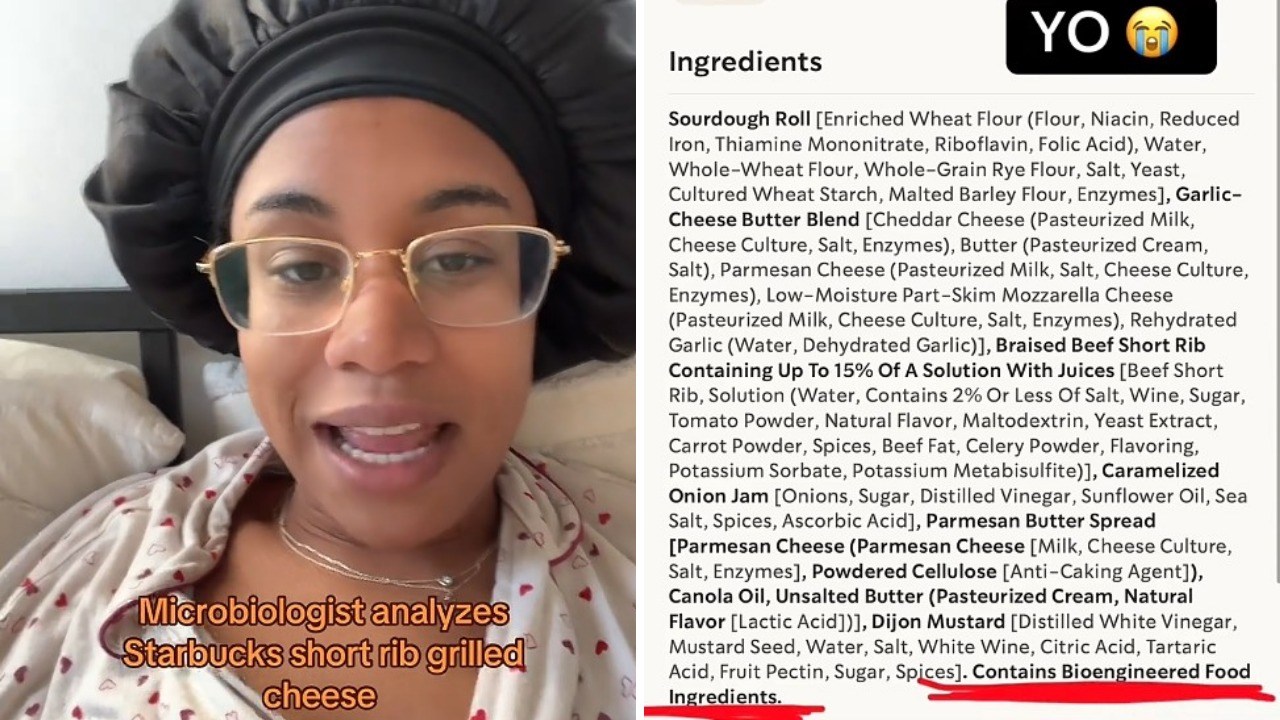
A Baltimore-based microbiologist says she could not be paid enough to eat the new Braised Short Rib Grilled Cheese at Starbucks, according to BroBible. June, who posts as @june.ok on TikTok and holds a Master of Science in Molecular Microbiology and Immunology, broke down the sandwich’s listed ingredients in a TikTok video. The sourdough was the only part she appeared willing to trust.
June called the bread “definitely the safest thing you could eat in there” and said she would scrape everything off and eat just that in a dire situation. Her bigger concern is the short rib, which she says is listed with a 15% juice solution.
June suspects potassium sorbate and potassium metabisulfite are used to preserve that liquid. “Do you want to eat preserved meat juice from Starbucks that’s in a sandwich?” June asks in the video. She added that she hadn’t looked at the chain’s other meat products, so her critique covers only this sandwich.
She thinks the juice soaked into the meat is the real problem
Starbucks added the short rib grilled cheese to its holiday menu this month, pitching it as a heartier take on its classic with caramelized onion jam, Dijon and three cheeses. It costs roughly $8 to $10 depending on location. Its appearance was already a talking point online after one customer found meat covering a quarter of one slice.
She also said the Parmesan butter freaks her out a bit, while the Dijon looked standard to her. The detail that bothered her most was a bioengineered food disclosure on the short rib grilled cheese’s ingredient list, as it doesn’t say which component is bioengineered. June guessed the butter, canola oil, and corn syrup are the likely sources.
June said she assumes the short rib is real meat, noting that cultivated meat is still expensive, though she described the portion as very small. However, she kept returning to the label, saying it gives no clear answer about what is bioengineered. She called the cheese blend straightforward and didn’t flag any concerns there.
She closed by blaming the wider food system rather than Starbucks alone, suggesting the way companies list ingredients may not reflect what actually goes into a product. She didn’t point to specific evidence for that claim. Starbucks was contacted for comment, the outlet said, though no response has been published.
I’d want the label to tell me which part is bioengineered too
Under the USDA’s National Bioengineered Food Disclosure Standard, companies can disclose bioengineered food with text, a symbol, a scannable link, or text message instructions. The agency says the disclosure is a marketing label and carries no information about health, safety, or environmental differences. Ingredients with no detectable modified genetic material aren’t classified as bioengineered at all.
Added solutions are common in processed meat. The USDA’s Food Safety and Inspection Service requires raw meat and poultry labels to state the percentage of any added solution and its ingredients, a rule it adopted as some labels left shoppers unable to tell plain cuts from injected ones.
Potassium metabisulfite belongs to the sulfite family, which the FDA treats as generally recognized as safe. However, labels must declare sulfites at 10 parts per million or more, a requirement dating to 1986, as sulfites can cause rashes, nausea, and breathing trouble in sensitive people.
Have a tip we should know? [email protected]
Follow The Mary Sue:
