


Alanis Morissette comes out as pansexual, and yes, she saved it for the epilogue
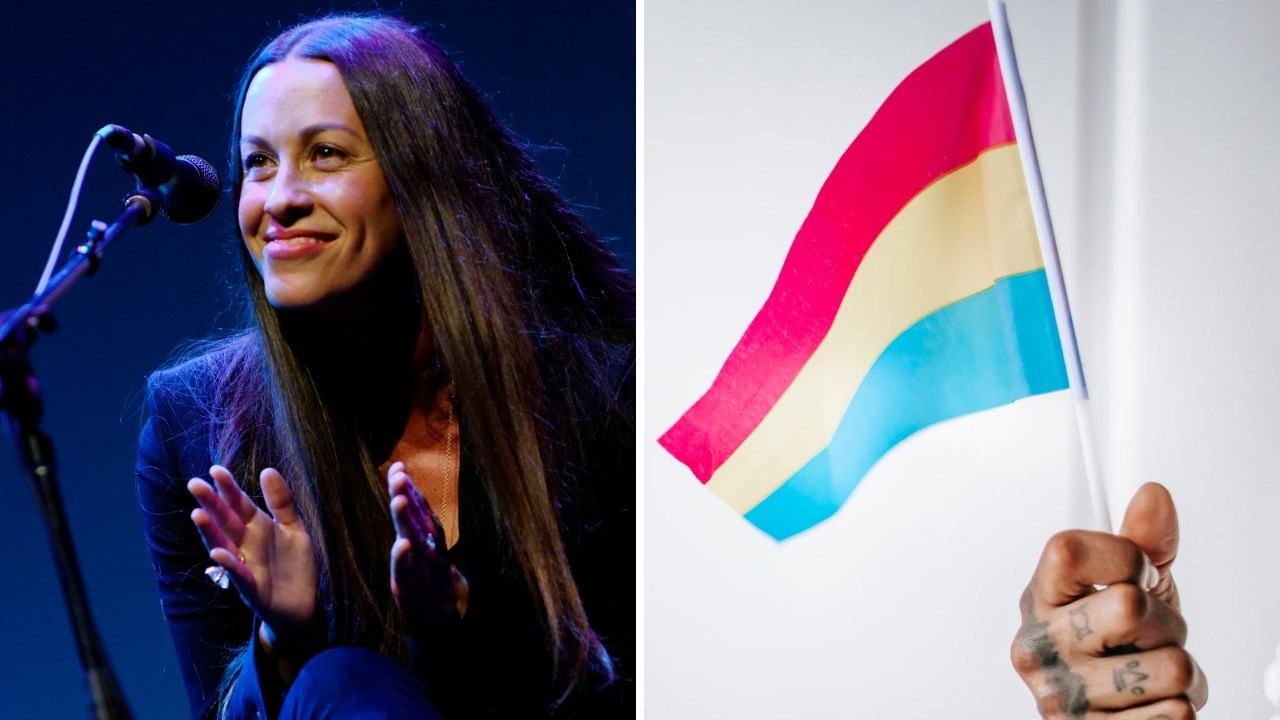
Alanis Morissette has publicly come out as pansexual, revealing her sexuality during a recent appearance on the podcast Handsome. The 52-year-old singer-songwriter came out as pansexual on the November 3 episode of Handsome, hosted by Tig Notaro, Fortune Feimster, and Mae Martin.
The moment began with a compliment. Feimster told Morissette she was sorry for the men who hurt her, but “I’m not sorry for the songs that came from it.” Then she asked, “Did it make you want to be a lesbian at any point?”
“I’m pansexual, so yeah,” Morissette said. Notaro, understandably, needed a second. “Wait, you’re not really pansexual, are you? How did I not know this?” she asked. “I am,” Morissette confirmed. Notaro then ribbed her for holding the news until the end of the show, and Morissette quipped that she likes to save things for the epilogue.
A long time coming, sort of
For longtime fans, this may feel less like a plot twist and more like a footnote finally getting its own chapter. Back in 2008, Morissette told The Advocate that playing with sexuality is a beautiful rite of passage and that her own experimentation was great, though she never put a label on it. Now, nearly two decades later, she has the word.
It’s also a reminder that queer identity doesn’t expire in a long-term relationship. Morissette has been married to Mario “Souleye” Treadway since 2010, and they have three children. Being married to a man doesn’t make a pansexual person any less pansexual.
What “pansexual” means (and what it doesn’t settle)
The most widely accepted definition is simple: pansexual people are attracted to others regardless of gender. But the label isn’t a rigid box, and the community doesn’t agree on exactly where it sits. Some people consider pansexuality part of the bisexual umbrella. Others see it as its own distinct identity.
Part of the overlap comes from a common misconception: bisexuality has never been only about attraction to cisgender people. Bi people are attracted to people of multiple genders, trans and nonbinary people included, which is why the two terms can feel so close to each other. For some people, “pansexual” captures their experience better. For others, “bisexual” does. Neither choice is wrong.
What matters most is which word helps someone understand themselves better. Labels are tools, not tests.
Three decades of honest songwriting
Morissette broke out in 1995 with Jagged Little Pill, has won seven Grammys and 14 Junos, and joined the Songwriters Hall of Fame at a June gala. An entire generation learned to scream-sing their feelings in the car because of her, and some of those fans are probably doing some self-reflection right now.
The reaction online has been mostly joyful, with plenty of “you oughta know” puns, as was inevitable. After thirty years of giving the world its most cathartic songs, Alanis Morissette is telling her own story on her own terms, with her own punchline.
Have a tip we should know? [email protected]
Follow The Mary Sue:
