


Her Mom Had Just Passed Away. Then Her Husband Came Home Interrogating Why Dinner Isn’t Ready: ‘My Blood Is Boiling’
The impact of scripted content.
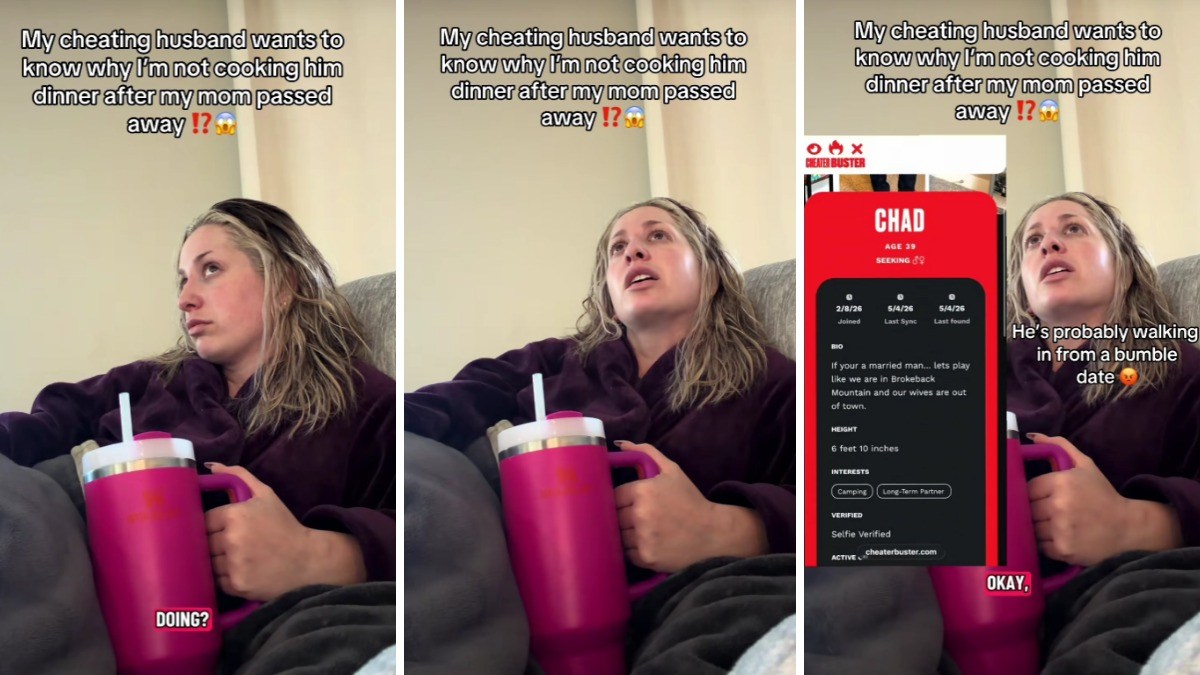
A TikTok video showing a grieving woman being interrogated by her husband about why dinner isn’t ready has sparked outrage online. The roughly one-minute clip, posted by creator Aiyleen under the handle @lonelylovergirl55, depicts a painful confrontation where an off-camera male voice presses her about the lack of a prepared meal just after her mother’s death.
The video, which carries an on-screen text noting that her “cheating husband wants to know why I’m not cooking him dinner after my mom passed away,” has racked up over 4.6 million views since it was shared in June. The scene unfolds with the husband entering and immediately asking what time it is. When she estimates it’s around six or seven, he demands to know why she isn’t in the kitchen cooking.
She responds with disbelief – “Are you kidding me?” – and asks if he received her earlier text about her mother. He acknowledges seeing the message but pivots back to his complaint, citing a long day at work and his expectation that dinner should be ready. The exchange escalates as she tells him she’s not in the mood to be messed with, underscoring her shock at his priorities in the immediate aftermath of her loss.
The video has drawn strong reactions
One commenter, Danique Van Der Kruk, wrote, “My blood is boiling from hearing this,” – a response that has since garnered over 18,000 likes. Other comments reflect a mix of outrage and personal resonance, with users sharing their own experiences of similar dismissiveness.
“He is not my husband, but I still want a divorce,” one wrote, while another added, “My husband did this. We got divorced.” The clip has become a lightning rod for conversations about emotional neglect during grief, traditional gender expectations around domestic labor, and the frustration that arises when basic empathy is absent.
Aiyleen, who specializes in scripted, confrontational relationship content, often explores themes of infidelity, emotional neglect, and the breakdown of marriages. Her videos typically feature reenactments or recorded exchanges that highlight one-sided demands, gaslighting, or dismissive behavior from partners.
While this particular video is presented as a recreation of a real experience – complete with named husband “Chad” and references to prior texts and cheating – its staged framing and Aiyleen’s established style of dramatic storytelling leave open the possibility that it’s a heightened or scripted illustration rather than an unfiltered recording. The video’s virality speaks to its ability to crystallize a universal frustration – being met with self-centered demands at a moment of vulnerability.
It invites both empathy and debate
It’s clear that many viewers see their own struggles reflected in it. However, the scripted nature of the content also raises questions about how such videos are consumed and interpreted. While they can offer solidarity to people in similar situations, there’s a risk that they might be taken at face value as guidance on how to react in real-life scenarios.
This isn’t the first time TikTok has become a battleground for discussions about emotional labor and stereotypical gender roles. The platform has long been a space where users share their experiences with unequal partnerships, and videos like Aiyleen’s often serve as a form of catharsis for those who feel unseen or unheard in their relationships. As these conversations gain traction, it’s worth considering how the platform’s design shapes the way people engage with such content.
A recent study from the University of Birmingham highlights how TikTok’s algorithm-driven design can make it difficult for young people to think critically about the mental health content they encounter. The research, which involved interviews and group discussions with young people aged 16–25, found that while users are often skeptical of what they see, the platform’s emphasis on relatability over reliability creates real risks.
Participants in the study consistently described TikTok as a space for entertainment rather than serious learning, often characterizing it as “fun but fake.” This mindset can lead them to prioritize whether a creator feels authentic over whether they have professional expertise. The study also found that TikTok’s algorithm encourages rapid, passive consumption, with serious mental health videos often followed immediately by unrelated entertainment.
This leaves little room for reflection or critical evaluation
In turn, it is harder for users to distinguish between trustworthy advice and misleading content. Many participants were unaware of built-in safety features like screen time controls or content filtering tools, suggesting gaps in platform-specific media literacy. Professor Ruth Page, the lead researcher, noted that while young people are thoughtful and often skeptical about what they see, TikTok’s design makes it much harder to apply that critical thinking in practice.
The findings come as the UK government prepares to introduce new online safety rules, including overnight curfews and other platform restrictions for 16- and 17-year-olds from spring 2027, and a nationwide social media ban for under-16s. While the study wasn’t designed to evaluate these measures, it suggests that the way social media platforms are designed plays a significant role in shaping how young people engage with mental health information.
The researchers argue that better media literacy, clearer verification systems for mental health influencers, and greater accountability from social media companies are needed to create environments that better support young people’s wellbeing. This includes holding social media companies accountable for their design choices.
For now, videos like Aiyleen’s continue to spark important conversations about emotional labor, grief, and the expectations placed on women in relationships. But as these discussions evolve, it’s worth remembering that the platform hosting them isn’t just a neutral space. It’s an environment shaped by algorithms, engagement metrics, and design choices that can influence how we think, feel, and react.
(Featured images: AIYLEEN @lonelylovergirl55 on TikTok)
Have a tip we should know? [email protected]
Follow The Mary Sue:
