


Woman Tries Chili’s Fajita Trio Skillet for the First Time. Then She Issues a Warning About the Steak: ‘Please Be Aware’
Cutting corners?
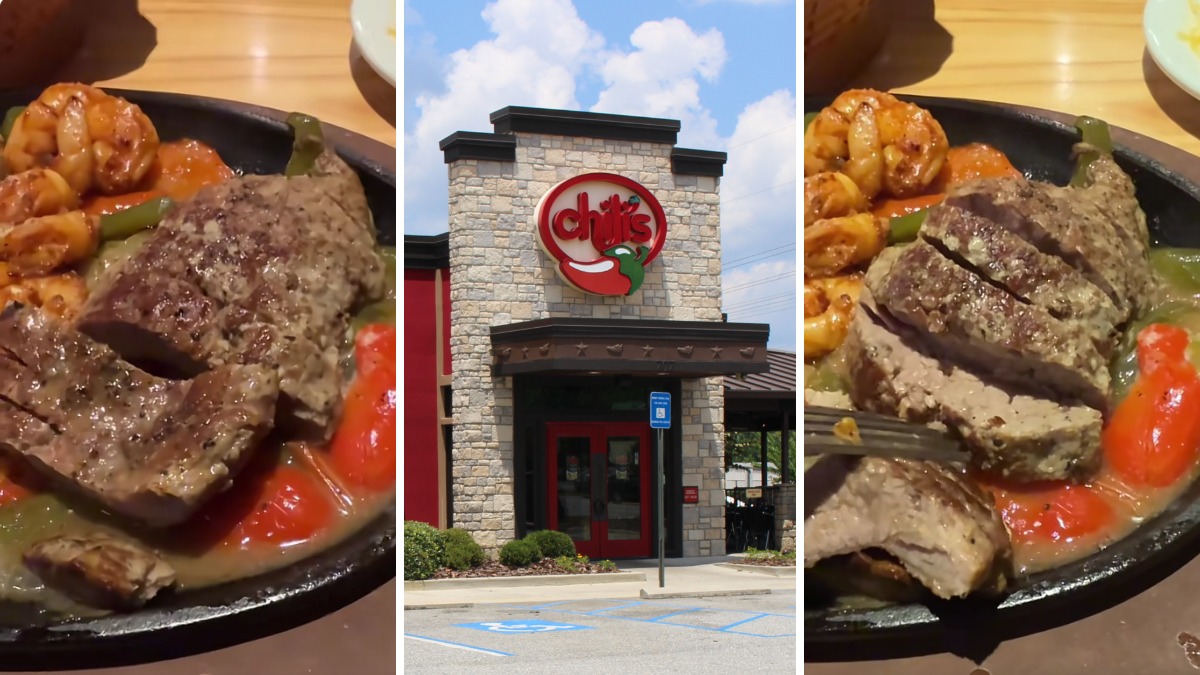
Chili’s just got called out in a viral TikTok video for serving steak that looks and tastes more like a Jimmy Dean breakfast sausage than actual beef. Creator Sasha Bentley (@sasha.bentley8) posted a close-up of the chain’s Fajita Trio Skillet, pointing out the grayish, grainless steak that she claims is “not real.” The clip, posted mid-August 2026, ends with a blunt warning: “So please be aware of the food that we’re eating at these restaurants.”
Bentley’s video isn’t just another casual food review. It’s tapping into a growing frustration with chain restaurant transparency, especially when it comes to meat quality. The Fajita Trio Skillet, which includes grilled chicken, shrimp, and steak alongside sides like tortillas, rice, beans, and toppings, is marketed as a hearty, flavorful option. But Bentley’s comparison to a processed sausage patty has left viewers questioning what they’re actually paying for.
The reaction online has been mixed but mostly skeptical. Some commenters jumped in to defend Chili’s, arguing that the steak is just a lower-grade cut. One user wrote, “I think people complain to complain. Looks fine to me. I can tell you what’s not real to me is the quality of that steak. It’s a select grade which is the lowest grade the USDA gives meat. It’s more chewier and quality isn’t there so that’s what you’re seeing and tasting.”
Others shared their own horror stories
One person recounted getting raw chicken from the same dish, while another called the entire platter “nasty,” saying it tasted like “chewing on rubber.” A few even admitted they’d noticed the same issues with Chili’s grilled chicken years ago, suggesting this isn’t a new problem.
This isn’t the first time a viral post has exposed questionable meat practices in restaurants. According to the New York Post, in 2025, a cattle rancher from Rockin W Cattle Co. posted a video on Instagram showing how to spot a “glued meat product” at steakhouses. The rancher, who raises around 100 cattle per year, ordered an 8-ounce fillet at a restaurant in Weatherford, Oklahoma, and immediately suspected something was off.
The steak was perfectly round, which he said is a red flag since real fillets are never that uniform. After cutting into it, he concluded it was likely a sirloin that had been tenderized and glued together to mimic a higher-quality cut.
The rancher’s post went viral on X, too, with users calling the practice “disgusting” and demanding accountability. One commenter wrote, “Paying for a steak and getting leftover meat scraps bound together by a chemical enzyme is absolutely disgusting. That man should sue the restaurant out of business.” Another asked, “Is any food real in America anymore?”
The rancher himself blamed corporations, not individual farmers, for the manipulation, noting that the beef industry’s lack of transparency is a systemic issue. He pointed out that price is another giveaway – an 8-ounce fillet for $28 should raise suspicions, as true fillets of that size are rare and expensive.
The parallels between the videos are hard to ignore
Both highlight how chain restaurants and even some steakhouses can cut corners with meat, whether by using lower-grade cuts, processed fillers, or glued-together scraps. The difference is that Bentley’s warning is aimed at casual diners, while the rancher’s post targets steakhouse customers who might assume they’re getting a premium product.
Both videos resonate with consumers who feel misled. In an era where menu prices keep rising but portion sizes and quality don’t always match, diners are becoming more skeptical; and more vocal.
Chili’s isn’t the only chain facing scrutiny. The comments on Bentley’s video drew comparisons to Applebee’s, with one user writing, “Chili’s is in the same bracket as Applebee’s, everything frozen and microwaved… not sure what you expected.”
These reactions suggest that diners are increasingly aware of the trade-offs that come with affordable, high-volume restaurants. Bentley’s video hits because it’s about the feeling that you’re being sold something that isn’t what it claims to be.
The timing of Bentley’s video is also interesting
It’s gaining traction as restaurants across the U.S. are seeing a surge in business thanks to the recently-concluded FIFA World Cup 2026. Reports have highlighted how international visitors are either loving or being shocked by American food, particularly portion sizes and perceived unhealthiness. So what’s the takeaway here? If you’re a fan of Chili’s or similar chains, Bentley’s warning might not change your mind.
After all, millions of people eat at these restaurants every day without complaint. But her video does raise a valid question: What are you actually getting when you order “steak” at a casual dining spot? Is it a lower-grade cut, a processed product, or something else entirely? The answer might depend on how much you’re willing to scrutinize what’s on your plate; and how much you trust the restaurant to be upfront about it.
For those who want to avoid the uncertainty, there are a few red flags to watch for. The rancher’s advice about perfectly round steaks is a good start. If a fillet looks too uniform, it might not be a real fillet. Price is another clue. And if the texture feels off, like Bentley’s comparison to a sausage patty, it might be time to reconsider your order. At the very least, her video is a reminder that not all “steak” is created equal.
(Featured images: Sasha Bentley @sasha.bentley8 on TikTok and Michael Rivera)
Have a tip we should know? [email protected]
Follow The Mary Sue:
