


NASA Is Scrambling To Debunk The Viral Project Anchor Theory That Claims Earth Will Stop Holding Us Down
Like clockwork.
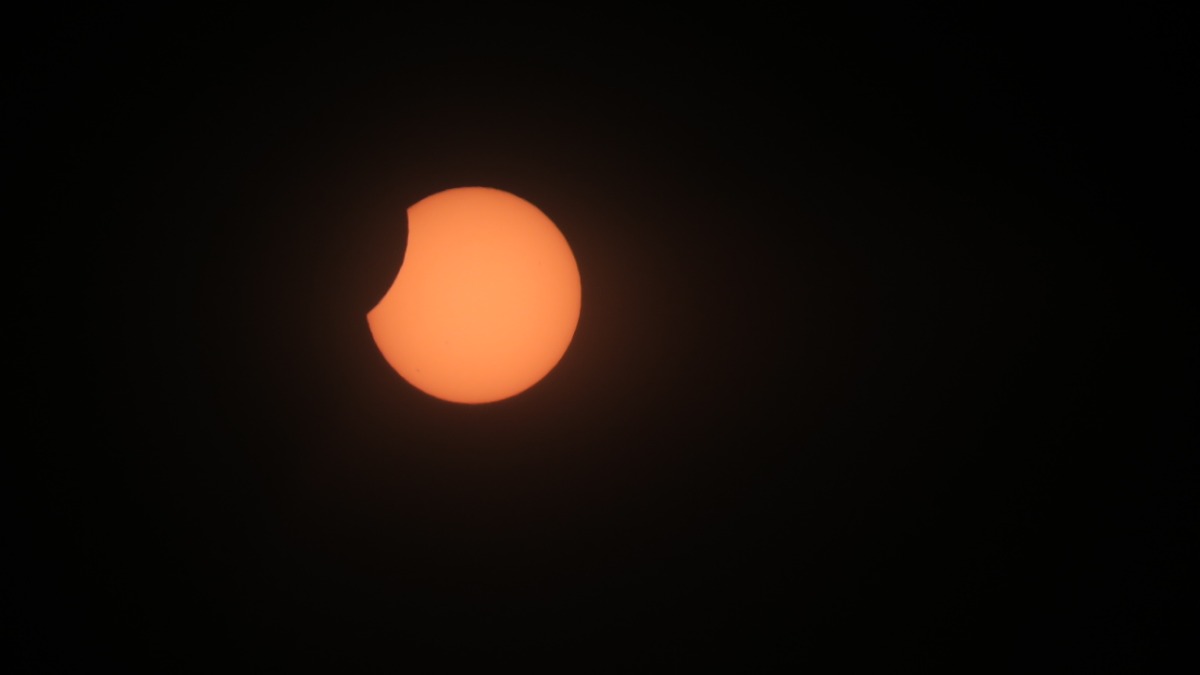
NASA is once again playing whack-a-mole with a bizarre conspiracy theory that claims Earth is about to lose its gravity. The agency has been forced to issue yet another public denial after a viral rumor – dubbed “Project Anchor”– resurfaced online, insisting that our planet will briefly stop holding us down. The theory, which has been debunked repeatedly, even set a specific date for the supposed catastrophe: Wednesday, August 12, 2026.
That date has now come and gone, along with a solar eclipse and a meteor shower, and the Earth is still spinning just fine. According to Newsweek, the whole thing started with a so-called “leaked NASA document” that began circulating in late 2024. According to the rumor, this secret project warned of a seven-second “gravitational anomaly” that would send everything not bolted down flying into the air.
The posts were packed with dramatic details, including an alleged $89 billion budget, predictions of tens of millions of deaths, and claims that only a select group of officials and specialists would be safe in underground bunkers. Fact-checkers at Snopes rated the claim as false, noting that there was no evidence any such document existed. The story continued to spread on social media, including an Instagram video that framed NASA as hiding the truth from the public.
‘The Earth will not lose gravity’
NASA senior science communicator Karen Fox said that this conspiracy theory “comes around every year,” like clockwork. The agency issued a fresh statement on Wednesday, making it clear that Earth’s gravity isn’t going anywhere. “The Earth will not lose gravity on [Wednesday],” the statement read.
It added, “Earth’s gravity, or total gravitational force, is determined by its mass. The only way for the Earth to lose gravity would be for the Earth system – the combined mass of its core, mantle, crust, ocean, terrestrial water, and atmosphere – to lose mass.”
The timing of the latest resurgence isn’t a coincidence. August 12 was a big day for celestial events, with a total solar eclipse visible across parts of Greenland, Iceland, northern Russia, Spain, and Portugal. A partial eclipse was also visible in parts of the northern U.S., Canada, Europe, and northwestern Africa.
The Perseid meteor shower peaked the same night, adding to the astronomical buzz. For conspiracy theorists, it was the perfect storm – a rare alignment of events that made the “Project Anchor” claims seem just plausible enough to spread.
NASA also clarified that solar eclipses have nothing to do with gravity
“A total solar eclipse has no unusual impact on Earth’s gravity,” the agency said. “The gravitational attraction of the Sun and Moon on the Earth, which doesn’t impact Earth’s total gravity but does impact tidal forces, is well understood and is predictable decades in advance.” That’s a fancy way of saying that while eclipses are cool to watch, they’re not secretly plotting to fling us into space.
The eclipse itself was a bit of a letdown for most Americans. While skywatchers in parts of the Northeast, Midwest, and Alaska got a partial view, 23 states were completely left out of the show. According to USA Today, the path of totality – the narrow strip where the moon fully blocks the sun – didn’t come anywhere near the U.S. this time. Instead, it crossed over Greenland, Iceland, northern Russia, Spain, and a small corner of Portugal.
The eclipse began around 11:34 a.m. ET and reached its peak at 1:46 p.m. ET, with Alaska seeing the action much earlier in the day. For everyone else, it was just another Wednesday. If you were hoping to catch a glimpse, your best bet was to be in one of the states where the partial eclipse was visible.
That list included Alaska, Connecticut, Delaware, Illinois, Iowa, Indiana, Kentucky, Maine, Maryland, Massachusetts, Michigan, Minnesota, Montana, New Hampshire, New Jersey, New York, North Carolina, North Dakota, Ohio, Pennsylvania, Rhode Island, South Dakota, Vermont, Virginia, Washington D.C., West Virginia, and Wisconsin. Even then, you’d need clear skies to see anything.
Project Anchor is more proof of how conspiracy theories can spiral out of control
It starts with a grain of truth – like the fact that eclipses and meteor showers are real, predictable events – and then gets layered with wild speculation. In this case, someone took the idea of a solar eclipse, added a dash of doomsday drama, and voilà: a viral hoax was born. The fact that it keeps resurfacing every year, despite repeated debunking, shows just how sticky these kinds of stories can be.
NASA’s response was straightforward and scientific, as expected. The agency has dealt with these kinds of rumors before, and it’s clear they’ve learned not to feed the trolls. Instead of engaging with the more outlandish claims, they stuck to the facts: Earth’s gravity is stable, eclipses don’t mess with it, and there’s no secret project preparing for a gravitational apocalypse.
For the rest of us, the takeaway is simple. If you see a wild claim online, especially one that involves NASA hiding the truth from the public, it’s worth taking a second to fact-check. Snopes, NASA’s own website, and other reputable sources are your friends.
(Featured image: Kepler-1229b)
Have a tip we should know? [email protected]
Follow The Mary Sue:
