


What’s the Backstory on Ashley Tisdale’s ‘mom-group,’ and Why is She Now Allegedly Producing a Netflix Series on It?
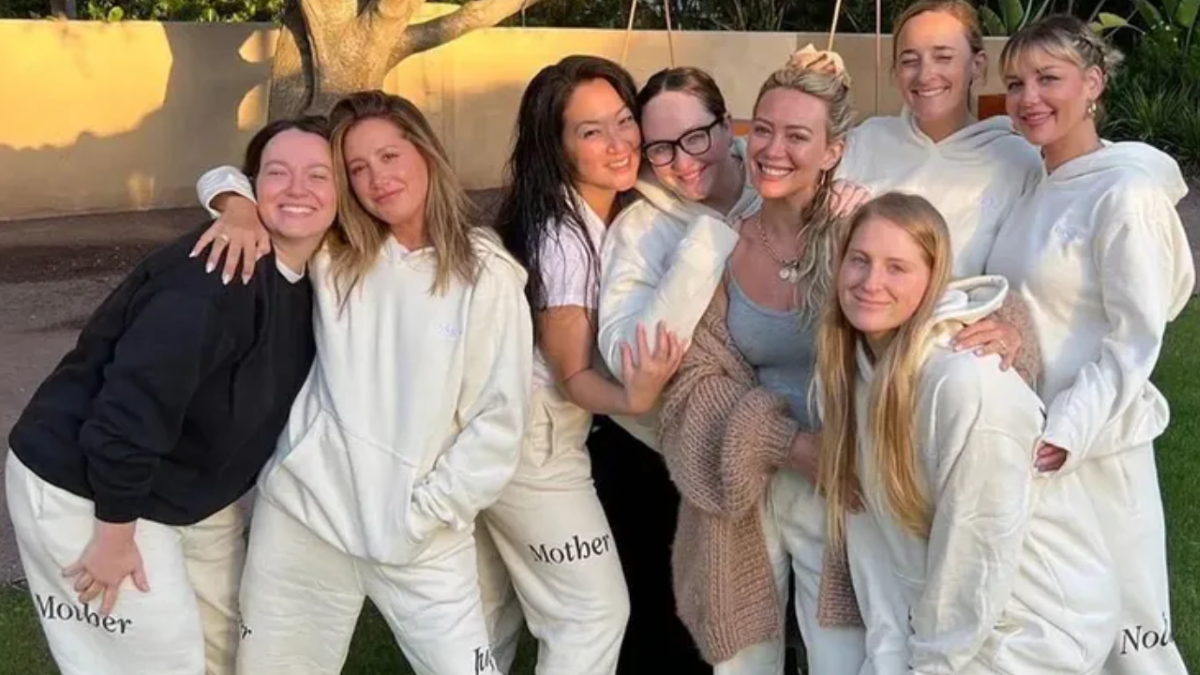
Ashley Tisdale’s headline-making essay for The Cut about leaving a “toxic” mom group is getting a second life on screen. According to Deadline, the actress is attached to executive produce and potentially star in Toxic Moms, a half-hour Netflix comedy written by Sabrina Jalees, with Ali Wong also executive producing and possibly directing. The series follows a sleep-deprived new mom who finds herself drawn into an exclusive circle of wealthy mothers, only to discover there’s a darker side to the community she’s been searching for.
The premise immediately reminded fans of Tisdale’s viral essay for The Cut, which sparked months of speculation about a celebrity mom group, internet detective work, and public responses from several stars who were believed to be connected to the story. While the Netflix project is fictional, its themes closely mirror the experience Tisdale shared earlier this year.
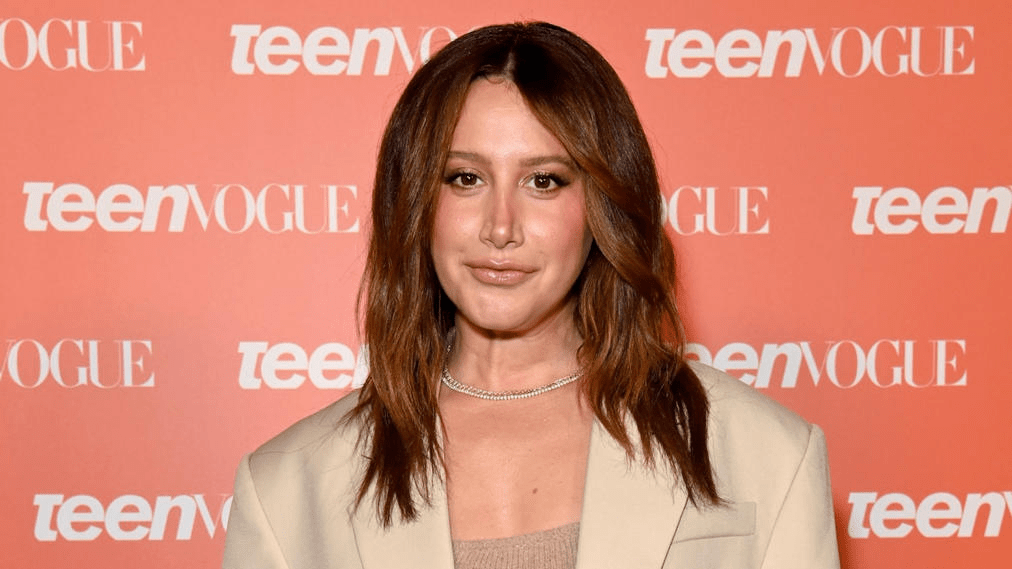
How Ashley Tisdale Found Her “Village”
Like many women who became mothers during the COVID-19 pandemic, Tisdale has spoken openly about craving connection after welcoming her first daughter in 2021. Traditional ways of meeting other new parents had largely disappeared due to social distancing, leaving many moms searching for community elsewhere.
In previous interviews, Tisdale shared that Hilary Duff, who gave birth to her daughter just one day after Tisdale’s was born, invited her to join a baby music class with other new mothers. Tisdale recalled arriving without knowing who else would be there and described it as “the cutest time.” She also praised Duff as a “super mom,” saying she always felt she could turn to her for parenting advice.
Over the next several years, the group became a familiar ensemble on social media. The women attended music classes, celebrated birthdays, took weekend trips together, and frequently spoke about how valuable it was to have other mothers navigating the same stage of life.
Duff previously told People that the group saw each other several times a week through activities with their children. Mandy Moore later called it a “cool mom club,” while Meghan Trainor referenced an active group text that included Tisdale, Duff, and Moore. From the outside, it appeared to be exactly the kind of support system many new parents hope to find.
The Essay That Changed Everything
On New Year’s Day 2026, Tisdale published an essay in The Cut titled “Breaking Up With My Toxic Mom Group.”
In the piece, she explained that the friendships gradually changed. She noticed the group holding side conversations, making plans without her, and gathering for children’s activities she never knew about. Watching those gatherings unfold on Instagram made the exclusion feel even more painful.
Tisdale wrote that the experience transported her back to high school, leaving her wondering whether she had done something wrong or simply wasn’t “cool enough.” After feeling excluded once again, she eventually texted the group to say she no longer wanted to participate because the dynamic felt “too high school.”
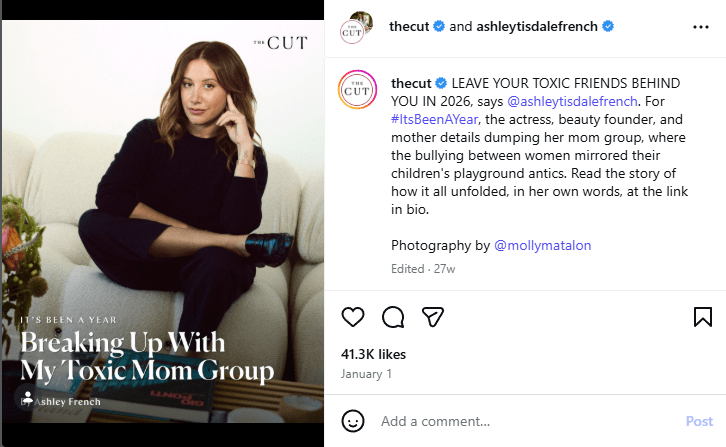
@TheCut @AshleyTisdaleFrench
Although she criticized the group’s dynamics, Tisdale also emphasized that she didn’t view everyone involved as bad people. Instead, she framed the essay as a reflection on recognizing unhealthy friendships and permitting yourself to walk away from relationships that no longer bring peace.
She also urged readers not to try identifying the women involved, insisting that any internet theories would likely be incorrect.
Fans Immediately Connected the Dots
Although Tisdale never identified anyone in her essay and even urged readers not to speculate, the internet immediately began trying to piece together the group’s identity.
Part of the reason was that the celebrity mom circle wasn’t exactly a secret. Over the years, several members had openly discussed their friendships in interviews, describing everything from baby music classes and playdates to group vacations and an active group chat. Fans also traced the friendships through photos from girls’ trips and family outings that the women had shared across social media over the years.
Internet sleuths quickly revisited those interviews and posts, comparing old photos with more recent Instagram activity. Fans quickly noticed that Tisdale had unfollowed Hilary Duff and Mandy Moore but still followed several other women associated with the group. The social media changes only intensified speculation that she had written about the celebrity friend circle that fans had followed for years.
As speculation snowballed, Tisdale’s representative pushed back, denying that the essay referred to Duff, Moore, Meghan Trainor, or the celebrity mom group many believed she was describing.
Still, the internet had largely shifted its focus. Rather than debating the essay’s message about navigating adult friendships and motherhood, much of the conversation became an attempt to identify the women behind the story. Turning a personal reflection into one of the year’s biggest celebrity internet mysteries.
The Women at the Center of the Speculation Eventually Responded
As speculation around the essay continued, several people connected to the alleged mom group eventually addressed the conversation, though their responses varied. Some acknowledged the situation indirectly, while others spoke more openly about how the controversy affected them.
Meghan Trainor was among the first to publicly acknowledge the online discussion. After posting a TikTok joking about discovering the “apparent mom group drama,” Trainor later explained that Tisdale had personally reached out after her name became connected to the story. She said she felt bad that Tisdale had experienced hurt and suggested the situation may have involved misunderstandings rather than intentional harm.
Hilary Duff later addressed the controversy directly, explaining that she believed Tisdale’s essay was about the friend group many fans had identified. During an appearance on Call Her Daddy, Duff said she felt hurt after reading the piece and was surprised by how the situation unfolded publicly. She explained that she felt the essay did not accurately reflect her experience with the group and said the situation was painful not only for her but for the other women involved.
Mandy Moore also reflected on the controversy months later, saying the situation was particularly upsetting because it went beyond typical celebrity scrutiny. She explained that the fallout reinforced an unfair narrative that women are unable to support one another, adding that her experience building friendships with other mothers had been one of the most meaningful parts of becoming a parent.
Later in the conversation, Matthew Koma, Duff’s husband, also appeared to respond to the controversy through social media. His post, which mocked the premise of Tisdale’s essay with a parody magazine cover, added another layer to the ongoing public discussion surrounding the situation.
Fans Saw Themselves in Ashley Tisdale’s Story
While the internet became focused on identifying the women behind Tisdale’s essay, the reason the story gained so much attention went far beyond celebrity gossip.
At its core, Tisdale’s essay was about a feeling many parents know well – the search for a village. After becoming a mother, she described finding comfort in a group of women who seemed to understand the challenges of raising children at the same stage of life. Losing that connection was not only connected to missing invitations or group outings, it was also about feeling like she’d lost a place where she belonged.
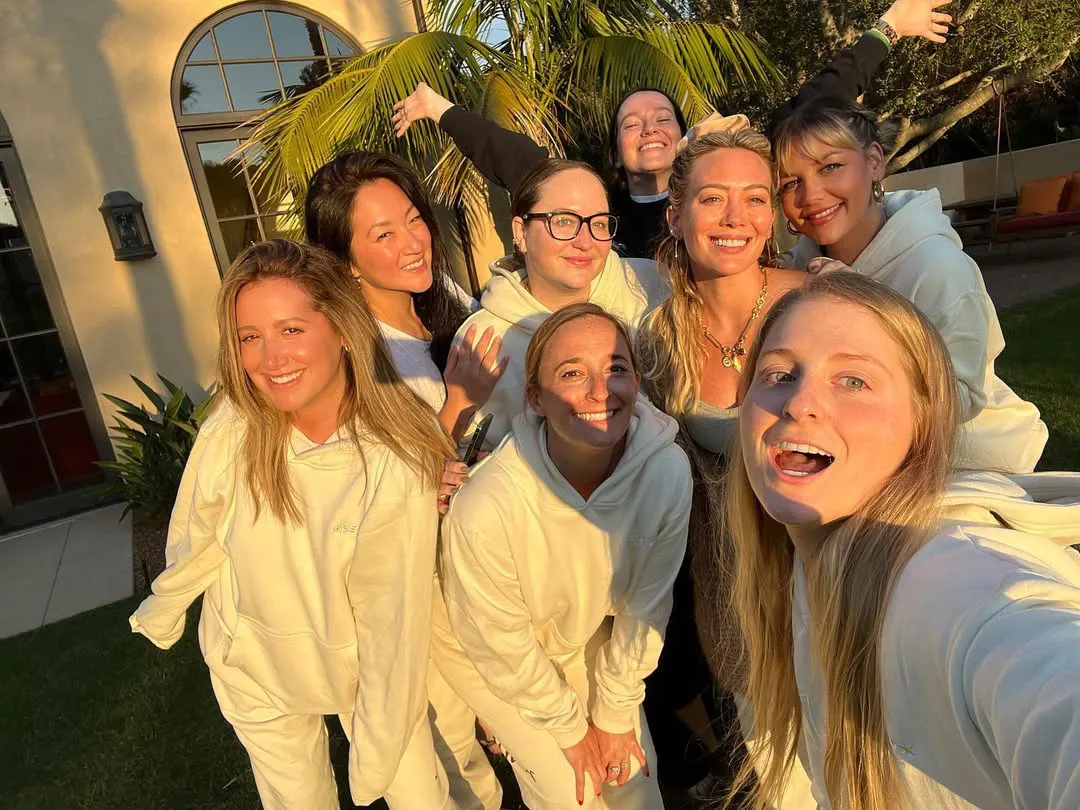
@Hilary Duff/Instagram
That experience struck a deep nerve with many readers who had faced similar situations in their own lives. Across TikTok, Reddit, and parenting communities, people shared stories about feeling left out of playgroups, neighborhood circles, school communities, or friend groups that changed after children entered the picture.
The conversation also showed how complicated adult friendships can become. Unlike childhood friendships, where people often share built-in environments like school or extracurricular activities, making close friendships as an adult often requires vulnerability, effort, and a willingness to put yourself out there. For many parents, finding other people who understand the challenges of raising children can feel both necessary and surprisingly difficult.
That universal experience may be the reason Tisdale’s story continued to capture attention even among people who had never followed her career. The celebrity names created the headlines, but the emotions behind the essay were familiar to anyone who has ever wondered whether they truly belonged in a group they once considered home.
From Essay to Screen
Seven months after Ashley Tisdale French sparked a major online conversation with her essay about leaving a “toxic” mom group, the actress is bringing those experiences into a fictional story.
Toxic Moms is reportedly in development at Netflix, with Tisdale French attached to executive produce alongside Sabrina Jalees and Ali Wong. The half-hour comedy is inspired by Tisdale French’s own journey through motherhood and follows a new mom who encounters a group of wealthy mothers who appear to offer the community and support she is searching for, only to discover a more complicated side to the group.
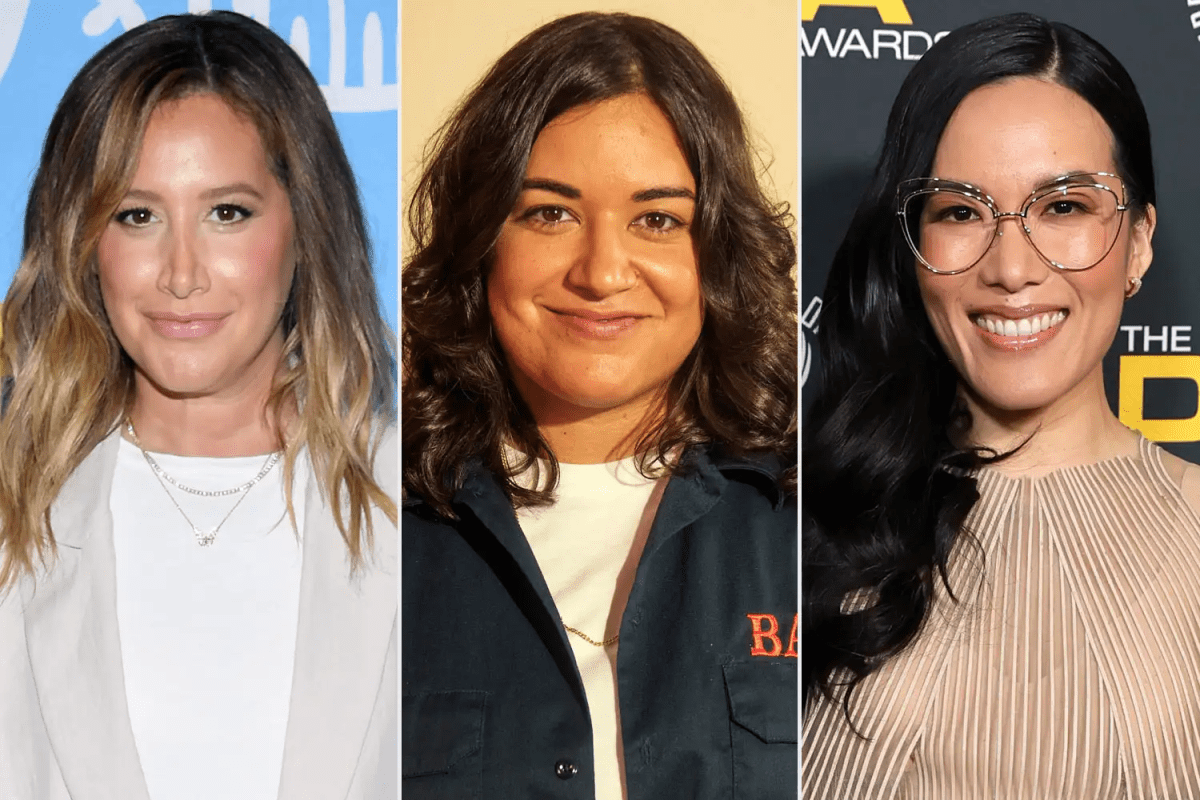
Stephen Lovekin/Shutterstock; Corey Nickols/Getty; Michael Tullberg/Getty
While the series isn’t a direct retelling of the celebrity mom group speculation that surrounded Tisdale French’s essay, its premise draws from the same themes that made the story resonate with audiences. The search for a village, the pressure to find belonging after becoming a parent, and the challenges of navigating adult friendships all sit at the center of both stories.
That distinction is important because the online conversation surrounding Tisdale French’s essay often focused on identifying the women she may have been referring to. Fans analyzed old interviews, social media posts, and Instagram activity while debating the identities of the alleged group members. But the potential Netflix series shifts the focus away from the mystery and toward the larger experience behind it.
Whether Toxic Moms ultimately moves beyond development and becomes a full series remains to be seen. Still, the project shows how a personal story about friendship and motherhood grew into a much larger conversation about community, connection, and the complicated relationships that can form when people are searching for a place to belong.
(feature image: Hillary Duff/Instagram)
This is an opinion piece. The views expressed in this article are those of just the author.
Follow The Mary Sue:
