


RFK Jr. Nuked Millions in Teen Pregnancy Prevention Funding, and Democrats Want to Know Where the Money Is Really Going
Another step backward?
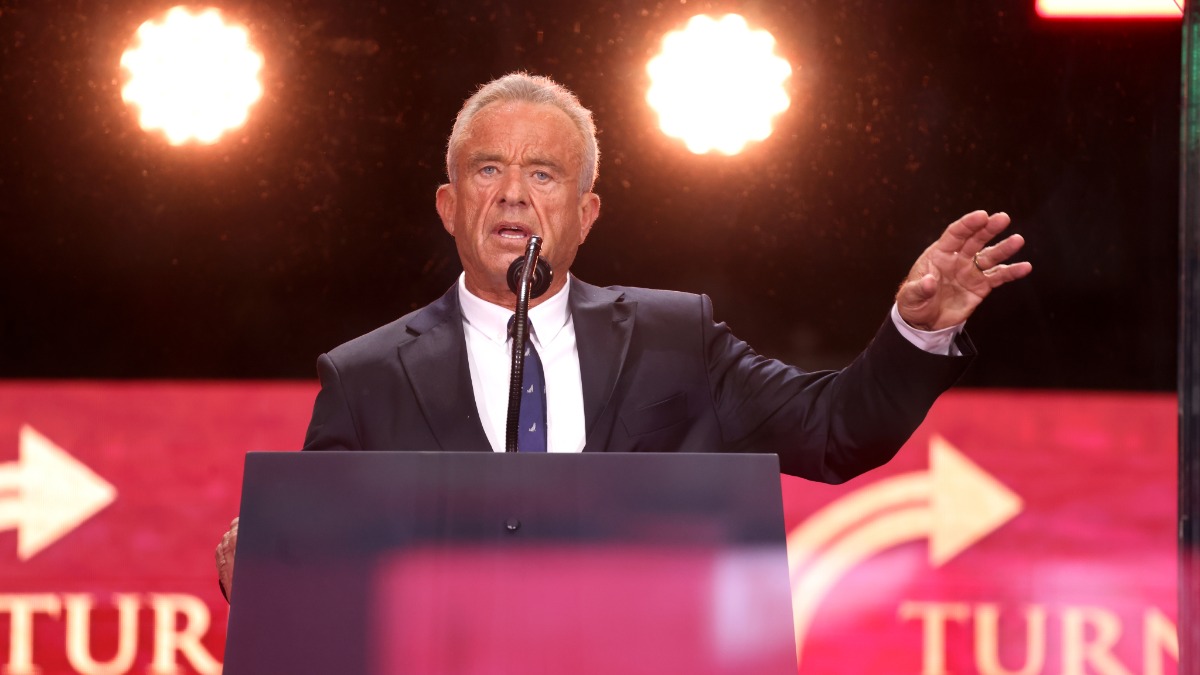
The Trump administration just pulled the plug on $68 million in federal funding for teen pregnancy prevention programs, and Democrats in Congress are demanding answers. In a sharp rebuke, 79 House Democrats led by the Democratic Women’s Caucus sent a letter to Health and Human Services Secretary Robert F. Kennedy Jr. this week, calling the move an “abrupt and arbitrary disruption” that undermines the program’s mission.
According to The Hill, the letter specifically asks Kennedy to explain why the grants no longer align with HHS priorities. It also seeks to know what the agency plans to do with the reclaimed funds, which won’t be reallocated until 2027. The Teen Pregnancy Prevention program, run by the HHS Office of Population Affairs, has been a cornerstone of evidence-based sexual health education for years.
It funds organizations that provide teens with the tools to make informed decisions, reduce risky behavior, and lower rates of unintended pregnancies and sexually transmitted infections. But last week, HHS terminated the grants, arguing they normalized or promoted sexual activity among minors. An HHS official confirmed the money will be redirected into two new grant opportunities, though no awards will be made until 2027, leaving a gaping hole in funding for programs that rely on it.
The backlash has been swift
Senate Democrats, led by Sen. Patty Murray, fired off their own letter to Kennedy on July 2, accusing the administration of ignoring congressional intent. Congress had already appropriated $101 million for the program in the latest bipartisan funding bill, making the sudden cancellation all the more jarring.
The senators didn’t hold back, writing that the decision “squarely aligns with your department’s established pattern of rejecting evidence and science, ignoring Congressional intent, and undermining the ability of people to make their own healthcare decisions.” They also pointed to allies of the president who have suggested declining teen birth rates are a “problem,” hinting that the administration might share that view.
The fallout can be seen everywhere. In Wisconsin, more than a dozen organizations are scrambling after losing nearly $1 million per year in federal funding. The Wisconsin Examiner reports that the state’s Department of Health Services was in the third year of a five-year grant when the feds pulled the plug, leaving local programs in limbo.
The DHS grant, totaling $1.162 million annually, was distributed as subgrants to nonprofits, county health departments, schools, and universities. These programs targeted high-risk populations, including Black, Hispanic, and Native American teens, who face disproportionately high rates of unintended pregnancies and STIs.
Wisconsin’s teen birth rate has dropped significantly
Over the past few decades, the teen birth rate in Wisconsin has been reduced from nearly 45 births per 1,000 girls in 1991 to about 10 per 1,000 in 2024. But the state’s health department has cautioned that disparities persist. For example, birth rates among Hispanic, American Indian, and Black teens are more than double those of white teens.
Sexually transmitted infections (STIs) rates tell a similar story, with Black, Native American, and Hispanic youth experiencing much higher rates than their white peers. The canceled grants were funding programs in clinics, schools, community centers, and even juvenile justice settings, reaching nearly 1,000 teens between July 2025 and May 2026. Without the funding, those efforts will grind to a halt.
Wisconsin isn’t taking the cuts lying down. Gov. Tony Evers’ office confirmed that filing a lawsuit is “a potential option currently under consideration.” The state is also exploring alternative funding sources to keep the programs afloat, though replacing $1 million a year won’t be easy. The DHS is assessing whether the federal government followed all the rules in canceling the grants, but for now, the future of these programs is uncertain.
HHS’ justification for the cuts has raised eyebrows
The HHS says that the grants normalized or promoted sexual activity. This has raised eyebrows, especially since the program has been operating for years under multiple administrations. The abrupt termination leaves organizations with little time to adjust, and the two-year delay before new grants are awarded means many programs will have to scale back or shut down entirely.
For teens who rely on these services, the consequences could be severe. Evidence-based programs like these don’t just reduce pregnancies and STIs, they also help teens build healthier relationships and connect with their communities.
The fight over the funding is far from over. Democrats in Congress are digging in, demanding transparency and accountability from HHS. Meanwhile, states like Wisconsin are left to pick up the pieces, trying to figure out how to keep critical services running without federal support. If the administration’s goal was to disrupt teen health programs, it’s working. But if the goal was to improve outcomes, the data, and the backlash, suggest it’s a step in the wrong direction.
(Featured image: Gage Skidmore)
Have a tip we should know? [email protected]
Follow The Mary Sue:
