


The Way ‘The Vampire Lestat’ Revisits the ‘Interview with the Vampire’ Season 2 Trial Tracks Dramaturgically
This time, Armand DID witness the play.
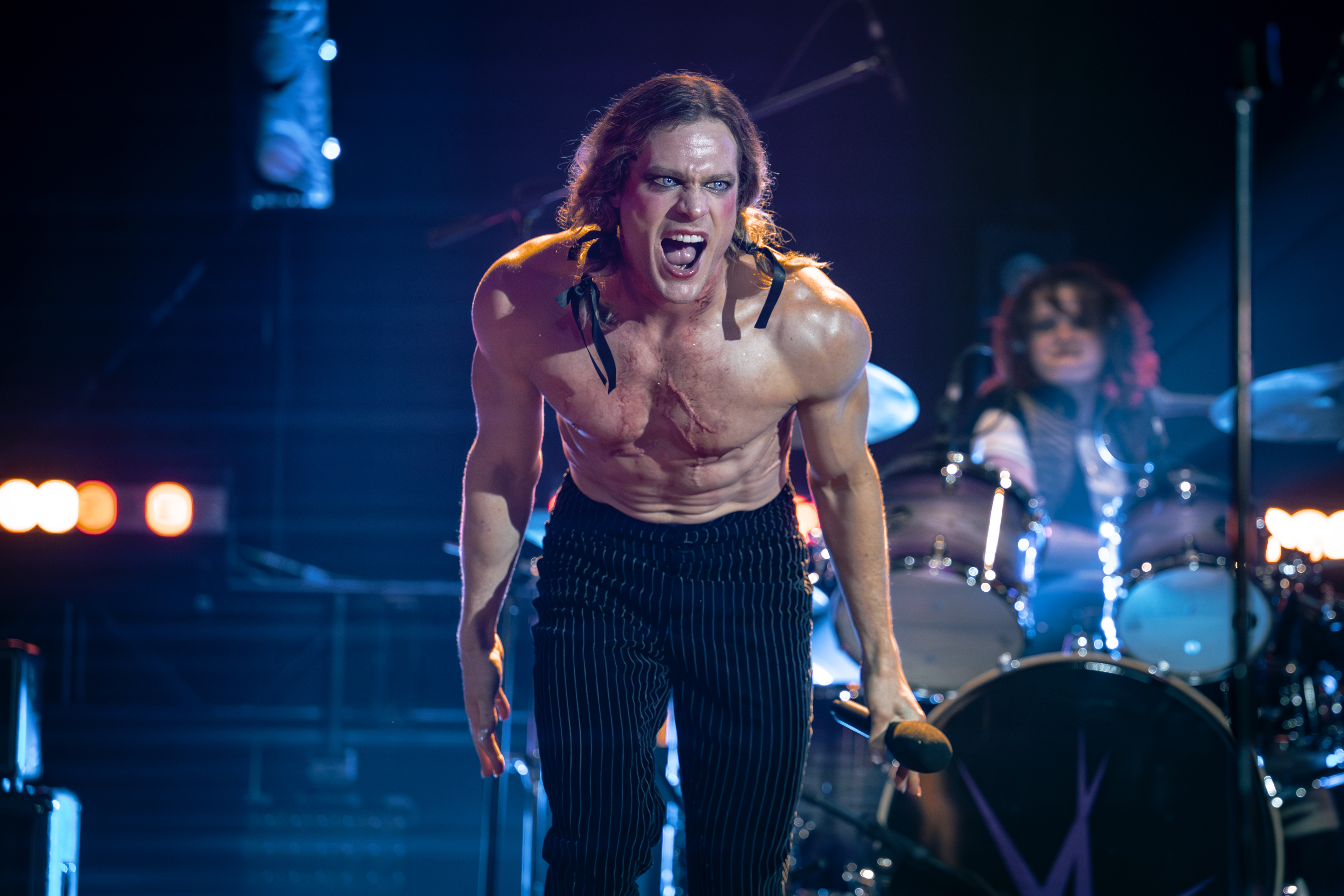
By “The Devil’s Road,” Episode 4 of The Vampire Lestat, it’s clear that Lestat (Sam Reid) is using the full extent of his artistic freedom to tell his story. Let’s talk about how the Armand (Assad Zaman) diss track “Big Boss” turns Lestat’s memories about the trial in Paris into yet another piece of immersive theatre.
Anne Rice’s book The Vampire Lestat does not spend much time rehashing the events of Interview with the Vampire. But since this is a television show, and actors Jacob Anderson and Delainey Hayles remain at the top of the billing, there has been some fan speculation about how much the third season of Interview with the Vampire would revisit those key season 1 and season 2 moments from Lestat’s perspective. Chief among them is Lestat’s participation in the Théâtre de Vampires’ TRIAL! The Treacherous and Unnatural Crimes of the Vampiers Louis and Claudia (And Their Fledgling Madeleine).
We see 1.5 versions of the “matinee performance” in season 2. The play was, as Lestat points out to Armand in The Vampire Lestat, an actual trial with victims meant to punish Louis (Anderson), Claudia (Hayles), and Madeleine (Roxane Duran) for breaking the vampiric Great Laws. In one version, Armand saves Louis from a death sentence via mind control. In the other, more accurate version, Lestat does. But there are still unanswered questions. Was Lestat tortured, or forced to take the stage? Did he know it was a real trial? What else are these vampires potentially not telling us?
Instead of a flashback on TVL, however, we get another performance in Episode 4 “The Devil’s Road.” This time, it’s a peppy song with dark undertones written and staged by Lestat. The whole musical number is an homage to the Parisian coven. Lestat puts on striped trousers like his costume in the trial. His pigtails and pastel makeup are in homage to Claudia’s Baby LuLu costume. He asks the audience to follow his finger and draws a wavy line in the air like the bouncing ball in a sing-a-long video. What were Claudia’s last words to the trial audience? “Follow the bouncing ball.”
By inviting Armand, putting a follow spot on him and addressing the song directly to him, he makes his former maitre an unwitting participant in the theatrical production. Sound familiar? Simply put, it’s as if Lestat is saying “I did your play, now you do my play.” Quid pro quo, etc.
We must hope that, underneath the seething, Armand appreciated the Brechtian nature of the show. I have to imagine that part of the reason why Armand walked out when he did was that the theatre professional in him knew when to make his exit.
But maybe he was just hurt. Maybe Lestat calling him bad in bed in front of ~1000 people was a bridge too far. Fair, valid, and understandable! The song is relentlessly mean to a vamp who did just try to make amends. Or perhaps multiple things can be true, as Armand knows better than most.
“Big Boss” tells us how Lestat *really* feels about covens.

It’s not just about their personal history. There’s method to the madness. The song begins with Lestat insulting Armand’s looks specifically when he first met him as the Children of Darkness’ leader. He was living underground with his coven in religious poverty, looking more urchin than gremlin. The lyrics go on to reveal not only Lestat’s opinions about Armand, but about the five Great Laws. Take a look:
One! Only the big boss gets to have fun.
Two! If you’re a boo boo, then he doesn’t want you!
Three! Oh, don’t you dare write down his history!
Four! If you know him, then you won’t know much more.
Five! Only the Big Boss gets to decide who dies and who stays alive!
No, that last line was not a Hamilton reference. Those are the Five Great Laws in Lestat’s own words. If you need a refresher, here’s how Santiago (Ben Daniels) lays them out in season 2, episode 3:
“Each coven must have its leader and only he might order the working of the Dark Trick upon a mortal. The Dark Gifts must never be given to the crippled, the maimed or to children. No vampire must commit to writing the history of the vampires. No vampire shall ever reveal his or her true nature to a mortal and let the mortal live. No vampire may ever destroy another vampire except that the coven master has the power of life and death over all his flock.”
Mind you, Armand broke most if not all five laws by turning Daniel and Lestat knows that. Bless his heart. Anyway, this is Lestat’s way of saying that the Great Laws are for losers and authority figures are for weirdos. In the grand tradition of School of Rock, he’s sticking it to the man.
Lestat’s whole rockstar venture in The Vampire Lestat is true to his original vision for the Théâtre des Vampires, actually. “In this temple,” Armand recounts Lestat pitching in season 2, episode 3, “belief is protection. Announce you are a vampire. Drink the blood in plain sight. Direct your coven rituals not in the sewer but from the balcony rail.” He’s repeating that cycle on tour with his band of mortals now.
Does “Big Boss” answer any of those questions about The Trial?
Yes and no. You could infer from his anger during the song and during Lestat’s previous scene with Armand in the tour bus that he was, in some way, deceived about the trial’s true intentions. You can tell he wants to make Armand pay for his part in what happened to Claudia in some way. He does not think one person should have that power. But like any good piece of performance art, the rest is up to our interpretation as an audience. It’s about pure artistic expression, as Lestat told Dan in the previous episode, not definitive truths.
Mild spoilers ahead! This is not the show, or Lestat’s, final say on the matter. The significance of these lyrics take an even darker turn when Lestat and the band record “Big Boss” in Episode 5. And that’s just one example. The Vampire Lestat is not definitely not done re-examining Claudia’s death.
What I like about this, and The Vampire Lestat as a season of television in general, is that it’s my favorite kind of theatre. The Vampire Lestat is not giving us First Folio Shakespeare performed in period accurate costumes. It’s an adaptation in an unexpected setting that reimagines the text and says something new. Or a revival that doesn’t change a word, but uses specific choices in the lighting, casting, staging, and/or pacing to reveal a truth that was hidden in plain sight. That’s what art is here for!
My only note? What theatre kid have you met who doesn’t have a lot of rules? Try calling a cast recording a “soundtrack” in front of us and see what happens. Don’t even think about naming the Scottish play in a theater, saying “good luck” instead of “break a leg” on opening night, or forgetting to turn the ghost light on when you leave. We’re a pedantic bunch. It’s kind of our whole deal.
(featured image: AMC)
Have a tip we should know? [email protected]
Follow The Mary Sue:
