


Pentagon’s War on the First Amendment Hits a Wall as a Judge Blocks Hegseth’s Restrictive Press Escort Policy for the Second Time
A recurring battle.
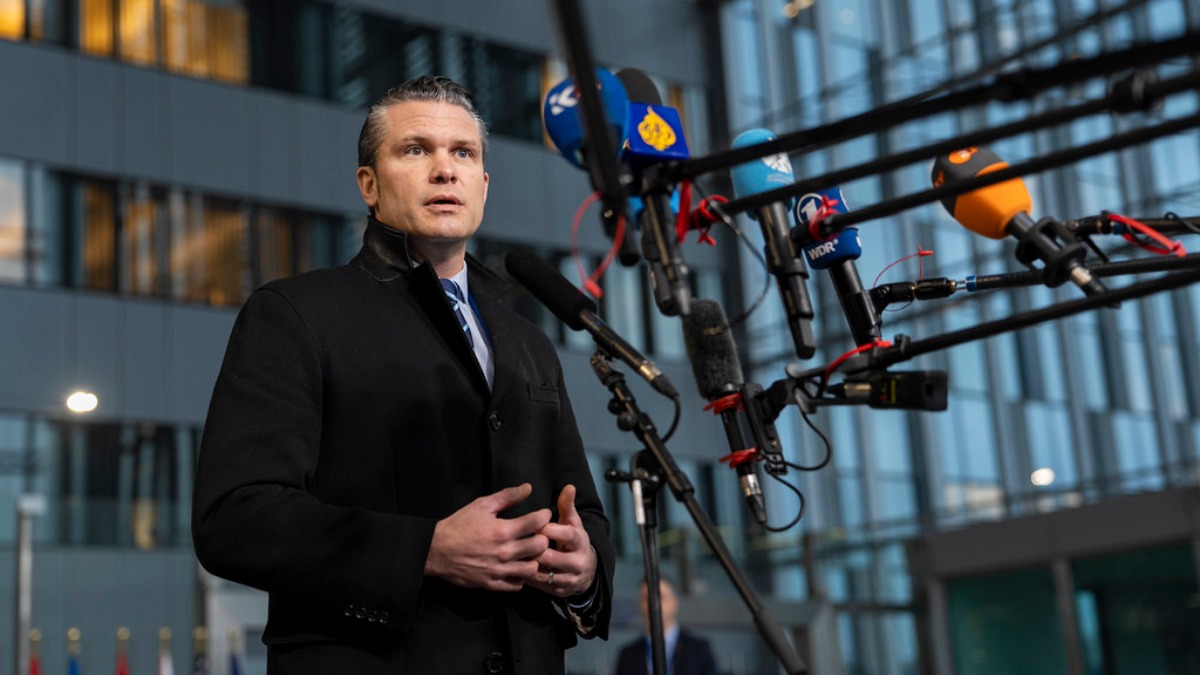
The Pentagon’s latest attempt to muzzle the press just hit another legal wall. A federal judge has once again blocked War Secretary Pete Hegseth’s controversial escort policy, ruling it likely violates the First Amendment and imposes unconstitutional burdens on journalists. This marks the second time Judge Paul Friedman has halted the policy, and the third time his court has ruled against the Pentagon’s press restrictions in less than a year.
According to MS NOW, in a 35-page decision, Friedman didn’t mince words about the importance of a free press. “This Court has spoken at several points about the critical importance of protecting the freedoms enshrined in the First Amendment, and that evergreen message bears repeating,” he wrote. “As our country celebrates its 250th anniversary this very week, that principle must not be abandoned now.”
The judge’s ruling temporarily blocks the Pentagon from enforcing the escort requirement while the case plays out, though it’s unclear whether the order applies only to The New York Times or the entire press corps. The escort policy, rolled out earlier this year, forces credentialed reporters to be accompanied by an official escort at all times while inside the Pentagon.
The policy was strongly opposed
The New York Times, which filed the lawsuit, argued the rule makes meaningful reporting impossible. Theodore Boutrous, Jr., the paper’s attorney, called the policy “retaliation against The Times for exercising its First Amendment rights.” The Pentagon, however, insists the rule is necessary to protect classified information.
Sean Parnell, a Pentagon spokesman, posted on X that the ruling “strips away reasonable security measures and will make it easier for sensitive and classified information to reach our adversaries.” The Department of Defense has already vowed to appeal.
The Times first sued the Pentagon in December over a broader set of restrictions Hegseth imposed last fall. Those rules limited how reporters could cover unauthorized information, and Friedman struck them down in March, calling them unconstitutional. The Pentagon responded by issuing a revised policy that included the escort requirement and another controversial change.
It closed the “Correspondents’ Corridor,” the in-house workspace for journalists, and moved it to an annex outside the main building. Friedman blocked that policy in April, but a federal appeals court partially paused his order, allowing the escort rule to stay in effect while the case continued. That’s when the Times filed this latest lawsuit, specifically targeting the escort policy.
The Pentagon’s argument hinges on national security
Parnell claimed that unescorted access allowed journalists to observe “activity patterns” and develop relationships that led to “unauthorized disclosures of operational plans and intelligence.” He called the court’s order a step backward, warning it restores a “risky environment” at a time when protecting military secrets is “more critical than ever.”
But the Times and its allies see the policy as a thinly veiled attempt to control the narrative. According to AP, Charlie Stadtlander, a Times spokesperson, called the ruling a “well-reasoned decision” that reaffirms the press’s right to cover the Pentagon “without restrictions designed to prevent the public from knowing what the military is doing.”
The escalating tension between the press and the Pentagon reflects a broader pattern of media crackdowns under the current administration. Last October, the Times and other outlets staged a walkout rather than comply with Hegseth’s restrictions, choosing to cover the military from outside the building. A new, Pentagon-approved press corps now occupies the space inside, but the legal fight over press freedom continues. The appeals process is ongoing.
What’s clear is that the Pentagon’s attempts to tighten control over media access keep running into the same obstacle: the First Amendment. Friedman’s rulings have consistently sided with the press, reinforcing the idea that the government can’t simply impose restrictions because it finds reporting inconvenient.
The escort policy seems designed to create hurdles for journalists rather than address genuine security concerns
Requiring an escort for every move inside the Pentagon doesn’t just slow down reporting. It makes it nearly impossible to build the kind of relationships and observe the kind of details that lead to meaningful stories. The closure of the Correspondents’ Corridor is another example of this overreach. Moving journalists to an annex outside the main building inconveniences and isolates them from the day-to-day operations of the Pentagon.
That physical separation makes it harder for reporters to do their jobs, whether it’s catching impromptu conversations, observing meetings, or simply being in the right place at the right time. The Pentagon’s argument that this is about security rings hollow when you consider that credentialed journalists already undergo extensive background checks and security clearances. The real goal seems to be limiting transparency, not protecting secrets.
The Times’ legal challenges have highlighted how far the Pentagon is willing to go to control the flow of information. Each time a policy is struck down, the Department of Defense responds with a slightly tweaked version, hoping to find a loophole that will pass legal muster. But so far, the courts aren’t buying it.
The broader implications extend beyond the Pentagon
Press freedom is under attack in multiple arenas, from local governments trying to limit access to public meetings to federal agencies imposing restrictions on journalists. The Times’ victories here set an important precedent, reinforcing the idea that the government can’t simply shut down reporting because it doesn’t like the coverage. That’s a win for transparency, but also a reminder that these battles have to be fought repeatedly.
For now, the escort policy remains blocked, at least temporarily. But the Pentagon’s vow to appeal means this fight is far from over. The real losers in this battle aren’t the journalists or the Pentagon, but the public. When the government imposes unnecessary restrictions on the press, it’s making life harder for all of us to understand what’s happening in our own military.
(Featured image: U.S. Secretary of Defense)
Have a tip we should know? [email protected]
Follow The Mary Sue:
