


Samurai Blue Fans Are Bringing Their Signature Post-Match Cleanup to American Stadiums This World Cup, and the Online Fallout Is Brutal
‘This is our culture.’
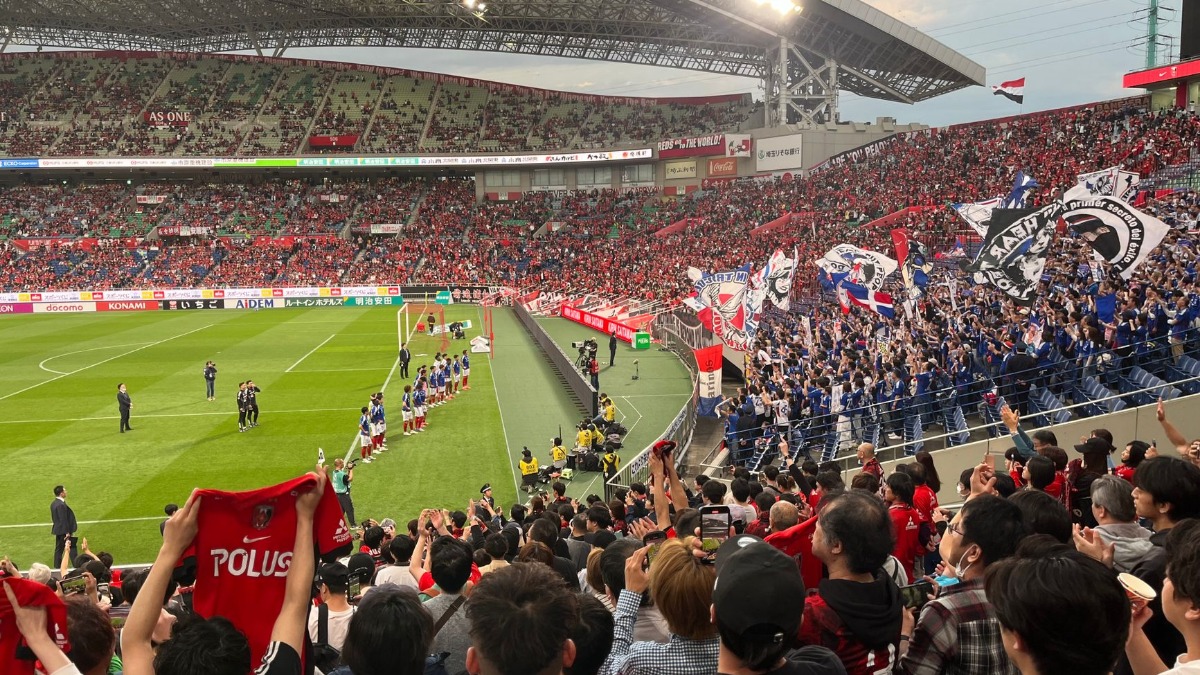
Samurai Blue fans are making waves at the 2026 FIFA World Cup – not just for their team’s performance, but for their post-match cleanup efforts in American stadiums. According to The Daily Dot, videos of Japanese supporters methodically picking up trash after games have gone viral, sparking a mix of admiration, self-reflection, and outright backlash online.
One clip shared on X by user @EricLDaugh shows a group of fans in blue jerseys walking through their section, collecting discarded cups, wrappers, and other debris into blue bags. The caption reads, “Americans are noticing that Japanese World Cup fans are doing MASS CLEANUPS of AMERICAN STADIUMS after the match.”
The post quickly racked up reactions, with many users calling it a “pure class act” and praising Japan’s culture of civic responsibility. Some commenters even framed their responses as letters to Japan, with one writing, “Thank you for the badly needed lesson! We are indeed undisciplined slobs, and an embarrassment on the world stage. We should take your lesson to heart, and I pray that we do!”
The tradition isn’t new
Japanese fans have been cleaning up stadiums for decades, dating back to at least the 1998 World Cup in France. Since then, the practice has become a hallmark of ‘Samurai Blue’ supporters, whether they’re playing in Qatar, Texas, or anywhere else. The blue bags they bring to cheer on their team double as trash collectors once the final whistle blows.
It’s a habit so ingrained that even NFL quarterback Jameis Winston was spotted joining in after Japan’s opener against the Netherlands, wearing a Japan jersey with his name on the back. The contrast with American stadium culture hasn’t gone unnoticed. While many online praised Japan’s fans for setting an example, others used the moment to critique their own country’s habits.
One user wrote, “So many Americans are an embarrassment to the hardworking ones.” Another pointed out broader cultural differences, noting, “If you drop money they all help you pick it up. If you lose your phone or computer they turn it into a nearby store. We need to learn from that culture.”
The roots of this behavior run deep in Japanese society
Cleaning is a fundamental part of education from an early age, with students routinely scrubbing classrooms and common areas without being asked. Public waste bins are rare in Japan, so people are expected to take their trash home, where disposing of it involves meticulous sorting into different categories.
Sociologist Masachi Ohsawa explains that this isn’t just about cleanliness – it’s about peer pressure and social responsibility. “Japanese people tend not to take much interest in justice on a large scale, like global inequality or climate change, but they are extremely sensitive to moral considerations on a smaller scale,” he said, per AFP. “When it comes to people they share the same space with, they feel a strong desire not to cause them trouble.”
The concept of “reading the air” plays a big role too. If one person starts picking up litter, others around them feel compelled to join in. Scott North, an emeritus professor of sociology at the University of Osaka, compares it to how Japanese football supporters operate.
“Since everyone comes together, there’s an expectation that they’ll act as a group,” he said. “And when the leaders break out the bags and say here you go, nobody is going to say no.” It’s less about altruism and more about not wanting to be seen as the odd one out.
For fans, the cleanup isn’t a performative act
Eita Tanaka, a 20-year-old supporter, put it simply: “We have to think about everyone.” After the Netherlands match, he was seen holding a beer and a couple of cups while wearing his team’s jersey, embodying the idea that leaving a place cleaner than you found it is second nature.
Futo Hagiwara, another fan, said he’s proud that his country’s behavior is being recognized positively. “This is our culture,” he said. “Everywhere we go, we need to clean it after ourselves. It’s our spiritual way, our attitude.”
The online reaction has been a mix of admiration and defensiveness. Some Americans have embraced the lesson, while others have pushed back, arguing that comparing cultures oversimplifies complex social norms. But for Japan’s fans, the message is clear: actions speak louder than words. As Hagiwara put it, “We usually don’t tell children they should do it. We just show our actions and behavior, and other people follow.”
The tradition isn’t limited to sports. In Japan, community cleanups are common, with neighbors gathering to pull weeds or rake leaves. It’s a system built on collective responsibility, where leaders set the tone and others follow.
North, who has lived in Japan for 40 years, said these groups operate similarly to football supporters. “There’s an expectation that everyone will participate,” he said. “If someone doesn’t, they risk being seen as a bad person.”
The debate has also touched on broader issues of civic responsibility
Some argue that Japan’s emphasis on small-scale morality doesn’t translate to larger systemic change. Ohsawa acknowledged this, saying, “While Japanese people may excel at keeping their immediate surroundings clean, they’re less engaged with global issues like climate change.” But for fans like Hagiwara, the focus remains on setting an example. “We’re not trying to preach,” he said. “We’re just doing what we’ve always done.”
As Japan advances in the tournament, their fans will continue their cleanup routine. Their next match is against Tunisia in Mexico, and if history is any indication, the stands will be spotless afterward. For those watching, it’s a reminder that small acts of responsibility can leave a lasting impression.
(Featured image: Maulana Diki on Pexels)
Have a tip we should know? [email protected]
Follow The Mary Sue:
