


Monkeys Just Helped Solve One of Humanity’s Biggest Mysteries, but Lefties Remain the Odd Ones Out
Pieces of the evolution puzzle.
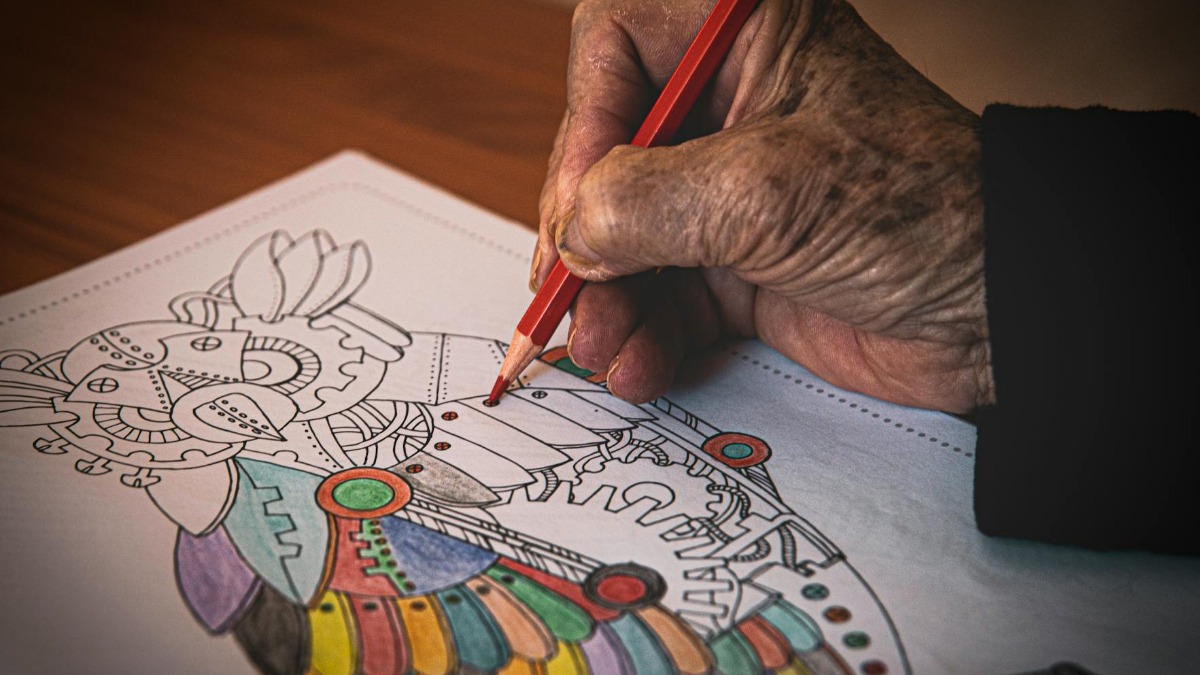
Monkeys just helped Oxford scientists crack one of humanity’s oldest mysteries – why 90% of us are right-handed. The answer, it turns out, is tied to two big evolutionary leaps, walking upright and growing bigger brains. But if you’re a lefty, don’t expect any clarity just yet. You’re still the odd one out, and science isn’t entirely sure why.
Researchers at the University of Oxford spent years digging into the origins of handedness, and their findings, published in PLOS Biology, finally give us a solid explanation for why the vast majority of humans favor their right hand. According to LADBible, the team analyzed data from 2,025 monkeys and apes across 41 different primate species, looking at everything from tool use and diet to brain size and motor skills.
At first, humans seemed like a total outlier compared to other primates. That changed when the scientists factored in two key traits, upright walking and brain size. Once those were accounted for, humans stopped looking like an evolutionary anomaly. The same models were then used to estimate handedness in extinct human ancestors.
This painted a gradual picture of how right-handedness became the norm
Early human species like Ardipithecus and Australopithecus probably had only mild preferences for their right hands, similar to modern great apes. The bias strengthened significantly with the genus Homo, through species like Homo ergaster, Homo erectus, and Neanderthals – who, studies show, were not as cognitively inferior as once believed – eventually reaching its modern extreme in Homo sapiens. But there was one exception, Homo floresiensis, the small-brained, “hobbit-like” humans from Indonesia.
They showed a much weaker preference for either hand, likely because their brains were smaller and their bodies were adapted to a mix of walking upright and climbing. This fits the broader pattern the researchers uncovered, a two-stage story where walking upright came first, freeing the hands for more precise tasks, and larger brains came later, locking in the rightward bias we see today.
Dr. Thomas A. Püschel, Wendy James Associate Professor in Evolutionary Anthropology, put it simply, “This is the first study to test several of the major hypotheses for human handedness in a single framework.”
He added, “Our results suggest it is probably tied to some of the key features that make us human, especially walking upright and the evolution of larger brains. By looking across many primate species, we can begin to understand which aspects of handedness are ancient and shared, and which are uniquely human.”
No answers for lefties yet
While the study answers the big question about right-handedness, lefties are still left in the dark. The mystery of why 10% of humans prefer their left hand remains unsolved, and it might stay that way for a while. Researchers are now looking to other species, like kangaroos and parrots, to see if they can find any clues. But if you’re hoping for a definitive answer soon, don’t hold your breath. Left-handedness is a puzzle that’s proving tough to crack.
Research on left-handedness in 2025 has offered some fascinating insights, even if it hasn’t solved the mystery. One of the biggest findings is that brain connectivity plays a huge role in distinguishing left-handers from right-handers. A large-scale neuroimaging study revealed that left-handedness is linked to motor networks across different parts of the brain, as well as the limbic network, which is crucial for emotions.
This suggests that the way our brains are wired is a major factor in handedness. If you’re a lefty, your brain might just be connected a little differently than your right-handed friends.
Left-handers also have a clear advantage in certain sports
A 2025 study looked at data from over 15,000 elite athletes and found that lefties are overrepresented in antagonistic sports like fencing and table tennis. If you’ve ever watched a fencing match, you might have noticed that left-handed fencers seem to have an edge. That’s not just your imagination, the data backs it up. Lefties bring something unique to the table in these sports, and it’s giving them a competitive advantage.
Genetics is another area where researchers are making progress. A synthesis of recent findings highlighted the role of tubulins, a group of proteins involved in early brain development, in handedness.
These proteins didn’t used to be a major focus in handedness research, but now they’re taking center stage. It turns out that the genes associated with tubulins are crucial for determining whether someone will be left or right-handed. This discovery is shedding new light on how handedness develops in the brain.
Left-handedness is also more common among neurodiverse and neurodivergent individuals. A meta-analysis integrating data from hundreds of studies found that conditions like autism, ADHD, and dyslexia are linked to higher rates of left-handedness.
This suggests that there’s a connection between handedness and the way the brain develops, though the exact nature of that connection is still being explored. If you’re neurodivergent, you’re more likely to be left-handed, and that’s something researchers are paying close attention to.
Left-handedness isn’t unique to humans
A comprehensive overview of studies on pawedness in animals proved this. Of 172 animal species studied, only about 28% didn’t show any handedness. The remaining had left-handed individuals, showing that left-handedness is actually pretty common in the animal kingdom.
One long-standing myth about left-handedness has been debunked. The idea that lefties are more creative is probably not true. A 2025 review and meta-analysis looked at studies on handedness and creativity, including divergent thinking and creative professions. The findings showed that left-handers aren’t any better at creative thinking than right-handers.
The Oxford study is a major step forward in understanding why most of us are right-handed, but it also highlights just how much we still don’t know about left-handedness. There’s still a lot to learn, and researchers are just getting started.
(Featured image: Jimmy Ramírez on Pexels)
Have a tip we should know? [email protected]
Follow The Mary Sue:
