


Amin Abdullah’s Smile Greeted Every Visitor at the San Diego Mosque, Until the Day He Stepped in Front of a Hate-Fueled Attack
A legacy of unity.
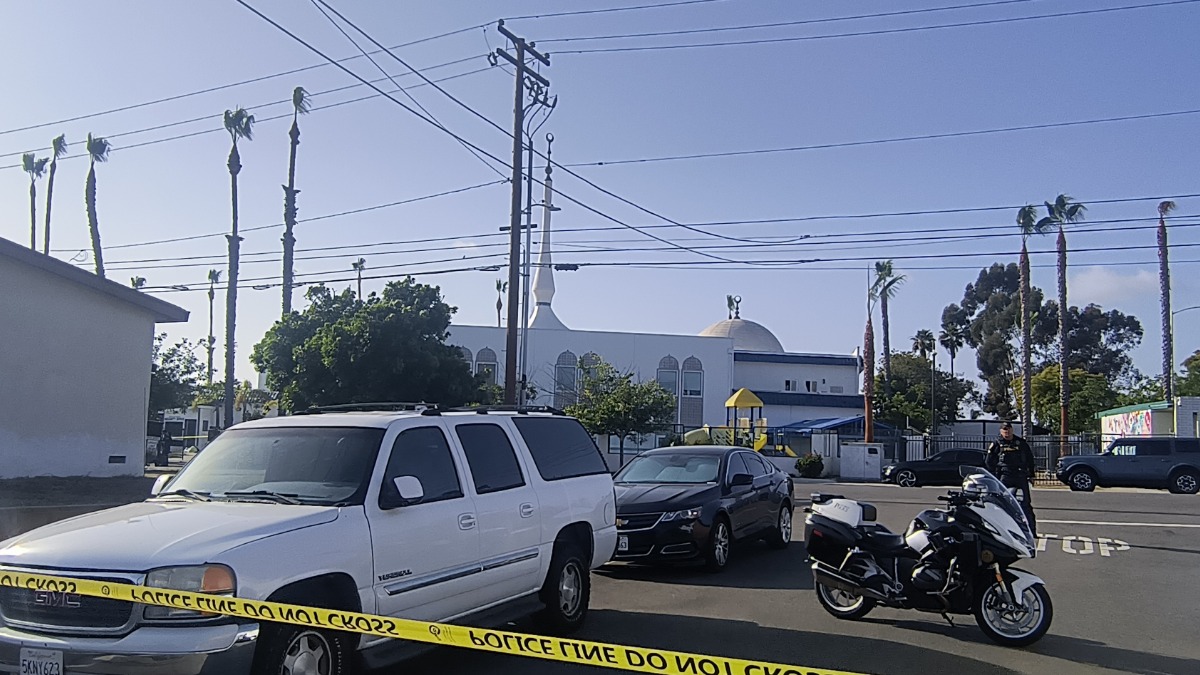
Amin Abdullah’s final act of bravery saved countless lives at a San Diego mosque on Monday, May 18, 2026, when he stepped in front of a hate-fueled attack that left him and two others dead. The 48-year-old father of eight, who worked as a security guard at the Islamic Center of San Diego, was hailed as a hero by police and community members after he engaged two armed teenage suspects, preventing what could have been a far deadlier outcome.
According to the BBC, San Diego Police Chief Scott Wahl confirmed at a news conference that Abdullah’s quick actions, including returning fire and initiating lockdown procedures, forced the attackers to flee before they could enter the mosque or the adjacent school, where 140 children were present. “Undoubtedly, he saved lives today,” Wahl said. “It’s fair to say his actions were heroic.” The two suspects later died by suicide in a vehicle blocks away from the scene.
The other victims were identified as Mansour Kaziha, who helped maintain the mosque’s grounds and convenience store, and Nader Awad, whose wife teaches at the Islamic Center’s school. A fundraiser for the families of the three men had already raised over $2.9 million by Tuesday afternoon, reflecting the deep impact of their loss on the community.
Abdullah’s kindness and dedication were a cornerstone of the mosque
He had worked at the mosque for over a decade. Friends and community members described him as a warm, welcoming presence who greeted everyone with a smile – whether they were worshippers, children attending the school, or even homeless individuals seeking help. “It didn’t matter who walked up… any random person could just walk up, and he would greet them, make sure they are OK,” said Sam Hamideh, a friend who knew Abdullah through the mosque.
Shaykh Uthman Ibn Farooq, another friend, said that Abdullah had a reason for choosing to work as a security guard. “He wanted to defend the innocent, so he decided to become a security guard,” Farooq said.
At a vigil on Tuesday evening, Abdullah’s daughter Hawa spoke alongside her siblings, urging the community to honor her father’s legacy by standing together. “That’s exactly the legacy he left behind,” she said. “He wants all of us to be better, regardless of who we are, what we identify as.” The family was joined by members of the San Diego Islamic community, many of whom called on elected officials to be mindful of how their rhetoric affects religious groups.
The shooting unfolded just after noon on Monday, after the mother of one of the suspects called police to report that her son had run away with a friend and might be suicidal. Hours later, authorities found the three victims – Abdullah, Kaziha, and Awad – outside the mosque with gunshot wounds. The suspects, aged 17 and 18, were later discovered dead in a stolen vehicle nearby, having taken their own lives.
The attack is being investigated as a hate crime
Authorities have confirmed that “hate rhetoric” was involved in the shooting that is being viewed as a hate crime. FBI Special Agent Mark Remily revealed that investigators had recovered writings from the suspects outlining extremist ideologies, though it remains unclear whether the mosque or school were specific targets.
“These subjects did not discriminate on who they hated,” Remily said. During searches of three residences linked to the suspects, authorities seized more than 30 firearms, including pistols, rifles, and shotguns, as well as a crossbow.
For the children at the Islamic Center’s school, the attack was a terrifying ordeal. According to The Guardian, nine-year-old Odai Shanah, whose mother emigrated from Gaza two decades ago, recounted hearing gunshots before he and his classmates were rushed into a closet. “My legs were shaking and my hands and my head were hurting a lot,” he said. “I felt like a rock.”
After the shooting stopped, Odai and the other children were escorted out by police, where they saw the bodies lying on the ground. His account underscored the trauma inflicted on young witnesses, a grim reminder of how gun violence disproportionately affects children in the U.S.
The community’s grief was palpable, but so was its resolve
San Diego Mayor Todd Gloria condemned the attack, emphasizing that the suspects “do not represent our city, these three Muslim men do.” At the White House, Vice President J.D. Vance called the shooting “reprehensible” and urged Americans to reject political violence. “Let’s talk with one another, not shoot each other when we disagree,” he said, echoing a sentiment shared by many in the wake of the tragedy.
Abdullah’s legacy, however, is one of courage and compassion. Tazheen Nizam, a spokeswoman for the Council on American-Islamic Relations-San Diego, described him as “a shining light” and “a true hero, a martyr.”
The mosque itself remembered him as “a courageous man who put himself on the line for the safety of others, who even in his last moments did not stop protecting our community.” For those who knew him, Abdullah wasn’t just a security guard, but a guardian of peace, a man whose smile greeted every visitor and whose final act ensured that others would live to see another day.
(Featured image: Leonard LMT)
Have a tip we should know? [email protected]
Follow The Mary Sue:
