


Cate Blanchett Drops a Brutal Truth About #MeToo’s Sudden Death and Why Walking Onto a Film Set Still Feels Like Stepping Into 1985
‘A glaring, systemic issue.’
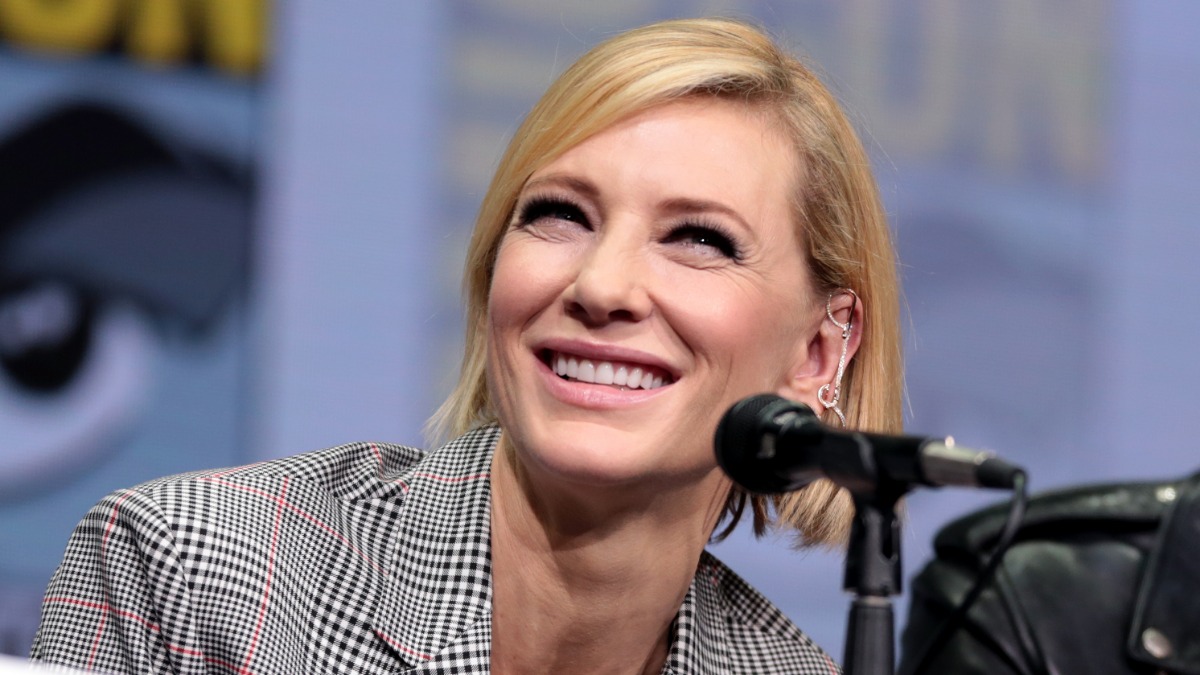
Cate Blanchett just called out the film industry’s dirty little secret, and it’s not pretty. At the 2026 Cannes Film Festival, the two-time Oscar winner didn’t hold back when she said the #MeToo movement “got killed very quickly.” Hearing this from someone like Blanchett, who’s been in the trenches for decades, makes it hit even harder. She didn’t just stop at calling out the movement’s sudden demise.
According to Variety, Blanchett painted a picture of what it’s still like to walk onto a film set today, and it sounds like stepping into a time machine back to 1985. “I’m still on film sets and I do the headcount every day, and it is still, you know… there’s 10 women and there’s 75 men every morning,” she said. That’s not just a minor imbalance, that’s a glaring, systemic issue.
And if you think that doesn’t affect the work being produced, Blanchett has news for you. “I love men, but what happens is the jokes become the same. You just have to brace yourself slightly, and I’m used to that, but it just gets boring for everybody when you walk into a homogeneous workplace.”
It’s not just about the numbers, though
Blanchett pointed out that the power dynamic between men and women in the industry is still wildly out of whack. She asked a question that should make everyone uncomfortable: “There are a lot of people with platforms who are able to speak up with relative safety and say this has happened to me, and the so-called average woman on the street is saying #MeToo. Why does that get shut down?”
The answer is simple, and it’s not pretty. The industry doesn’t want to acknowledge the problem because that would mean actually doing something about it. “What [the movement] revealed is a systemic layer of abuse, not only in this industry but in all industries, and if you don’t identify a problem, you can’t solve the problem,” Blanchett said.
Julianne Moore, another heavyweight in the industry, echoed Blanchett’s sentiments during her own Kering Women in Motion Talk at Cannes. She recalled a moment on set not too long ago where the only women present were her and the third assistant camera operator. “It’s when Hillary Clinton lost the election, and we were both devastated.
And I said, ‘Look around the room. We’re the only ones here,’” Moore said. She’s seen progress over the years, but it’s clear there’s still a long way to go. “I’ve certainly seen more gender representation in crews. It was unusual when I was coming up to see women on a crew.”
Blanchett’s frustration isn’t new
In 2018, she led a women’s march at Cannes where she held hands with Kristen Stewart, Léa Seydoux, Ava DuVernay, and Agnès Varda, among others. The march was a powerful statement, with 82 women walking up the steps of the Palais des Festivals. That number wasn’t random, it represented the number of female directors who had competed at Cannes up until that point, compared to the 1,866 male directors over the same period.
At the time, Cannes organizers were under fire for not doing enough to publicly acknowledge the #MeToo and Time’s Up initiatives. It’s almost like the industry wanted to pat itself on the back for a job well done while sweeping the real issues under the rug. Blanchett’s recent comments prove that nothing has really changed. The industry is still a boys’ club, and women are still fighting for their place in it.
Moore’s conversation at Cannes also shed light on the broader issue of representation in the industry. She pointed out that the problem isn’t just limited to film, it’s global. “I mean, there’s not representation in C-suites, there’s not representation in media, there’s not representation in higher education. There are lots of places where we don’t have the representation we deserve,” she said.
The numbers back her up. A recent study found that the number of women in lead roles dropped to 37% among 2025’s highest-grossing movies, down 10% from 2024. That’s not just a step back, that’s a full-on sprint in the wrong direction.
So how do you change an industry so deeply entrenched in its ways?
Moore has a simple answer: “You do it slowly, steadily, mindfully, making choices, speaking up, using your privilege, hiring more, talking about alliances, changing things for us on set.” It’s not about grand gestures or empty promises, it’s about the daily grind of making better choices and lifting each other up.
“Women are each other’s greatest allies,” Moore said. “That’s the secret sauce. It’s like, we are the ones who have each other’s backs, we are the ones who hire each other, we are the ones that write stories about ourselves.”
The fight for gender equality in Hollywood isn’t over, not by a long shot. But with voices like Blanchett and Moore leading the charge, there’s still hope for progress. It’s not about waiting for the industry to change on its own, it’s about making those small, steady choices every day to push it in the right direction. And if the industry doesn’t like it, well, that’s just too bad.
(Featured image: Gage Skidmore)
Have a tip we should know? [email protected]
Follow The Mary Sue:
