


John Magaro Talks the Emotional Toll of ‘Omaha’ [INTERVIEW]
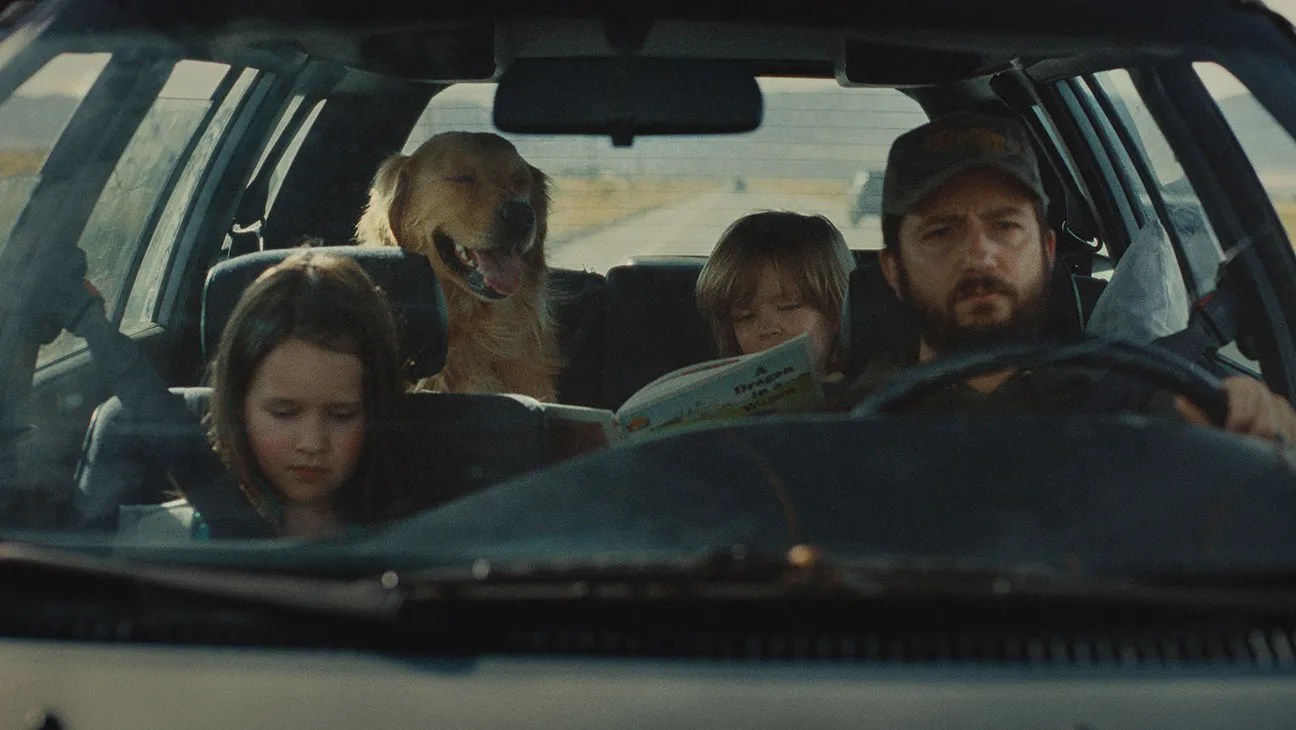
John Magaro is a Midwestern man, so he understands the plight of people like his character in Omaha, which premiered at Sundance over a year ago now. It’s a heart-wrenching film about poverty in America’s heartland and the tough decisions that sometimes are made, with Magaro’s quiet performance anchoring the more ebullient nature of his kids, who aren’t fully aware of the situation they’re in.
As their road trip to Omaha, Nebraska, progresses, it becomes even clearer that Magaro is hiding something, and it is that sense of dread, mixed with its slow but not plodding pace of a family making their way across the country. Ahead of the film’s wider release, Magaro sat down and talked to us about working with kids, the quiet reflection of this film, and how being a parent changes your perspective.
You can read our chat below.
The Mary Sue: I literally finished [the movie] 20 minutes ago. I’m glad I get to start with everything being directly in my mind. What was it like joining this project?
John Magaro: It was great. It was kind of a no-brainer, really. I got the script and read it and wanted to be a part of it. You just finished it, so you know it leaves you devastated. It’s really powerful and tragic. And the role of Dad is just something that really interested me and I wanted to tackle it. So I was pretty much right on board as soon as I read it.
TMS: What was the emotional prep to prepare for a role like this acting opposite only these two kids? That’s gotta be a pretty heavy thing to come into every day.
Magaro: The emotional prep was having a kid. That’s all you need. I mean, you could do it without, but that helps. Robert [Machoian, the screenwriter] wrote us a great script. And each scene allowed that kind of mystery of Dad to unravel. And we were pretty fortunate to shoot it kind of in sequence. Like we started with the beginning and we got out on the road and we got to know each other a little bit. It’s a challenge shooting with young kids. And they’re two very different kids. Molly Belray, who plays Ella, is a young powerhouse actor as you see in this film, exactly what you needed for a young girl on the cusp of adolescence who’s starting to see through the facade of her parents. Then you have Wyatt Salas who is a little firecracker and a lot of energy very innocent. So it meant understanding the script and in a way pivoting and being improvisational and loose with the language. And I think like that’s been done a few times with kids and it usually works best when you have young kids to kind of go down that route. But as far as the emotion, just letting the story play out, really. Just letting it play out, being in the circumstances, living it.
TMS: Sometimes when I watch movies, I like to not know anything about them when I go into it, because I love to just keep an open mind and let it take me where it takes me. And I did that with this one. There’s a part of me that’s glad that [I] had no idea what was going to happen at all in this film. And a part of me is like, I wish I would have, but it was really great to just kind of go into it not knowing anything because I finally broke down around the same time that your character broke down.
Magaro: That’s good. I will say people I’ve talked to have seen it a few times or know what’s going to happen still tend to get caught with the emotion. It’s heavy stuff. But some people I’ve heard say that they feel like it’s playing into that. I don’t think it is. It’s just the situation. And that’s what the situation is. And it’s a story that hasn’t been told about a thing that happened in 2008 and based on true events. And it’s a sad situation. So it’s kind of it’s tough to address it without it being a bit of a tearjerker.
TMS: These are kind of the stories that like, you’ll see me carrying in my little book pile at like Barnes and Noble. I love these sort of character focused [stories], not necessarily slow, but they’re very much what’s going on in the day to day. And it allows you to see everything start to slowly unfold. And I think especially having that disclaimer at the very end that talks about the Safe Haven law, which I had forgotten about.
Magaro: I didn’t even know about that.
TMS: I remember reading about it, but I had forgotten about it, that it existed, and forgot what it was. And I was reading that, and I’m like, this makes it so much worse going back and thinking about it.
Magaro: Well, that’s good. That’s what I love in film, too. I like the discovery. I like when directors allow moments of quiet that are deserved.
TMS: Yeah, I’m right in the same camp with you. I love that. One of my favorite things was when you guys are all driving down the highway and it’s silent outside of the car, but then it cuts to inside of the car when you guys are all singing and listening to music. [It was] such a great way to show how we are all immersed in our own worlds, but the rest of the world doesn’t see.
Magaro: That’s true. I’m certainly guilty of being in my car and singing my lungs out and you pass someone and try and act like you’re not singing, but too late. And it’s also a rare moment where you get to see the joy of this family, too.
TMS: There are a lot of quiet moments like that, that especially hit hard going further back with the kids. The dynamic between the three of you was just so amazing. It felt so natural. Was there anything, any particular scene or moment that you really enjoy getting to film with them?
Magaro: The zoo was a great sequence. That was a lot. I also liked the fast food place, which was hard. That was really hard. That’s sort of where we discovered that we’re going to have to be loose with the script. But that was fun. A lot of funny lines came out of that conversation. But the zoo, man, we had free reign of that zoo. That was fantastic. It’s nothing like being the kings of the zoo for a day.
TMS: Oh my gosh, I would be everywhere.
Magaro: Yeah, we were. It was fun. The kids loved it too. They had a great experience there. That was towards the end of the shoot. So it was a really nice experience.
TMS: Did they have a favorite animal that they gravitated towards? I saw there were a lot of different animals.
Magaro: They loved the polar bear, because the polar bear was right up against the glass. It was hard to pull them away from the pool. We’re like, we got enough polar bear footage. We’ve got to go on to another exhibit. They didn’t want to leave that polar bear.
TMS: This movie is one of those that I feel is going to stick with me for a long time. So you’ve talked to people that have seen this movie more than once you’ve [talked to] people like me who have like gone into it blind. What do you really hope people feel when they exit the theater?
Magaro: I hope they feel something. I leave that to them. I hope they see it for what it is. I hope for parents, it reaffirms their own care for their own children, reminds them how lucky they are, you know? I hope it also just evokes conversations because this is an issue, without giving it away. It’s an issue that still happens. And we haven’t solved quite frankly. So yeah, I think it’s okay to have those conversations and ask those questions.
TMS: Yeah, especially with older kids, because that’s what took me aback. I didn’t quite realize what was going to happen. I was like, is he really going to do that? And then he did. And I was like, oh, my God, that’s right. This happens. People do this with like kids that are over the age of like, you know, 12 months. It’s just very sad.
Magaro: Twelve months is pretty old, I think. And it’s just really indicative of how crazy our society is that anybody has to get into that position.
TMS: I know in a country where there’s so much wealth that people are still struggling so much. But this was truly so amazing. And I will probably watch it again. Maybe we’ll see if I can continue.
Magaro: Give yourself a break. Take a little time.
Have a tip we should know? [email protected]
Follow The Mary Sue:
